Emerg Infect Dis. 2021 Feb;27(2):538-546. doi: 10.3201/eid2702.203862.
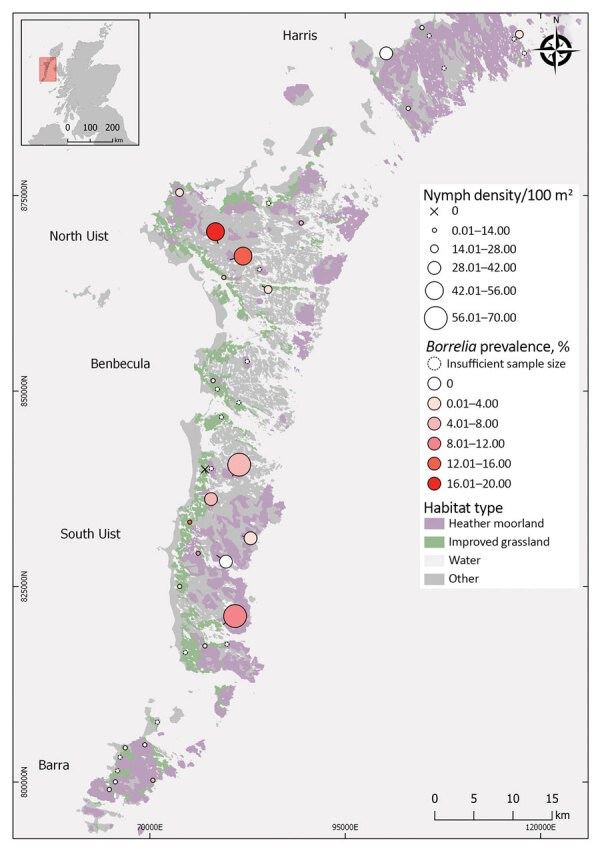
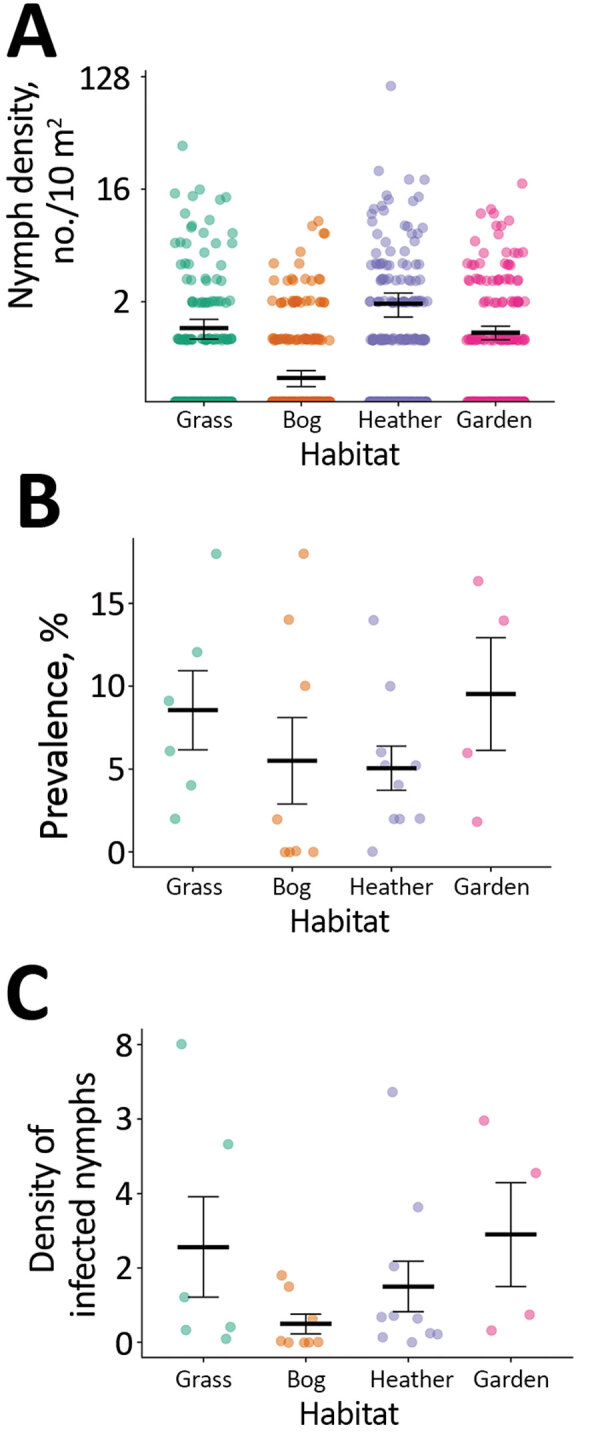
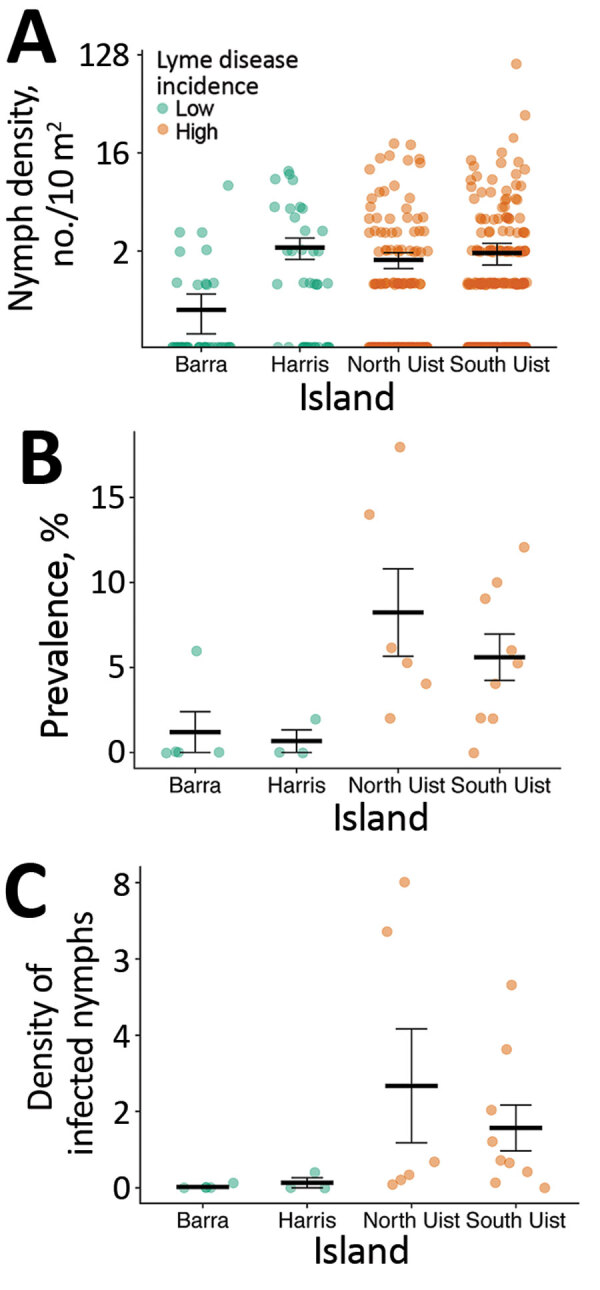
Lyme disease is usually associated with forested habitats but has recently emerged on treeless islands in the Western Isles of Scotland. The environmental and human components of Lyme disease risk in open habitats remain unknown. We quantified the environmental hazard and risk factors for human tick bite exposure among treeless islands with low and high Lyme disease incidence in the Western Isles. We found a higher prevalence of Borrelia burgdorferi sensu lato-infected ticks on high-incidence than on low-incidence islands (6.4% vs. 0.7%); we also found that residents of high-incidence islands reported increased tick bite exposure. Most tick bites (72.7%) occurred <1 km from the home, including many in home gardens. Residents of high Lyme disease incidence islands reported increasing problems with ticks; many suggested changing deer distribution as a potential driver. We highlight the benefits of an integrated approach in understanding the factors that contribute to Lyme disease emergence.
莱姆病通常与森林栖息地有关,但最近在苏格兰西部群岛无树的岛屿上出现。在开阔栖息地中,莱姆病风险的环境和人为因素仍不清楚。我们量化了西部群岛低发病率和高发病率无树岛屿上人类被蜱虫叮咬的环境危害和危险因素。我们发现,高发病率岛屿上感染伯氏疏螺旋体的蜱虫的流行率高于低发病率岛屿(6.4% vs. 0.7%);我们还发现,高发病率岛屿的居民报告说蜱虫叮咬的暴露增加了。大多数蜱虫叮咬(72.7%)发生在距离家不到 1 公里的地方,包括许多在家中的花园里。莱姆病高发病率岛屿的居民报告说,他们的蜱虫问题越来越严重;许多人认为改变鹿的分布可能是一个潜在的驱动因素。我们强调了采用综合方法来理解导致莱姆病出现的因素的好处。