Clinical Epidemiology and Evidence-Based Medicine (CEEBM) Unit, Cipto Mangunkusumo Hospital/Faculty of Medicine Universitas Indonesia, Jakarta, Indonesia.
Department of Internal Medicine, Faculty of Medicine Universitas Indonesia/Cipto Mangunkusumo Hospital, Jakarta, Indonesia.
PLoS One. 2021 Jan 26;16(1):e0246122. doi: 10.1371/journal.pone.0246122. eCollection 2021.
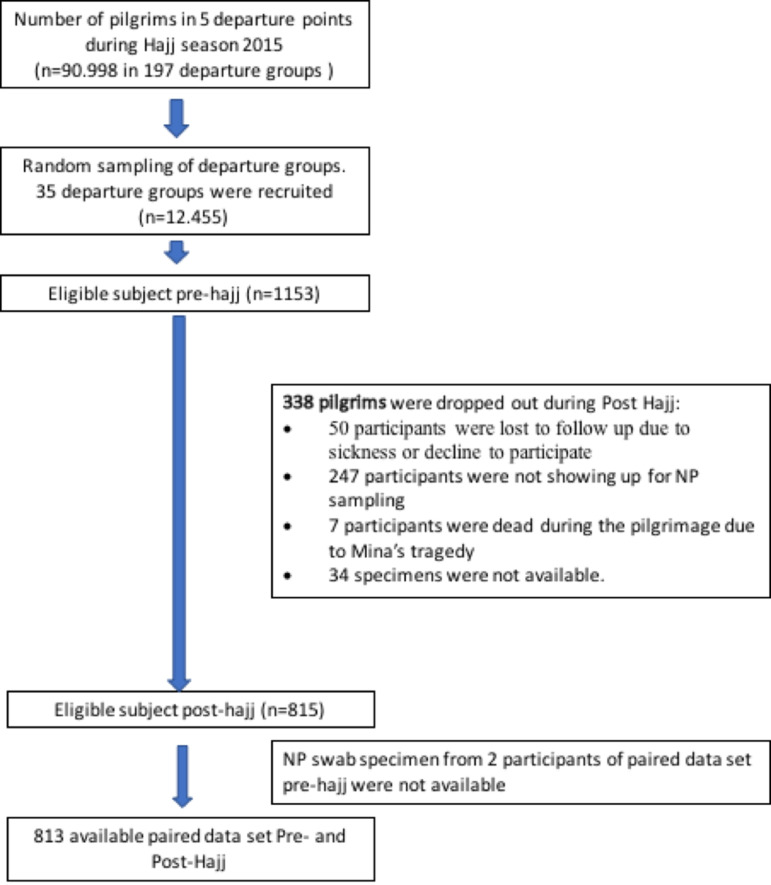
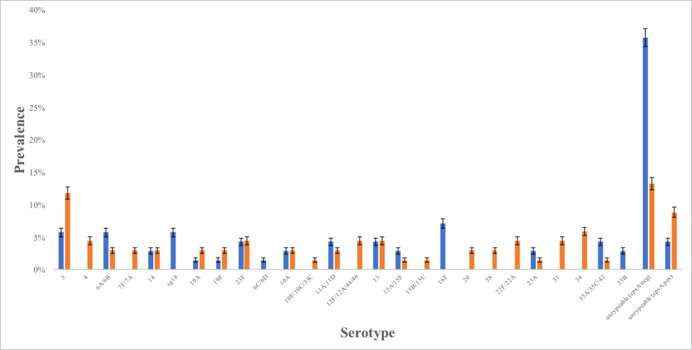
The Hajj is an annual pilgrimage to Mecca and one of the largest gathering of people in the world. Most Indonesian pilgrims are senior adults and elderly adults, who are more prone to acquire infections during the Hajj ritual. The aims of this study are to investigate the dynamics of Streptococcus pneumoniae colonization and to investigate antibiotic susceptibility of pneumococcal strains in Indonesian pilgrims. This was a prospective multi-site longitudinal study in Indonesian hajj pilgrims aged >18 years old in the year 2015. Nasopharyngeal swabs were collected from the same subject before departure and upon arrival at the airport. S. pneumoniae was identified using conventional and molecular approach, while antibiotic susceptibility was determined using a disk diffusion method. Among 813 Hajj pilgrims who were enrolled from five sites in this study, the prevalence of S. pneumoniae carriage rates before- and after-the Hajj were 8.6% (95% CI 6.7-10.5%) and 8.2% (95% CI 6.4-10.1%), (p value: 0.844) respectively. Serotype 16F, 6A/6B, 3, 18, and 23F were the five most prevalent serotypes before Hajj, whereas serotypes 3, 34, 13, 4, and 23F were the most prevalent serotypes after Hajj. Serotype 3 was identified as most acquired serotype during Hajj in Indonesian pilgrim. There was an increase in the percentage of isolates susceptible to co-trimoxazole after Hajj (42.9% versus 57.4%). The study provided an overview of the change of dynamics of S. pneumoniae serotype acquisition in Indonesian Hajj Pilgrims. Along with data of vaccination serotypes coverage and antimicrobial susceptibility, these findings may contribute to recommendation of vaccination and treatment policies in the future.
朝觐是每年一次的麦加朝圣,也是世界上最大的人群聚集活动之一。大多数印度尼西亚朝圣者是老年人,他们在朝觐仪式期间更容易感染。本研究旨在调查肺炎链球菌定植的动态,并研究印度尼西亚朝圣者中肺炎链球菌株的抗生素敏感性。这是一项针对 2015 年年龄大于 18 岁的印度尼西亚朝觐者的前瞻性多地点纵向研究。从同一受试者在出发前和抵达机场时采集鼻咽拭子。使用传统和分子方法鉴定肺炎链球菌,使用纸片扩散法测定抗生素敏感性。在这项研究中,从五个地点招募了 813 名朝觐者,他们在朝觐前和朝觐后的肺炎链球菌携带率分别为 8.6%(95%CI6.7-10.5%)和 8.2%(95%CI6.4-10.1%)(p 值:0.844)。16F、6A/6B、3、18 和 23F 是朝觐前最常见的 5 种血清型,而 3、34、13、4 和 23F 是朝觐后最常见的血清型。3 型被确定为印度尼西亚朝圣者在朝觐期间获得的最常见血清型。朝觐后对复方新诺明的敏感性分离株百分比增加(42.9%对 57.4%)。该研究概述了印度尼西亚朝觐者中肺炎链球菌血清型获得的动态变化。结合疫苗接种血清型覆盖率和抗菌药物敏感性数据,这些发现可能有助于未来推荐疫苗接种和治疗政策。