Electrical Engineering and Computer Science, Vanderbilt University, Nashville TN, 37235 USA.
Electrical Engineering and Computer Science, Vanderbilt University, Nashville TN, 37235 USA.
Neuroimage. 2021 Apr 1;229:117758. doi: 10.1016/j.neuroimage.2021.117758. Epub 2021 Jan 23.
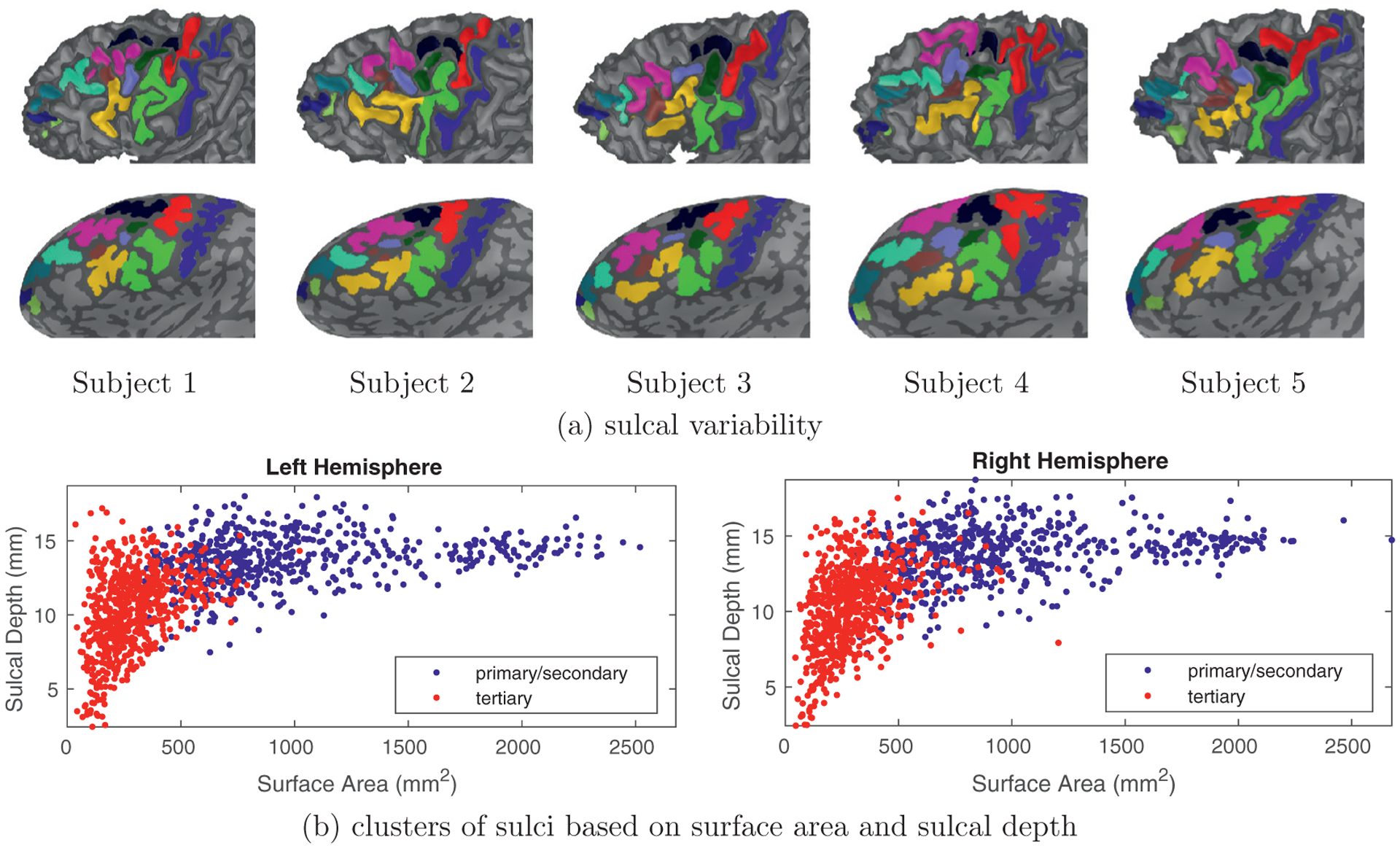
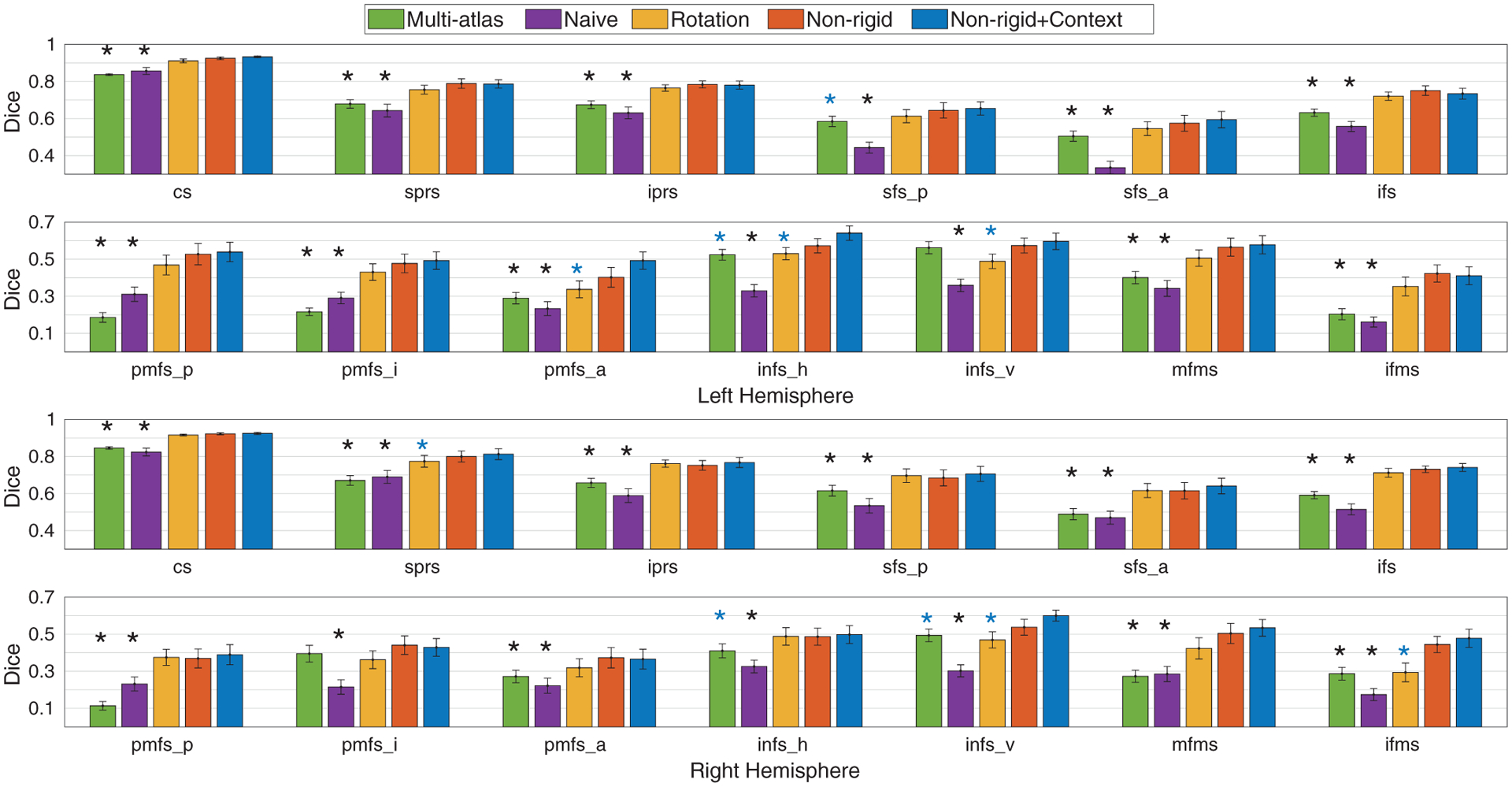
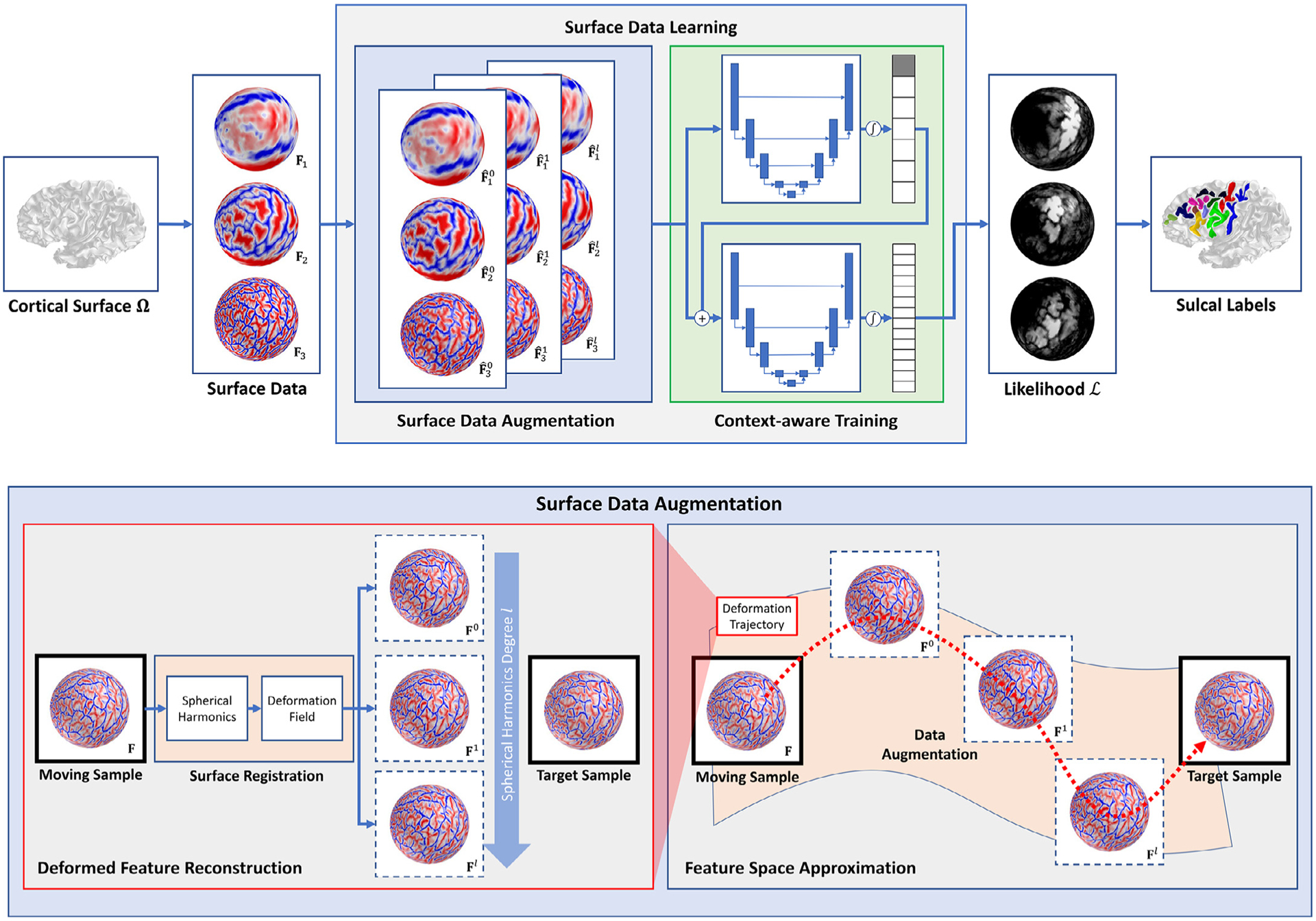
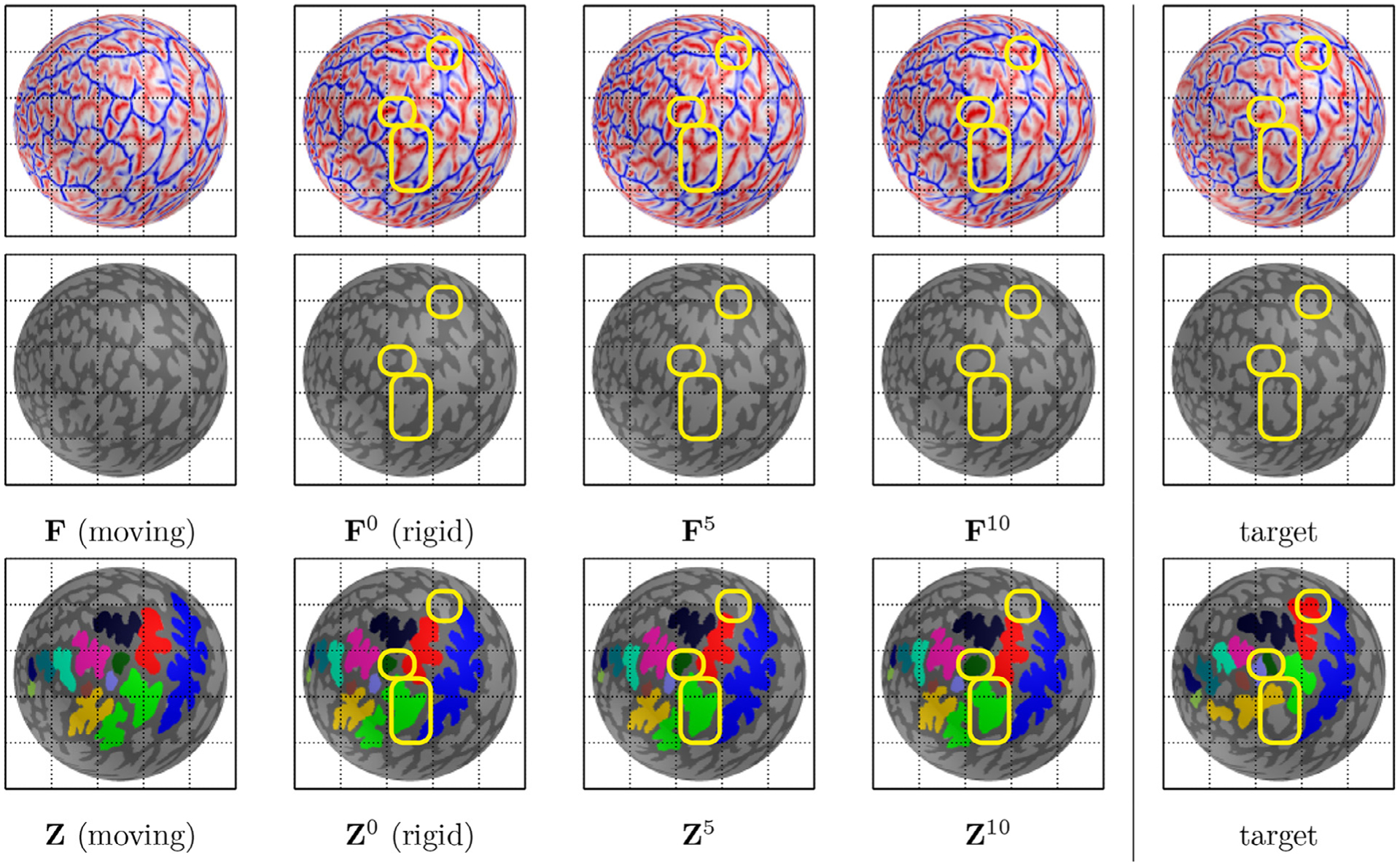
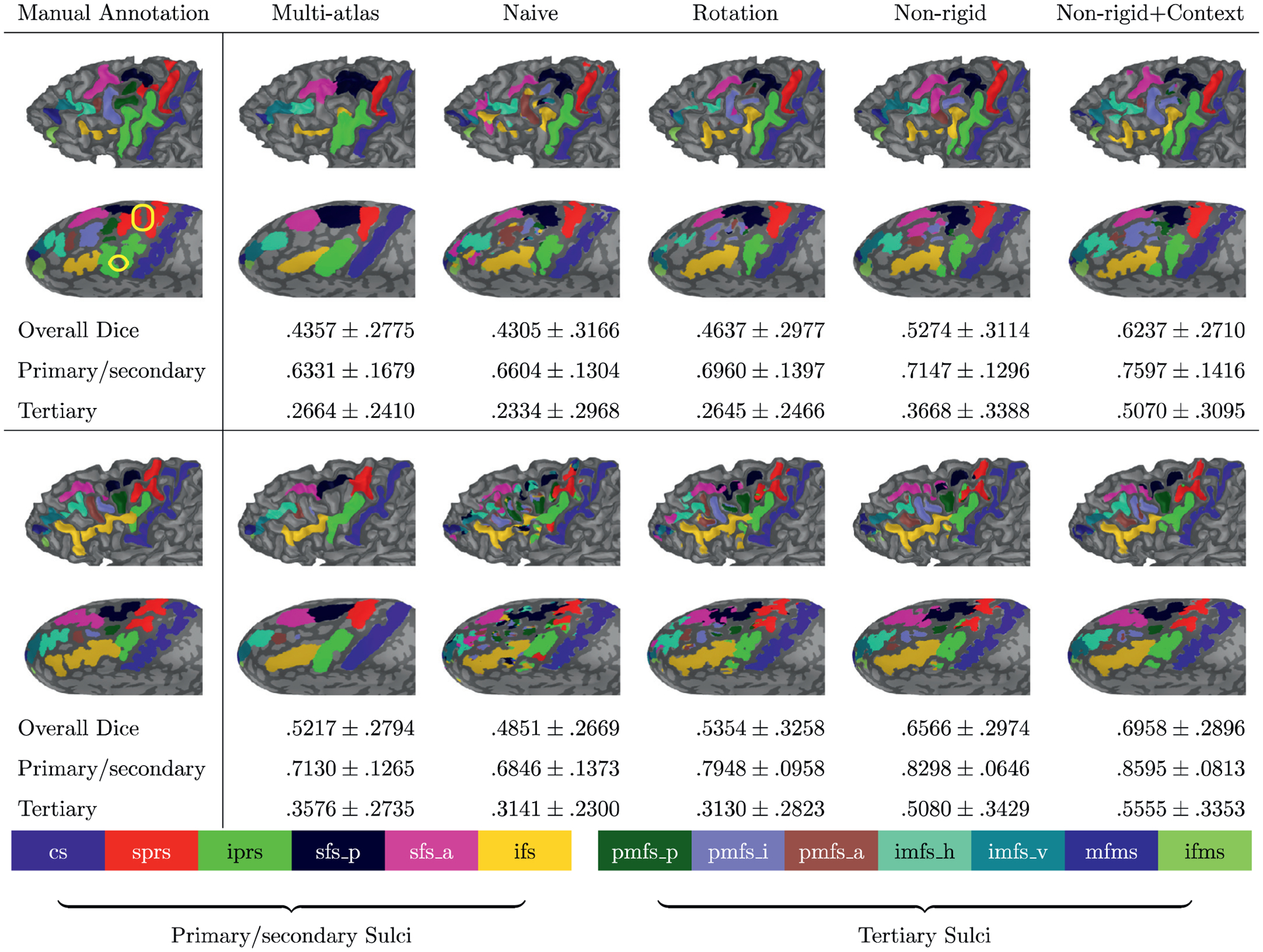
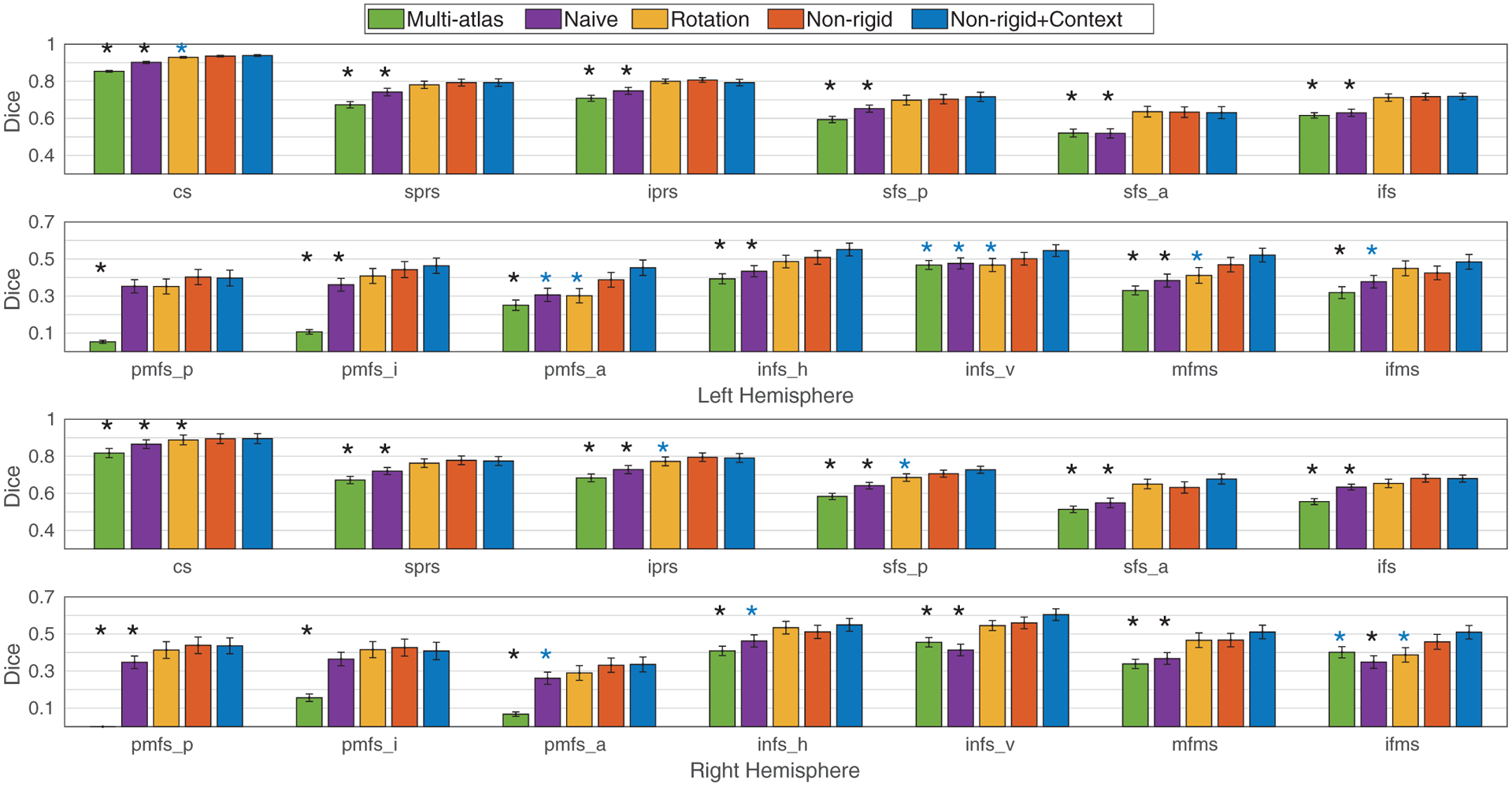
The inference of cortical sulcal labels often focuses on deep (primary and secondary) sulcal regions, whereas shallow (tertiary) sulcal regions are largely overlooked in the literature due to the scarcity of manual/well-defined annotations and their large neuroanatomical variability. In this paper, we present an automated framework for regional labeling of both primary/secondary and tertiary sulci of the dorsal portion of lateral prefrontal cortex (LPFC) using spherical convolutional neural networks. We propose two core components that enhance the inference of sulcal labels to overcome such large neuroanatomical variability: (1) surface data augmentation and (2) context-aware training. (1) To take into account neuroanatomical variability, we synthesize training data from the proposed feature space that embeds intermediate deformation trajectories of spherical data in a rigid to non-rigid fashion, which bridges an augmentation gap in conventional rotation data augmentation. (2) Moreover, we design a two-stage training process to improve labeling accuracy of tertiary sulci by informing the biological associations in neuroanatomy: inference of primary/secondary sulci and then their spatial likelihood to guide the definition of tertiary sulci. In the experiments, we evaluate our method on 13 deep and shallow sulci of human LPFC in two independent data sets with different age ranges: pediatric (N=60) and adult (N=36) cohorts. We compare the proposed method with a conventional multi-atlas approach and spherical convolutional neural networks without/with rotation data augmentation. In both cohorts, the proposed data augmentation improves labeling accuracy of deep and shallow sulci over the baselines, and the proposed context-aware training offers further improvement in the labeling of shallow sulci over the proposed data augmentation. We share our tools with the field and discuss applications of our results for understanding neuroanatomical-functional organization of LPFC and the rest of cortex (https://github.com/ilwoolyu/SphericalLabeling).
外侧前额叶皮质(LPFC)背侧的初级/次级和三级脑沟的自动标注
脑沟的皮质沟回标签推断通常集中在深(初级和次级)脑沟区域,而浅层(三级)脑沟区域在文献中基本被忽略,因为其手动/明确标注的稀缺性和其大的神经解剖学变异性。在本文中,我们提出了一种使用球形卷积神经网络对背外侧前额叶皮质(LPFC)的初级/次级和三级脑沟进行区域标注的自动化框架。我们提出了两个核心组件,通过增强脑沟标签推断来克服这种大的神经解剖学变异性:(1)表面数据增强和(2)上下文感知训练。(1)为了考虑神经解剖学变异性,我们从嵌入了球型数据的中间变形轨迹的建议特征空间中合成训练数据,以刚性到非刚性的方式来弥合传统旋转数据增强中的增强差距。(2)此外,我们设计了一个两阶段的训练过程,通过告知神经解剖学中的生物学关联来提高三级脑沟的标注精度:初级/次级脑沟的推断,然后是它们的空间可能性来指导三级脑沟的定义。在实验中,我们在两个具有不同年龄范围的独立数据集上评估了我们的方法,即儿童(N=60)和成人(N=36)队列的 13 个深和浅脑沟。我们将所提出的方法与传统的多图谱方法和没有/有旋转数据增强的球形卷积神经网络进行了比较。在两个队列中,与基线相比,所提出的数据增强提高了深和浅脑沟的标注精度,与所提出的数据增强相比,所提出的上下文感知训练进一步提高了浅脑沟的标注精度。我们与该领域共享我们的工具,并讨论我们的结果在理解 LPFC 和皮质其余部分的神经解剖学-功能组织中的应用(https://github.com/ilwoolyu/SphericalLabeling)。