Department of Botany, Institute of Biology, Warsaw University of Life Sciences, Nowoursynowska 159, 02-776 Warsaw, Poland.
Department of Plant Genetics, Breeding and Biotechnology, Institute of Biology, Warsaw University of Life Sciences, Nowoursynowska 159, 02-776 Warsaw, Poland.
Cells. 2021 Jan 20;10(2):200. doi: 10.3390/cells10020200.
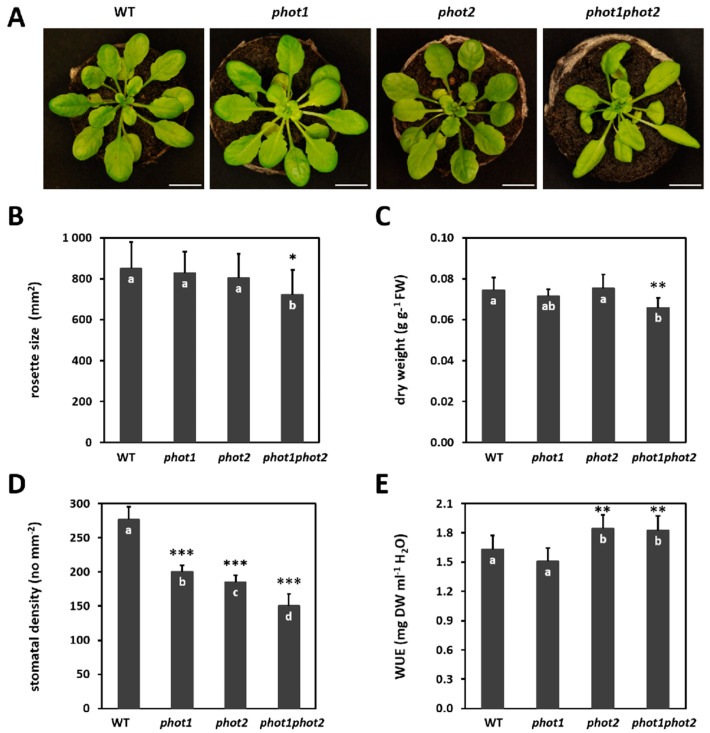
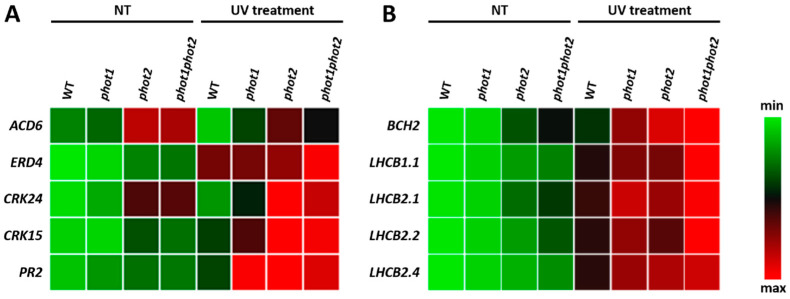
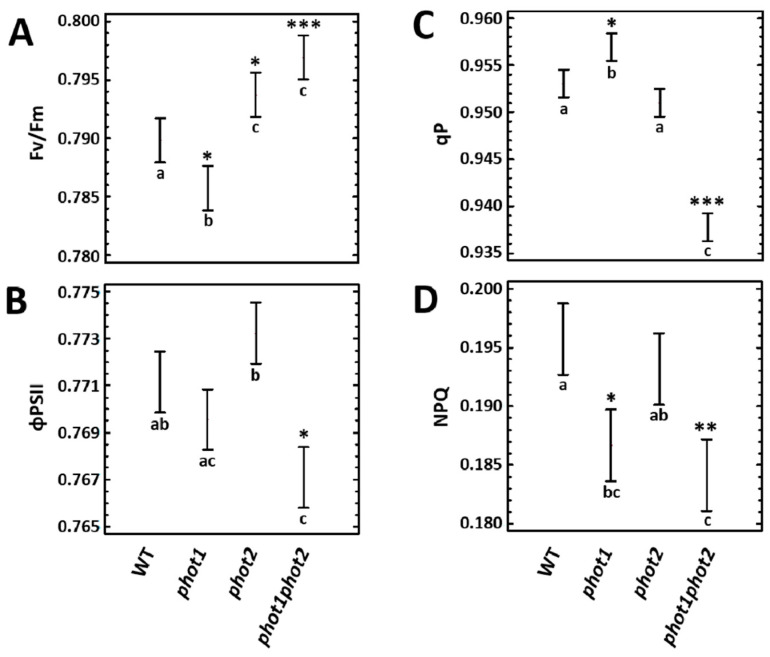
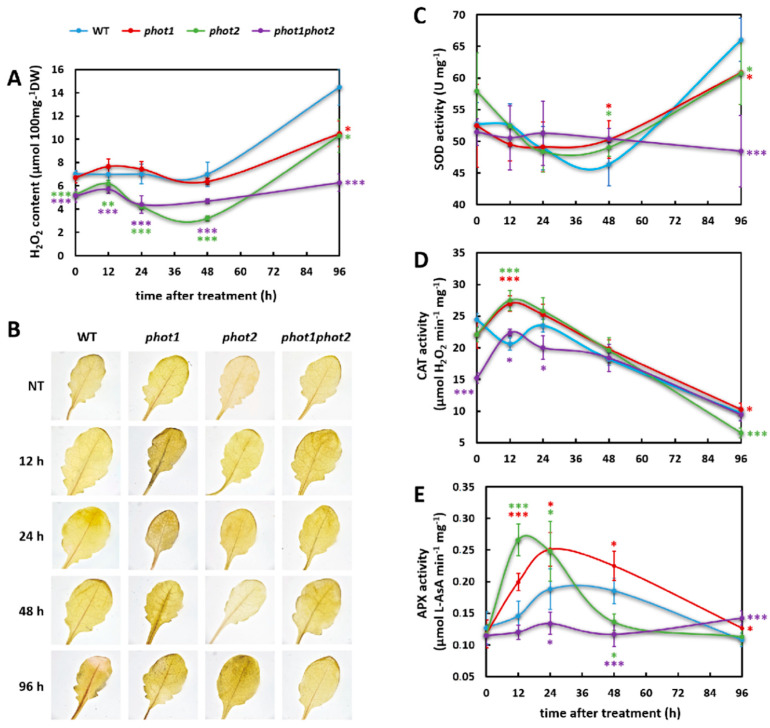
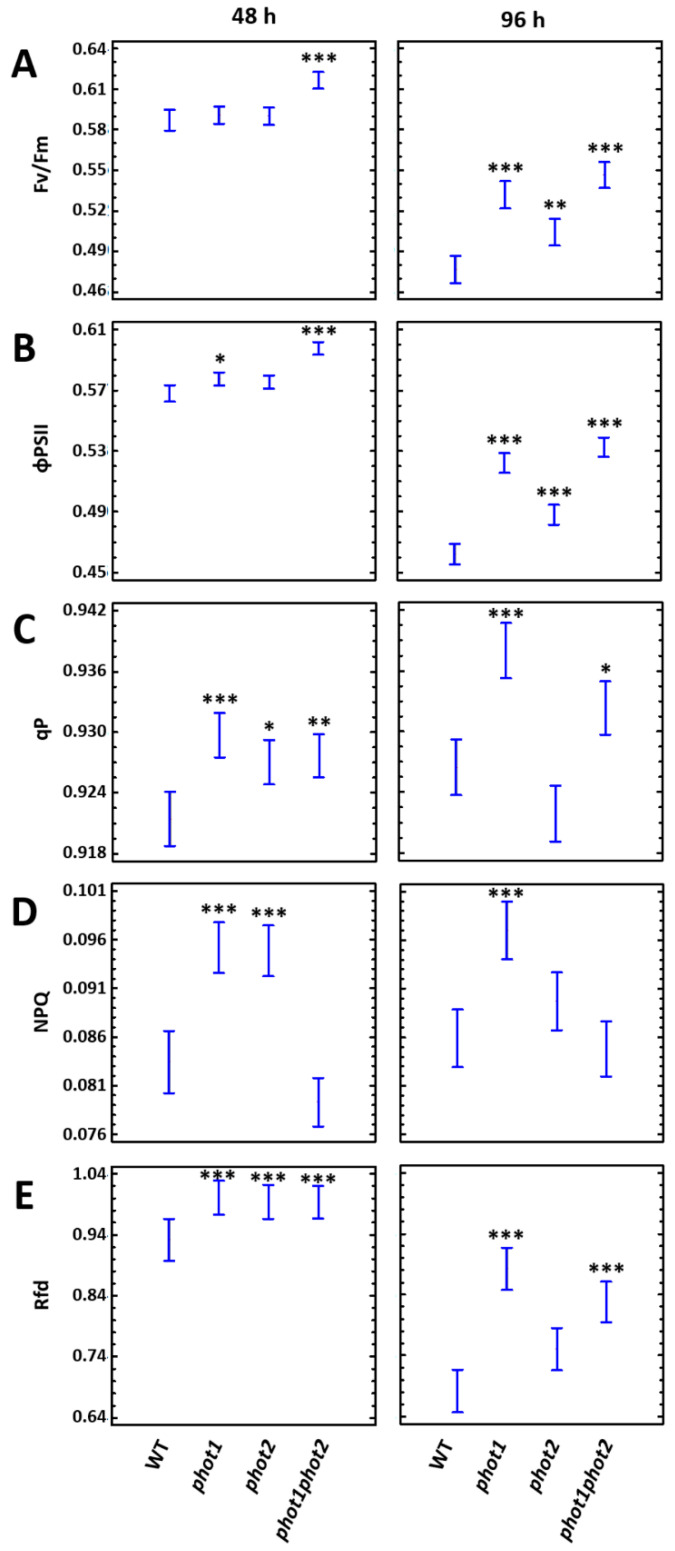
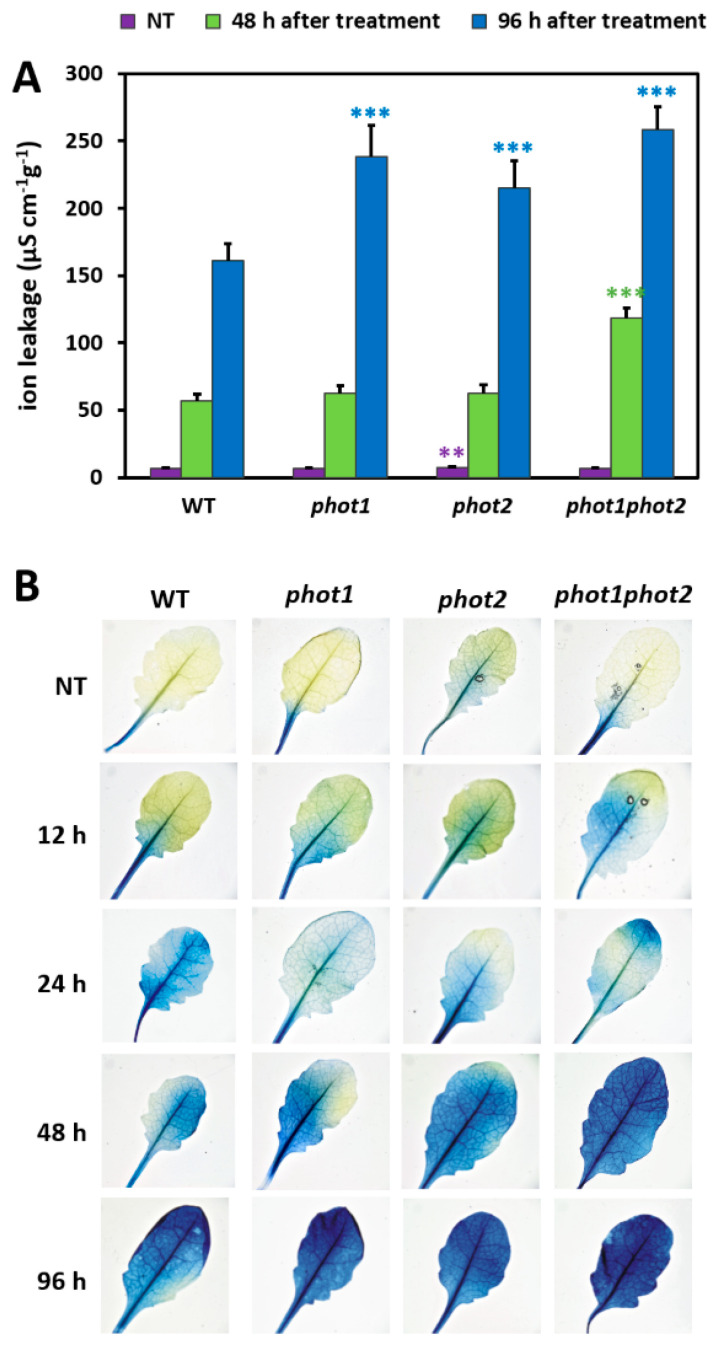
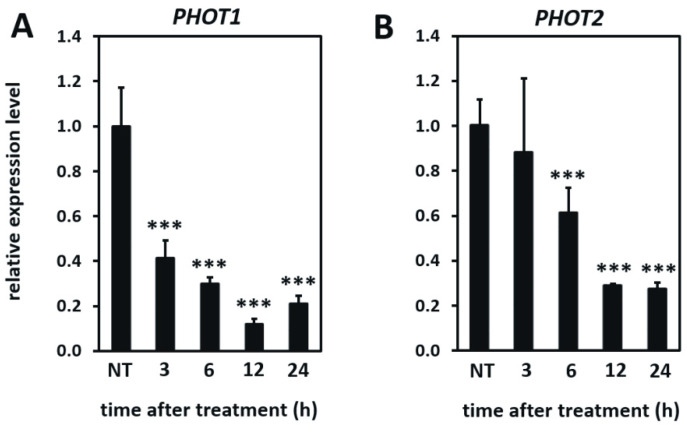
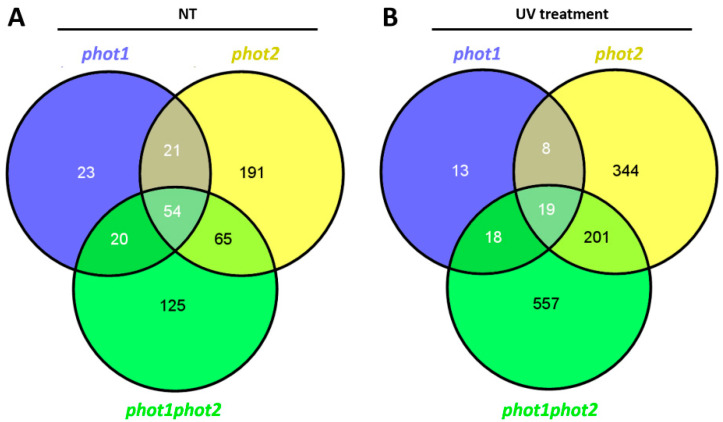
Phototropins are plasma membrane-associated photoreceptors of blue light and UV-A/B radiation. The genome encodes two phototropins, and , that mediate phototropism, chloroplast positioning, and stomatal opening. They are well characterized in terms of photomorphogenetic processes, but so far, little was known about their involvement in photosynthesis, oxidative stress responses, and cell death. By analyzing , single, and double mutants, we demonstrated that both phototropins influence the photochemical and non-photochemical reactions, photosynthetic pigments composition, stomata conductance, and water-use efficiency. After oxidative stress caused by UV-C treatment, and single and double mutants showed a significantly reduced accumulation of HO and more efficient photosynthetic electron transport compared to the wild type. However, all mutants exhibited higher levels of cell death four days after UV-C treatment, as well as deregulated gene expression. Taken together, our results reveal that on the one hand, both phot1 and phot2 contribute to the inhibition of UV-C-induced foliar cell death, but on the other hand, they also contribute to the maintenance of foliar HO levels and optimal intensity of photochemical reactions and non-photochemical quenching after an exposure to UV-C stress. Our data indicate a novel role for phototropins in the condition-dependent optimization of photosynthesis, growth, and water-use efficiency as well as oxidative stress and cell death response after UV-C exposure.
光受体是蓝光和 UV-A/B 辐射的质膜相关光受体。基因组编码两种光受体,和,介导向光性、叶绿体定位和气孔开放。它们在光形态发生过程方面得到了很好的描述,但到目前为止,它们在光合作用、氧化应激反应和细胞死亡中的作用知之甚少。通过分析、单突变体和双突变体,我们证明了两种光受体都影响光化学和非光化学反应、光合色素组成、气孔导度和水利用效率。在 UV-C 处理引起的氧化应激后,与野生型相比,和单突变体和双突变体的 HO 积累明显减少,光合作用电子传递更有效。然而,所有突变体在 UV-C 处理四天后表现出更高水平的细胞死亡,以及基因表达失调。总之,我们的结果表明,一方面,光受体 1 和光受体 2 有助于抑制 UV-C 诱导的叶片细胞死亡,但另一方面,它们也有助于维持叶片 HO 水平和光化学反应以及 UV-C 应激后非光化学猝灭的最佳强度。我们的数据表明,光受体在 UV-C 暴露后,光合作用、生长和水利用效率以及氧化应激和细胞死亡反应的条件依赖性优化中具有新的作用。