• 文献检索
  • 文档翻译
  • 深度研究
  • 学术资讯
  • Suppr Zotero 插件Zotero 插件
  • 邀请有礼
  • 套餐&价格
  • 历史记录
应用&插件
Suppr Zotero 插件Zotero 插件浏览器插件Mac 客户端Windows 客户端微信小程序
定价
高级版会员购买积分包购买API积分包
服务
文献检索文档翻译深度研究API 文档MCP 服务
关于我们
关于 Suppr公司介绍联系我们用户协议隐私条款
关注我们

Suppr 超能文献

核心技术专利:CN118964589B侵权必究
粤ICP备2023148730 号-1Suppr @ 2026

文献检索

告别复杂PubMed语法,用中文像聊天一样搜索,搜遍4000万医学文献。AI智能推荐,让科研检索更轻松。

立即免费搜索

文件翻译

保留排版,准确专业,支持PDF/Word/PPT等文件格式,支持 12+语言互译。

免费翻译文档

深度研究

AI帮你快速写综述,25分钟生成高质量综述,智能提取关键信息,辅助科研写作。

立即免费体验

通过数据融合和特征工程提高人体活动识别性能。

Improving Human Activity Recognition Performance by Data Fusion and Feature Engineering.

机构信息

Institute of Intelligent Machines, Hefei Institutes of Physical Science, Chinese Academy of Sciences, Hefei 230031, China.

University of Science and Technology of China, Hefei 230026, China.

出版信息

Sensors (Basel). 2021 Jan 20;21(3):692. doi: 10.3390/s21030692.

DOI:10.3390/s21030692
PMID:33498394
原文链接:https://pmc.ncbi.nlm.nih.gov/articles/PMC7864046/
Abstract

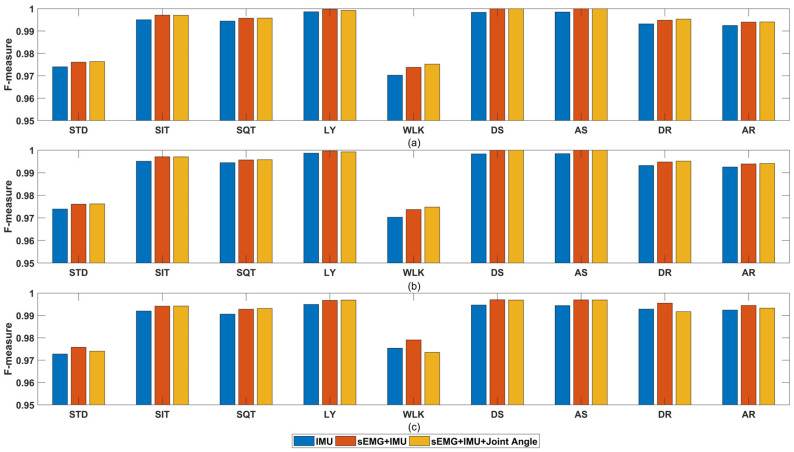
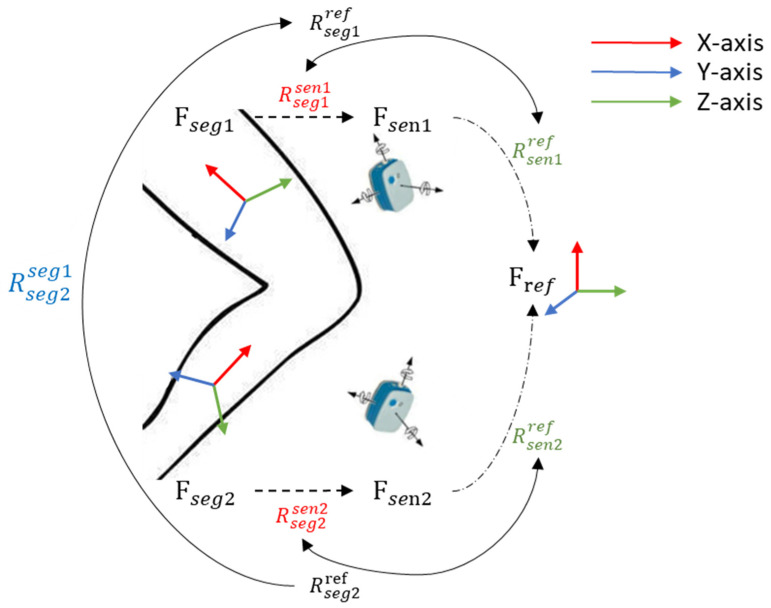
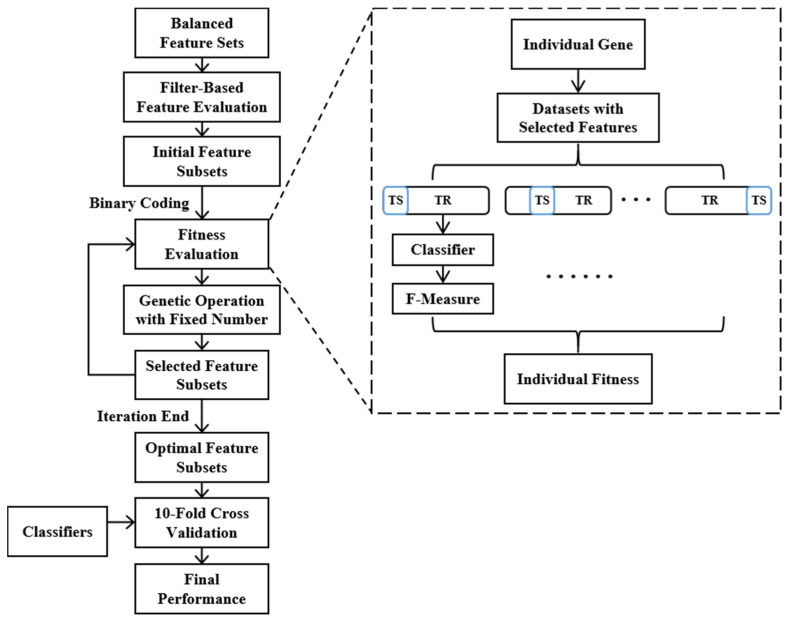
Human activity recognition (HAR) is essential in many health-related fields. A variety of technologies based on different sensors have been developed for HAR. Among them, fusion from heterogeneous wearable sensors has been developed as it is portable, non-interventional and accurate for HAR. To be applied in real-time use with limited resources, the activity recognition system must be compact and reliable. This requirement can be achieved by feature selection (FS). By eliminating irrelevant and redundant features, the system burden is reduced with good classification performance (CP). This manuscript proposes a two-stage genetic algorithm-based feature selection algorithm with a fixed activation number (GFSFAN), which is implemented on the datasets with a variety of time, frequency and time-frequency domain features extracted from the collected raw time series of nine activities of daily living (ADL). Six classifiers are used to evaluate the effects of selected feature subsets from different FS algorithms on HAR performance. The results indicate that GFSFAN can achieve good CP with a small size. A sensor-to-segment coordinate calibration algorithm and lower-limb joint angle estimation algorithm are introduced. Experiments on the effect of the calibration and the introduction of joint angle on HAR shows that both of them can improve the CP.

摘要

人体活动识别(HAR)在许多与健康相关的领域中至关重要。已经开发出了各种基于不同传感器的技术来进行 HAR。其中,基于异构可穿戴传感器的融合已得到发展,因为它便携、非介入且对 HAR 准确。为了在资源有限的情况下实时应用,活动识别系统必须紧凑可靠。这一要求可以通过特征选择(FS)来实现。通过消除不相关和冗余的特征,可以在保持良好分类性能(CP)的同时减轻系统负担。本文提出了一种基于两阶段遗传算法的具有固定激活数的特征选择算法(GFSFAN),该算法在从九项日常生活活动(ADL)的原始时间序列中提取的各种时间、频率和时频域特征的数据集上进行了实现。使用六种分类器来评估从不同 FS 算法中选择的特征子集对 HAR 性能的影响。结果表明,GFSFAN 可以实现小尺寸的良好 CP。介绍了一种传感器到段坐标校准算法和下肢关节角度估计算法。校准和关节角度引入对 HAR 效果的实验表明,这两者都可以提高 CP。
https://cdn.ncbi.nlm.nih.gov/pmc/blobs/2439/7864046/a8eab99e5272/sensors-21-00692-g010.jpg
https://cdn.ncbi.nlm.nih.gov/pmc/blobs/2439/7864046/a520af3a6510/sensors-21-00692-g001.jpg
https://cdn.ncbi.nlm.nih.gov/pmc/blobs/2439/7864046/cf7d46486013/sensors-21-00692-g002.jpg
https://cdn.ncbi.nlm.nih.gov/pmc/blobs/2439/7864046/79da107c8a13/sensors-21-00692-g003.jpg
https://cdn.ncbi.nlm.nih.gov/pmc/blobs/2439/7864046/d1d679786269/sensors-21-00692-g004.jpg
https://cdn.ncbi.nlm.nih.gov/pmc/blobs/2439/7864046/1c971052760a/sensors-21-00692-g005a.jpg
https://cdn.ncbi.nlm.nih.gov/pmc/blobs/2439/7864046/02d9528ba1aa/sensors-21-00692-g006.jpg
https://cdn.ncbi.nlm.nih.gov/pmc/blobs/2439/7864046/6fbc1d958a6c/sensors-21-00692-g007.jpg
https://cdn.ncbi.nlm.nih.gov/pmc/blobs/2439/7864046/ec5ae1e611df/sensors-21-00692-g008.jpg
https://cdn.ncbi.nlm.nih.gov/pmc/blobs/2439/7864046/2d92f6efdd58/sensors-21-00692-g009.jpg
https://cdn.ncbi.nlm.nih.gov/pmc/blobs/2439/7864046/a8eab99e5272/sensors-21-00692-g010.jpg
https://cdn.ncbi.nlm.nih.gov/pmc/blobs/2439/7864046/a520af3a6510/sensors-21-00692-g001.jpg
https://cdn.ncbi.nlm.nih.gov/pmc/blobs/2439/7864046/cf7d46486013/sensors-21-00692-g002.jpg
https://cdn.ncbi.nlm.nih.gov/pmc/blobs/2439/7864046/79da107c8a13/sensors-21-00692-g003.jpg
https://cdn.ncbi.nlm.nih.gov/pmc/blobs/2439/7864046/d1d679786269/sensors-21-00692-g004.jpg
https://cdn.ncbi.nlm.nih.gov/pmc/blobs/2439/7864046/1c971052760a/sensors-21-00692-g005a.jpg
https://cdn.ncbi.nlm.nih.gov/pmc/blobs/2439/7864046/02d9528ba1aa/sensors-21-00692-g006.jpg
https://cdn.ncbi.nlm.nih.gov/pmc/blobs/2439/7864046/6fbc1d958a6c/sensors-21-00692-g007.jpg
https://cdn.ncbi.nlm.nih.gov/pmc/blobs/2439/7864046/ec5ae1e611df/sensors-21-00692-g008.jpg
https://cdn.ncbi.nlm.nih.gov/pmc/blobs/2439/7864046/2d92f6efdd58/sensors-21-00692-g009.jpg
https://cdn.ncbi.nlm.nih.gov/pmc/blobs/2439/7864046/a8eab99e5272/sensors-21-00692-g010.jpg

相似文献

1
Improving Human Activity Recognition Performance by Data Fusion and Feature Engineering.通过数据融合和特征工程提高人体活动识别性能。
Sensors (Basel). 2021 Jan 20;21(3):692. doi: 10.3390/s21030692.
2
The Applications of Metaheuristics for Human Activity Recognition and Fall Detection Using Wearable Sensors: A Comprehensive Analysis.元启发式算法在可穿戴传感器人体活动识别和跌倒检测中的应用:综合分析。
Biosensors (Basel). 2022 Oct 3;12(10):821. doi: 10.3390/bios12100821.
3
Wearable Sensor-Based Human Activity Recognition in the Smart Healthcare System.基于可穿戴传感器的智能医疗保健系统中的人体活动识别。
Comput Intell Neurosci. 2022 Feb 24;2022:1391906. doi: 10.1155/2022/1391906. eCollection 2022.
4
Deep Wavelet Convolutional Neural Networks for Multimodal Human Activity Recognition Using Wearable Inertial Sensors.基于可穿戴惯性传感器的多模态人体活动识别的深度小波卷积神经网络
Sensors (Basel). 2023 Dec 9;23(24):9721. doi: 10.3390/s23249721.
5
Feature Fusion of a Deep-Learning Algorithm into Wearable Sensor Devices for Human Activity Recognition.深度学习算法融入可穿戴传感器设备进行人体活动识别。
Sensors (Basel). 2021 Dec 11;21(24):8294. doi: 10.3390/s21248294.
6
Applying Multivariate Segmentation Methods to Human Activity Recognition From Wearable Sensors' Data.应用多元分割方法于可穿戴传感器数据的人类活动识别。
JMIR Mhealth Uhealth. 2019 Feb 7;7(2):e11201. doi: 10.2196/11201.
7
w-HAR: An Activity Recognition Dataset and Framework Using Low-Power Wearable Devices.w-HAR:一个使用低功耗可穿戴设备的活动识别数据集和框架。
Sensors (Basel). 2020 Sep 18;20(18):5356. doi: 10.3390/s20185356.
8
Deep SE-BiLSTM with IFPOA Fine-Tuning for Human Activity Recognition Using Mobile and Wearable Sensors.基于移动和可穿戴传感器的人体活动识别中深度 SE-BiLSTM 与 IFPOA 微调
Sensors (Basel). 2023 Apr 27;23(9):4319. doi: 10.3390/s23094319.
9
A Wearable Inertial Sensor Approach for Locomotion and Localization Recognition on Physical Activity.基于可穿戴惯性传感器的身体活动中运动和定位识别方法。
Sensors (Basel). 2024 Jan 23;24(3):735. doi: 10.3390/s24030735.
10
Wearable Sensor-Based Residual Multifeature Fusion Shrinkage Networks for Human Activity Recognition.基于可穿戴传感器的残差多特征融合收缩网络的人体活动识别。
Sensors (Basel). 2024 Jan 24;24(3):758. doi: 10.3390/s24030758.

引用本文的文献

1
Quantifying Mild Cognitive Impairments in Older Adults Using Multi-modal Wearable Sensor Data in a Kitchen Environment.在厨房环境中使用多模态可穿戴传感器数据对老年人的轻度认知障碍进行量化。
medRxiv. 2025 May 25:2025.05.24.25328107. doi: 10.1101/2025.05.24.25328107.
2
A Comprehensive Dataset for Activity of Daily Living (ADL) Research Compiled by Unifying and Processing Multiple Data Sources.通过统一和处理多个数据源编译的用于日常生活活动(ADL)研究的综合数据集。
J Pers Med. 2025 May 21;15(5):210. doi: 10.3390/jpm15050210.
3
Smartphone IMU Sensors for Human Identification through Hip Joint Angle Analysis.

本文引用的文献

1
Design and Analysis for Fall Detection System Simplification.跌倒检测系统简化的设计与分析
J Vis Exp. 2020 Apr 6(158). doi: 10.3791/60361.
2
A Novel Method to Estimate the Full Knee Joint Kinematics Using Low Cost IMU Sensors for Easy to Implement Low Cost Diagnostics.一种使用低成本 IMU 传感器估算全膝关节运动学的新方法,易于实现低成本诊断。
Sensors (Basel). 2020 Mar 18;20(6):1683. doi: 10.3390/s20061683.
3
Sensor Data Acquisition and Multimodal Sensor Fusion for Human Activity Recognition Using Deep Learning.使用深度学习进行人体活动识别的传感器数据采集和多模态传感器融合。
基于髋关节角度分析的智能手机惯性测量单元传感器进行人体识别。
Sensors (Basel). 2024 Jul 23;24(15):4769. doi: 10.3390/s24154769.
4
A Robust Deep Feature Extraction Method for Human Activity Recognition Using a Wavelet Based Spectral Visualisation Technique.基于小波谱可视化技术的人体活动识别的稳健深度特征提取方法。
Sensors (Basel). 2024 Jul 4;24(13):4343. doi: 10.3390/s24134343.
5
Indoor Human Action Recognition Based on Dual Kinect V2 and Improved Ensemble Learning Method.基于双Kinect V2和改进集成学习方法的室内人体动作识别
Sensors (Basel). 2023 Nov 2;23(21):8921. doi: 10.3390/s23218921.
6
A Smartphone-Based sEMG Signal Analysis System for Human Action Recognition.基于智能手机的肌电信号分析系统用于人体动作识别。
Biosensors (Basel). 2023 Aug 11;13(8):805. doi: 10.3390/bios13080805.
7
A Study on the Influence of Sensors in Frequency and Time Domains on Context Recognition.传感器在频域和时域对上下文识别的影响研究。
Sensors (Basel). 2023 Jun 20;23(12):5756. doi: 10.3390/s23125756.
8
Human Activity Recognition Using Attention-Mechanism-Based Deep Learning Feature Combination.基于注意力机制的深度学习特征组合的人体活动识别。
Sensors (Basel). 2023 Jun 19;23(12):5715. doi: 10.3390/s23125715.
9
Reducing Power Line Interference from sEMG Signals Based on Synchrosqueezed Wavelet Transform.基于同步挤压小波变换的肌电信号的电力线干扰抑制。
Sensors (Basel). 2023 May 29;23(11):5182. doi: 10.3390/s23115182.
10
Human Motion Pattern Recognition and Feature Extraction: An Approach Using Multi-Information Fusion.人体运动模式识别与特征提取:一种使用多信息融合的方法。
Micromachines (Basel). 2022 Jul 29;13(8):1205. doi: 10.3390/mi13081205.
Sensors (Basel). 2019 Apr 10;19(7):1716. doi: 10.3390/s19071716.
4
Towards Human Activity Recognition: A Hierarchical Feature Selection Framework.迈向人类活动识别:一个分层特征选择框架。
Sensors (Basel). 2018 Oct 25;18(11):3629. doi: 10.3390/s18113629.
5
Evaluation of feature extraction techniques and classifiers for finger movement recognition using surface electromyography signal.基于表面肌电信号的手指运动识别的特征提取技术和分类器评估。
Med Biol Eng Comput. 2018 Dec;56(12):2259-2271. doi: 10.1007/s11517-018-1857-5. Epub 2018 Jun 18.
6
Text feature extraction based on deep learning: a review.基于深度学习的文本特征提取:综述。
EURASIP J Wirel Commun Netw. 2017;2017(1):211. doi: 10.1186/s13638-017-0993-1. Epub 2017 Dec 15.
7
Evaluation of Feature Extraction and Recognition for Activity Monitoring and Fall Detection Based on Wearable sEMG Sensors.基于可穿戴表面肌电传感器的活动监测和跌倒检测的特征提取与识别评估。
Sensors (Basel). 2017 May 27;17(6):1229. doi: 10.3390/s17061229.
8
A Comprehensive Analysis on Wearable Acceleration Sensors in Human Activity Recognition.可穿戴加速度传感器在人体活动识别中的综合分析
Sensors (Basel). 2017 Mar 7;17(3):529. doi: 10.3390/s17030529.
9
Alignment-Free, Self-Calibrating Elbow Angles Measurement Using Inertial Sensors.使用惯性传感器进行无对齐、自校准的肘部角度测量
IEEE J Biomed Health Inform. 2017 Mar;21(2):312-319. doi: 10.1109/JBHI.2016.2639537. Epub 2016 Dec 14.
10
Increasing trend of wearables and multimodal interface for human activity monitoring: A review.可穿戴设备和多模态接口用于人体活动监测的增长趋势:综述。
Biosens Bioelectron. 2017 Apr 15;90:298-307. doi: 10.1016/j.bios.2016.12.001. Epub 2016 Dec 2.