SW · Contents Basic Technology Research Group, Electronics and Telecommunications Research Institute, Daejeon 34129, Korea.
Sensors (Basel). 2019 Apr 10;19(7):1716. doi: 10.3390/s19071716.
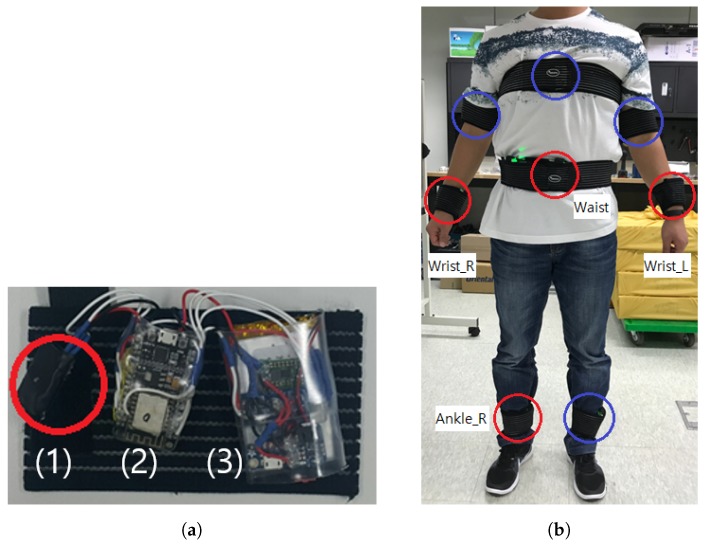
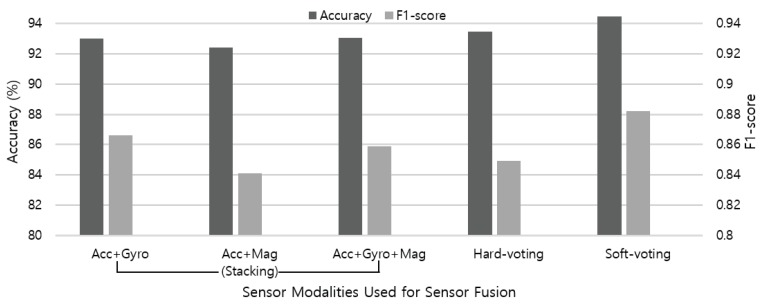
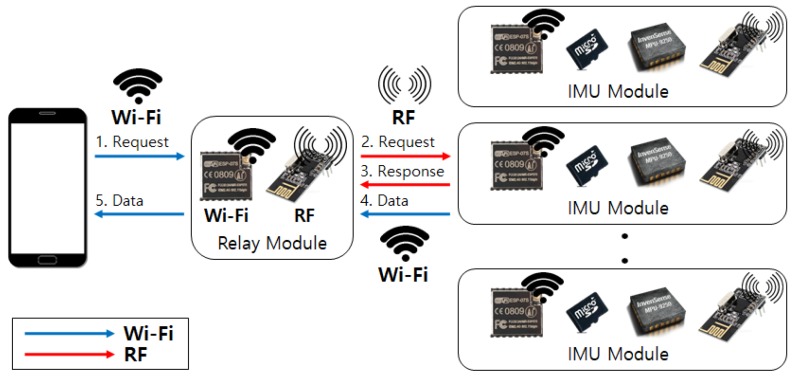
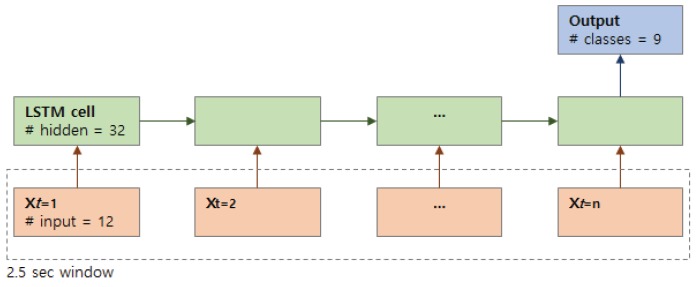
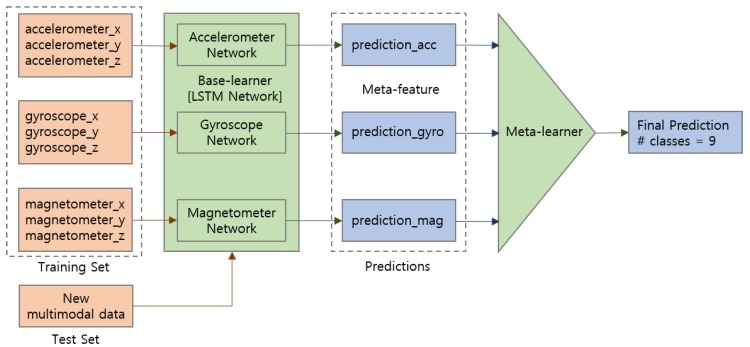
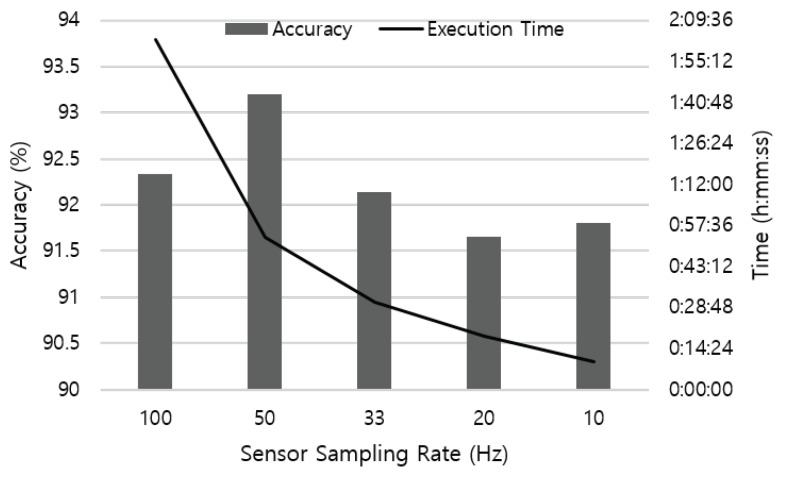
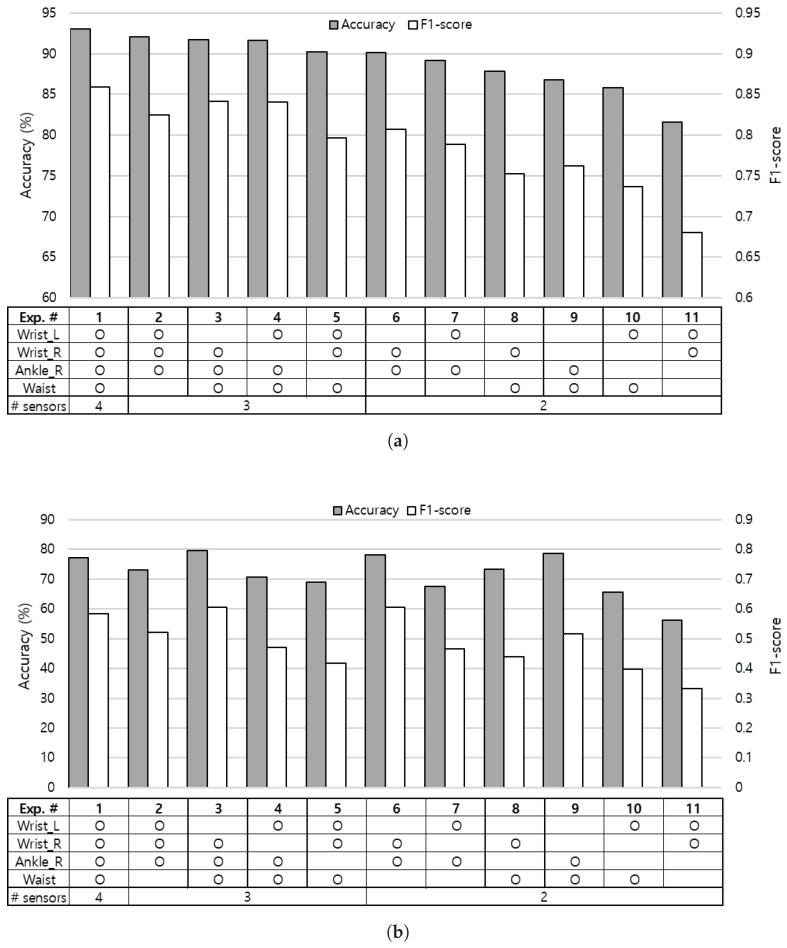
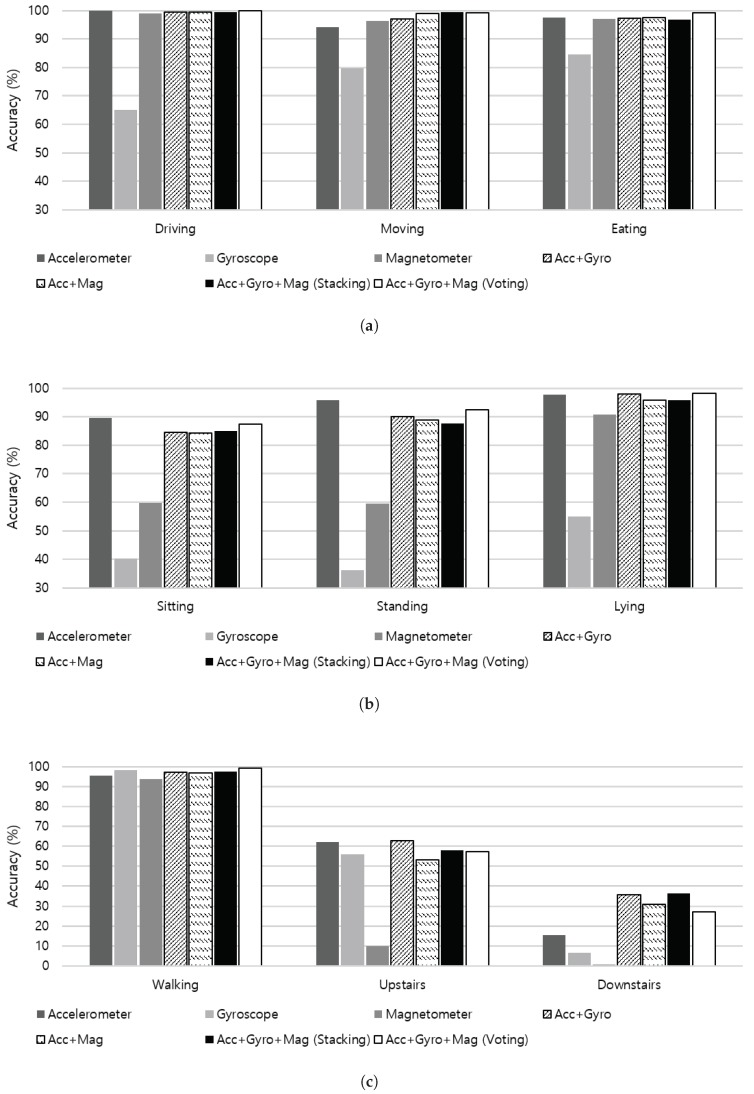
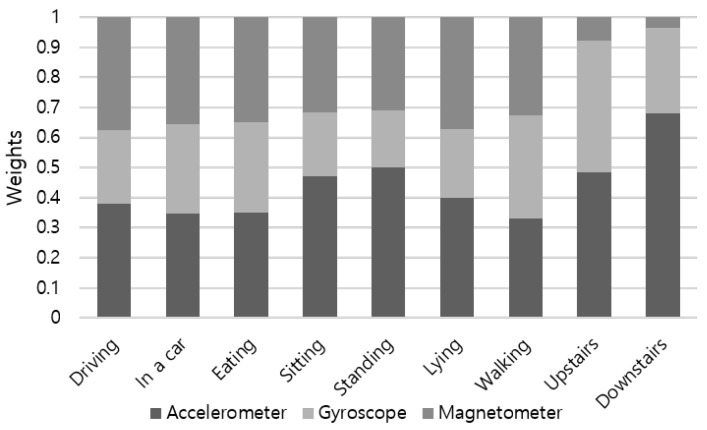
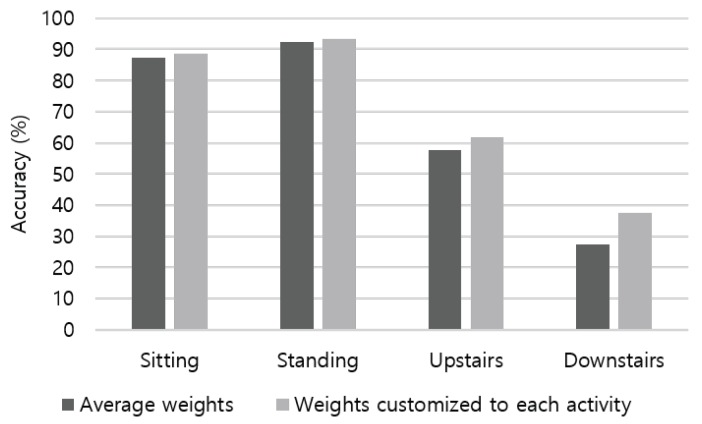
In this paper, we perform a systematic study about the on-body sensor positioning and data acquisition details for Human Activity Recognition (HAR) systems. We build a testbed that consists of eight body-worn Inertial Measurement Units (IMU) sensors and an Android mobile device for activity data collection. We develop a Long Short-Term Memory (LSTM) network framework to support training of a deep learning model on human activity data, which is acquired in both real-world and controlled environments. From the experiment results, we identify that activity data with sampling rate as low as 10 Hz from four sensors at both sides of wrists, right ankle, and waist is sufficient in recognizing Activities of Daily Living (ADLs) including eating and driving activity. We adopt a two-level ensemble model to combine class-probabilities of multiple sensor modalities, and demonstrate that a classifier-level sensor fusion technique can improve the classification performance. By analyzing the accuracy of each sensor on different types of activity, we elaborate custom weights for multimodal sensor fusion that reflect the characteristic of individual activities.
在本文中,我们针对人体活动识别(HAR)系统进行了系统的研究,包括体上传感器定位和数据采集细节。我们构建了一个测试平台,该平台由八个佩戴在身上的惯性测量单元(IMU)传感器和一个用于活动数据采集的 Android 移动设备组成。我们开发了一个长短期记忆(LSTM)网络框架,以支持在真实和受控环境中采集的人体活动数据上进行深度学习模型的训练。从实验结果中,我们发现仅从手腕两侧、右脚踝和腰部的四个传感器以 10 Hz 的采样率获取的数据就足以识别日常生活活动(ADL),包括进食和驾驶活动。我们采用两级集成模型来组合多个传感器模式的类别概率,并证明分类器级别的传感器融合技术可以提高分类性能。通过分析不同类型活动中每个传感器的准确性,我们详细说明了反映各个活动特征的多模态传感器融合的自定义权重。