Department of Epidemiology, Johns Hopkins Bloomberg School of Public Health, Baltimore, MD 21205, USA.
Infectious Diseases Division, icddr,b, Dhaka 1212, Bangladesh.
Viruses. 2021 Jan 23;13(2):169. doi: 10.3390/v13020169.
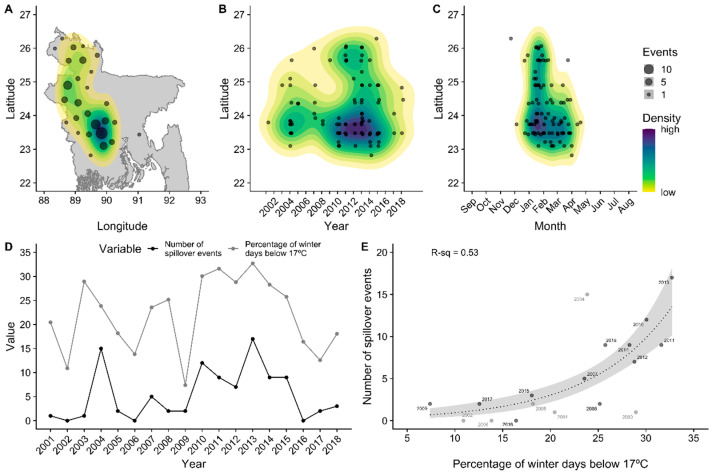
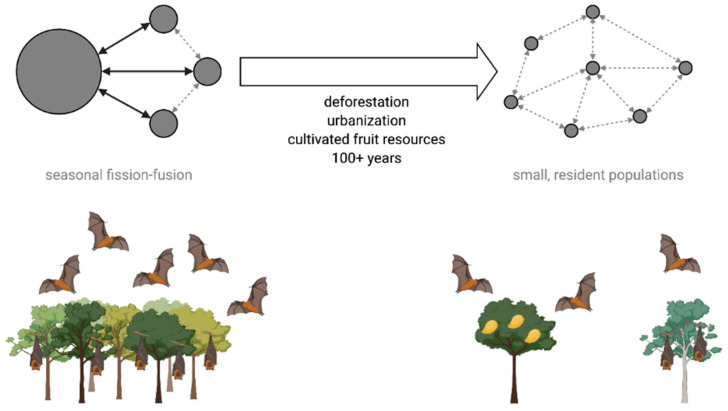
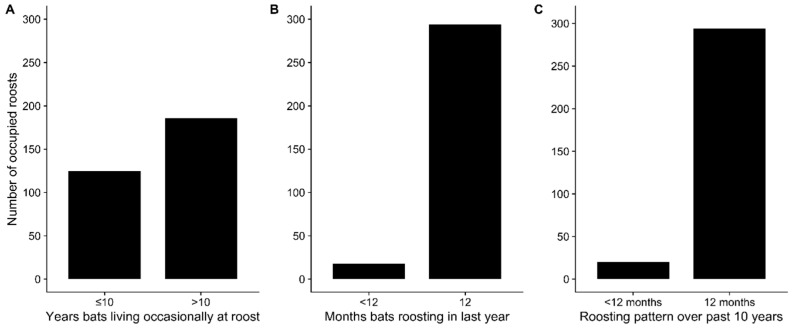
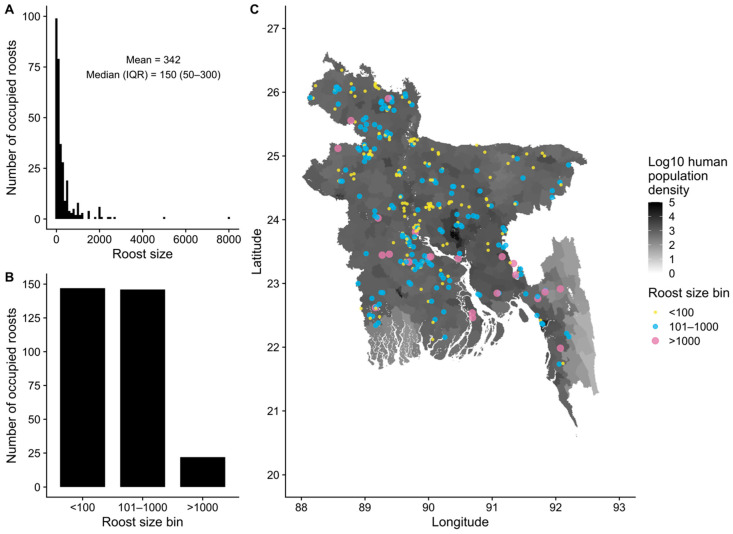
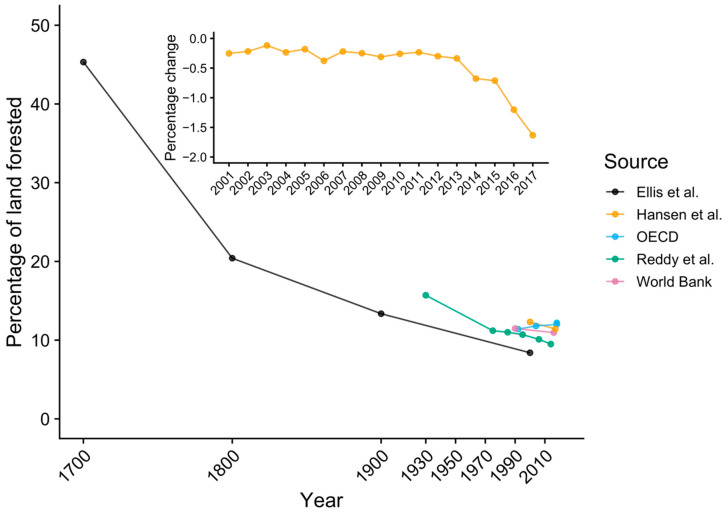
Nipah virus is a bat-borne paramyxovirus that produces yearly outbreaks of fatal encephalitis in Bangladesh. Understanding the ecological conditions that lead to spillover from bats to humans can assist in designing effective interventions. To investigate the current and historical processes that drive Nipah spillover in Bangladesh, we analyzed the relationship among spillover events and climatic conditions, the spatial distribution and size of roosts, and patterns of land-use change in Bangladesh over the last 300 years. We found that 53% of annual variation in winter spillovers is explained by winter temperature, which may affect bat behavior, physiology, and human risk behaviors. We infer from changes in forest cover that a progressive shift in bat roosting behavior occurred over hundreds of years, producing the current system where a majority of populations are small (median of 150 bats), occupy roost sites for 10 years or more, live in areas of high human population density, and opportunistically feed on cultivated food resources-conditions that promote viral spillover. Without interventions, continuing anthropogenic pressure on bat populations similar to what has occurred in Bangladesh could result in more regular spillovers of other bat viruses, including Hendra and Ebola viruses.
尼帕病毒是一种由蝙蝠传播的副黏液病毒,会导致孟加拉国每年爆发致命脑炎。了解导致病毒从蝙蝠传播到人类的生态条件,可以帮助设计有效的干预措施。为了调查导致孟加拉国尼帕病毒溢出的当前和历史进程,我们分析了溢出事件与气候条件、蝙蝠栖息地的空间分布和大小,以及过去 300 年来孟加拉国土地利用变化模式之间的关系。我们发现,冬季溢出事件的年变化有 53%可以用冬季温度来解释,冬季温度可能会影响蝙蝠的行为、生理和人类的风险行为。我们推断,由于森林覆盖的变化,蝙蝠栖息行为在数百年间发生了渐进式转变,从而形成了当前的系统,即大多数蝙蝠数量较少(中位数为 150 只),栖息场所长达 10 年或更长时间,生活在人口密度高的地区,并偶然以农作物为食,这些条件促进了病毒的溢出。如果不采取干预措施,类似孟加拉国发生的对蝙蝠种群的持续人为压力可能会导致其他蝙蝠病毒(包括亨德拉病毒和埃博拉病毒)更频繁地溢出。