González-García Yolanda, Cárdenas-Álvarez Claribel, Cadenas-Pliego Gregorio, Benavides-Mendoza Adalberto, Cabrera-de-la-Fuente Marcelino, Sandoval-Rangel Alberto, Valdés-Reyna Jesús, Juárez-Maldonado Antonio
Doctorado en Ciencias en Agricultura Protegida, Universidad Autónoma Agraria Antonio Narro, Saltillo, Coahuila 25315, Mexico.
Maestría en Ciencias en Horticultura, Universidad Autónoma Agraria Antonio Narro, Saltillo, Coahuila 25315, Mexico.
Plants (Basel). 2021 Jan 23;10(2):217. doi: 10.3390/plants10020217.
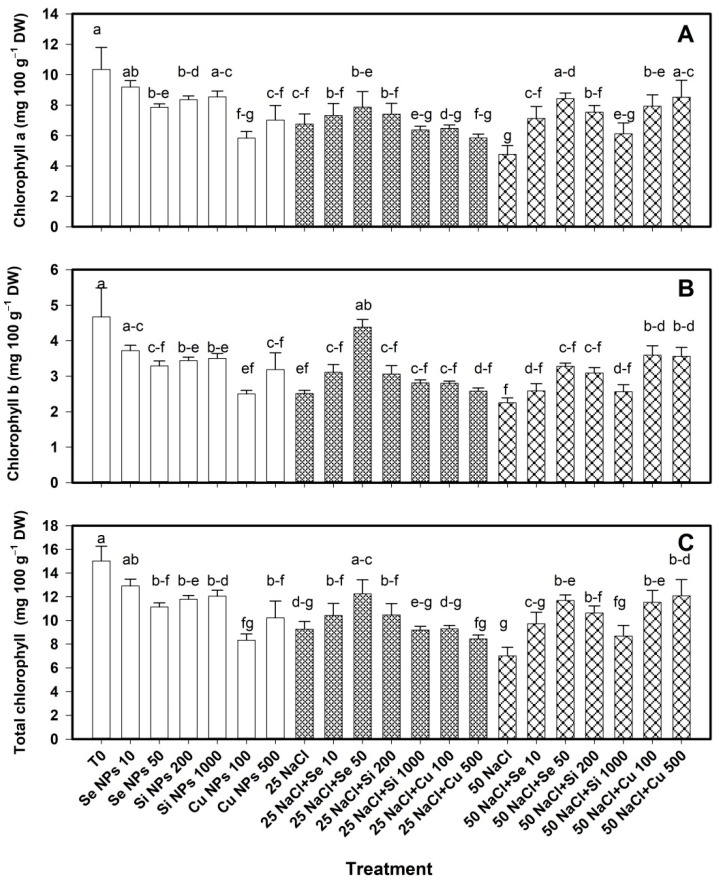
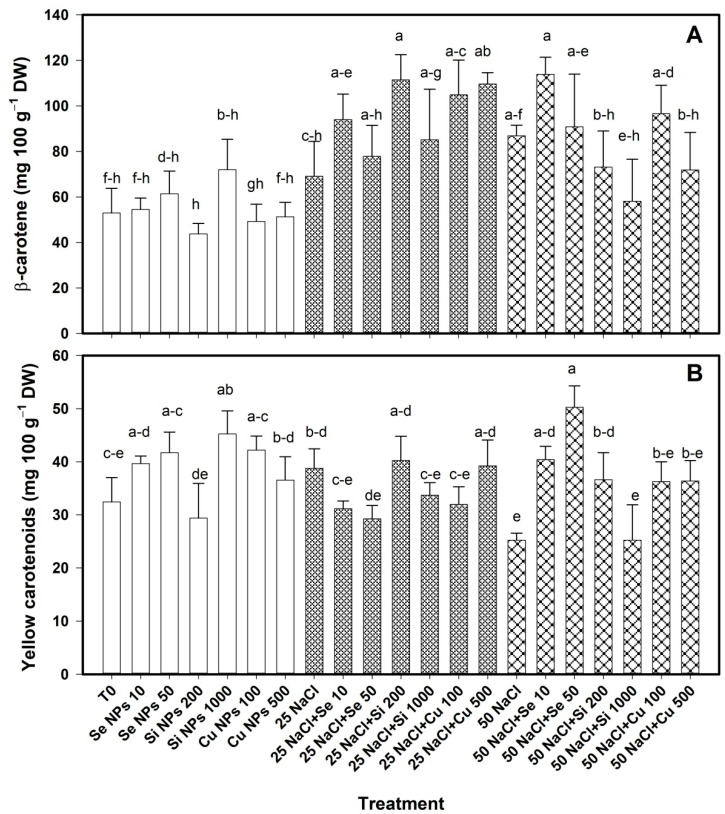
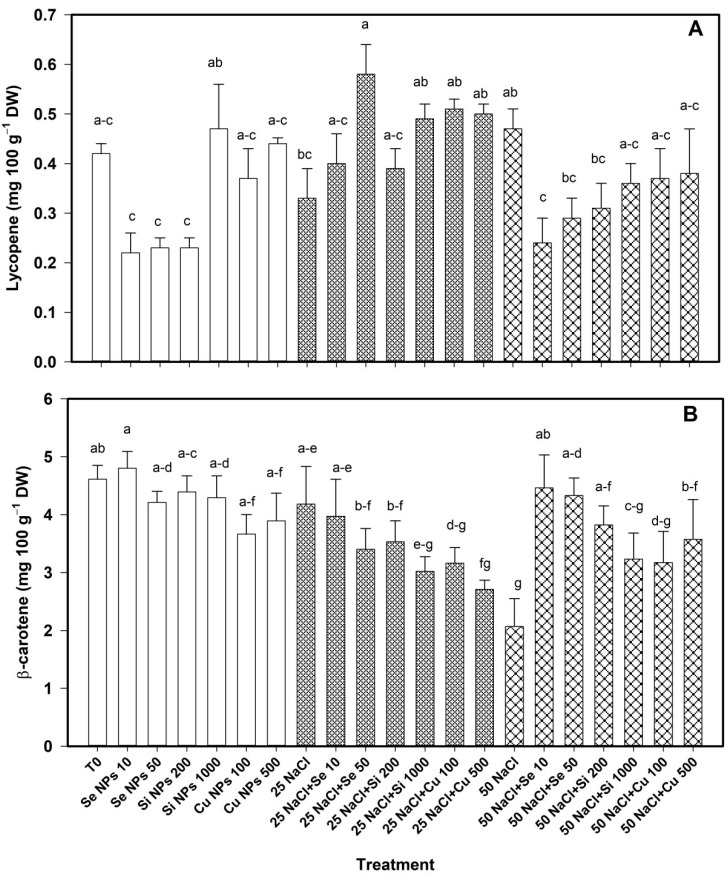
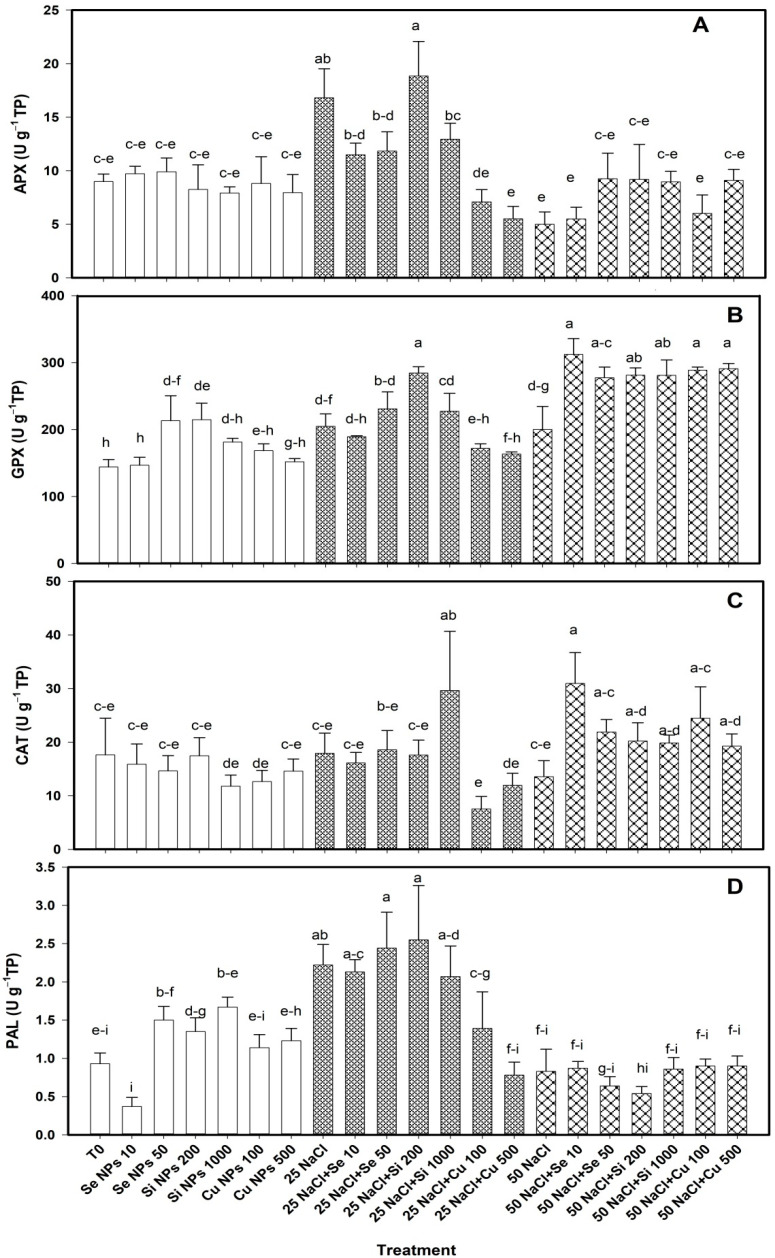
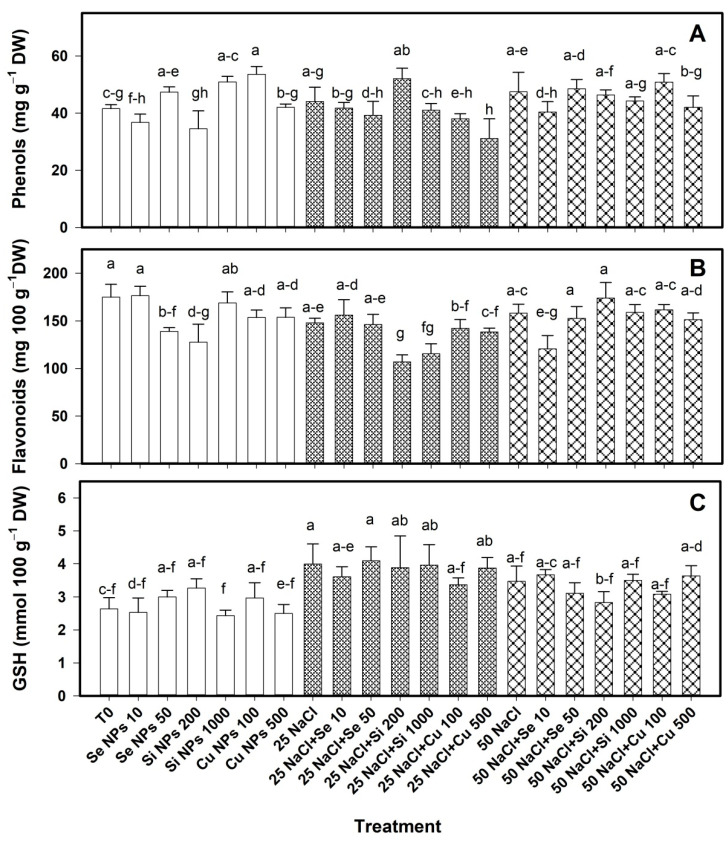
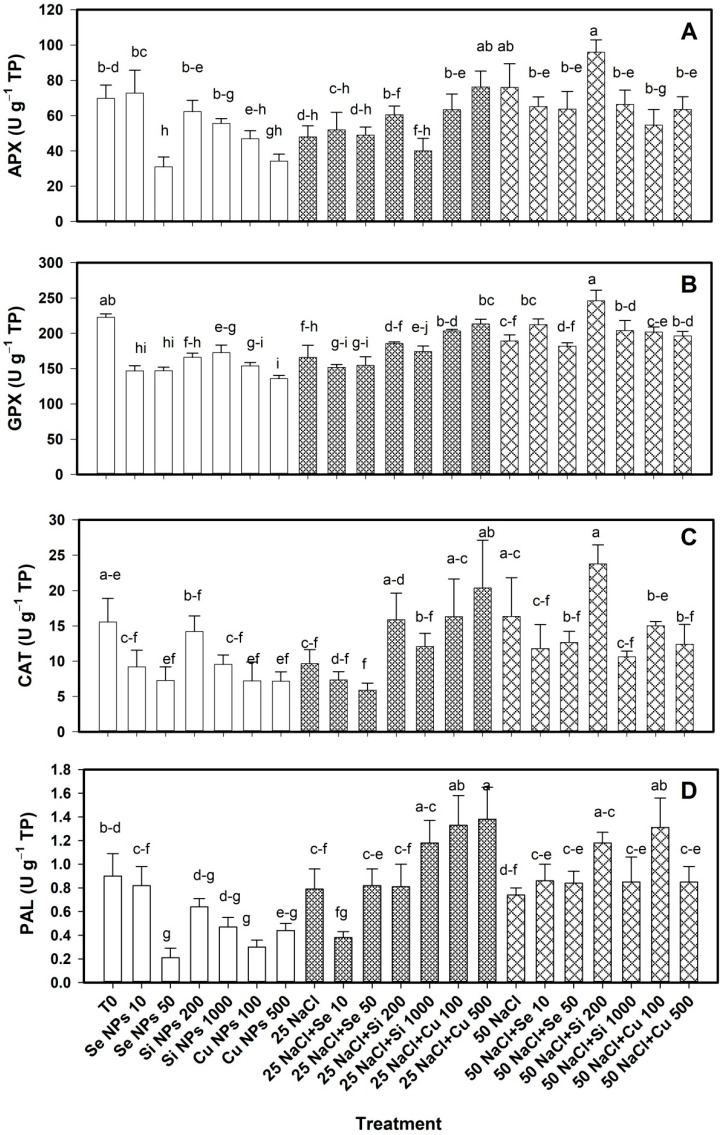
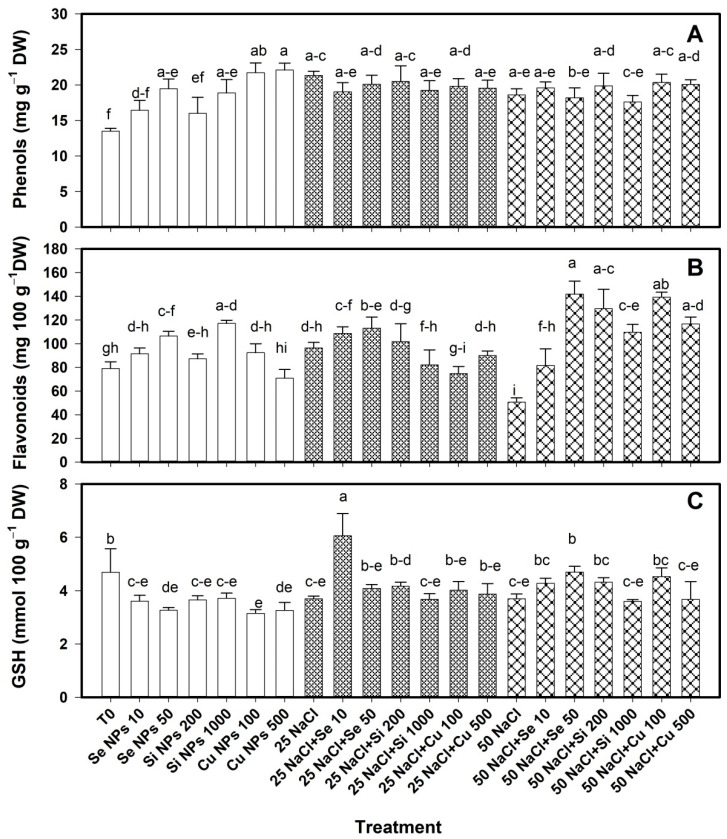
The bell pepper is a vegetable with high antioxidant content, and its consumption is important because it can reduce the risk of certain diseases in humans. Plants can be affected by different types of stress, whether biotic or abiotic. Among the abiotic factors, there is saline stress that affects the metabolism and physiology of plants, which causes damage, decreasing productivity and quality of fruits. The objective of this work was to evaluate the application of selenium, silicon and copper nanoparticles and saline stress on the bioactive compounds of bell pepper fruits. The bell pepper plants were exposed to saline stress (25 mM NaCl and 50 mM) in the nutrient solution throughout the crop cycle. The nanoparticles were applied drenching solution of these to substrate (Se NPs 10 and 50 mg L, Si NPs 200 and 1000 mg L, Cu NPs 100 and 500 mg L). The results show that saline stress reduces chlorophylls, lycopene, and β-carotene in leaves; but increased the activity of some enzymes (e.g., glutathione peroxidase and phenylalanine ammonia lyase, and glutathione). In fruits, saline stress decreased flavonoids and glutathione. The nanoparticles increased chlorophylls, lycopene and glutathione peroxidase activity in the leaves; and ascorbate peroxidase, glutathione peroxidase, catalase and phenylalanine ammonia lyase activity, and also phenols, flavonoids, glutathione, β-carotene, yellow carotenoids in fruits. The application of nanoparticles to bell pepper plants under saline stress is efficient to increase the content of bioactive compounds in fruits.
甜椒是一种抗氧化剂含量高的蔬菜,食用甜椒很重要,因为它可以降低人类患某些疾病的风险。植物会受到不同类型的胁迫影响,无论是生物胁迫还是非生物胁迫。在非生物因素中,盐胁迫会影响植物的新陈代谢和生理功能,造成损害,降低果实的产量和品质。这项工作的目的是评估硒、硅和铜纳米颗粒的应用以及盐胁迫对甜椒果实生物活性化合物的影响。在整个作物生长周期中,将甜椒植株置于营养液中的盐胁迫环境(25 mM NaCl和50 mM)下。将这些纳米颗粒制成浸提液施用于基质(硒纳米颗粒10和50 mg/L,硅纳米颗粒200和1000 mg/L,铜纳米颗粒100和500 mg/L)。结果表明,盐胁迫会降低叶片中的叶绿素、番茄红素和β-胡萝卜素含量;但会提高一些酶(如谷胱甘肽过氧化物酶、苯丙氨酸解氨酶和谷胱甘肽)的活性。在果实中,盐胁迫会降低类黄酮和谷胱甘肽的含量。纳米颗粒增加了叶片中的叶绿素、番茄红素和谷胱甘肽过氧化物酶活性;还提高了果实中的抗坏血酸过氧化物酶、谷胱甘肽过氧化物酶、过氧化氢酶和苯丙氨酸解氨酶活性,以及酚类、类黄酮、谷胱甘肽、β-胡萝卜素、黄色类胡萝卜素的含量。在盐胁迫下,将纳米颗粒施用于甜椒植株可有效提高果实中生物活性化合物的含量。