Department of Social Geography and Regional Development, Faculty of Science, University of Ostrava, Chittussiho 10, 710 00 Ostrava, Czech Republic.
AGEL a. s., Jungmannova 28/17, Nové Město, 110 00 Praha 1, Czech Republic.
Int J Environ Res Public Health. 2021 Jan 22;18(3):974. doi: 10.3390/ijerph18030974.
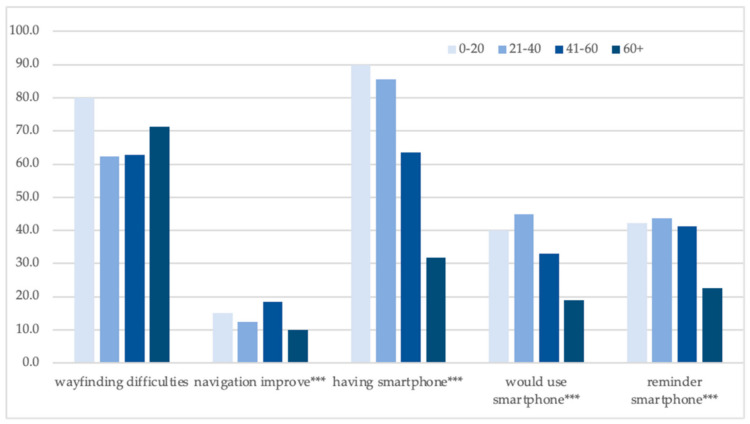
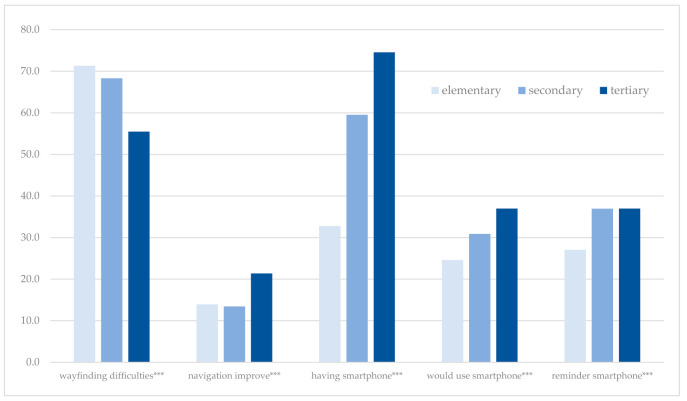
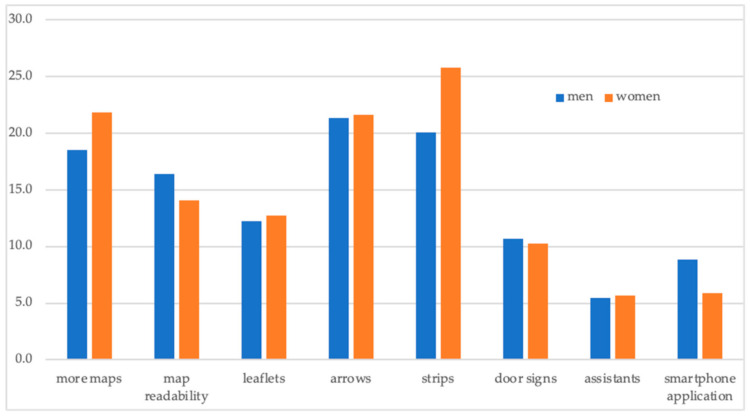
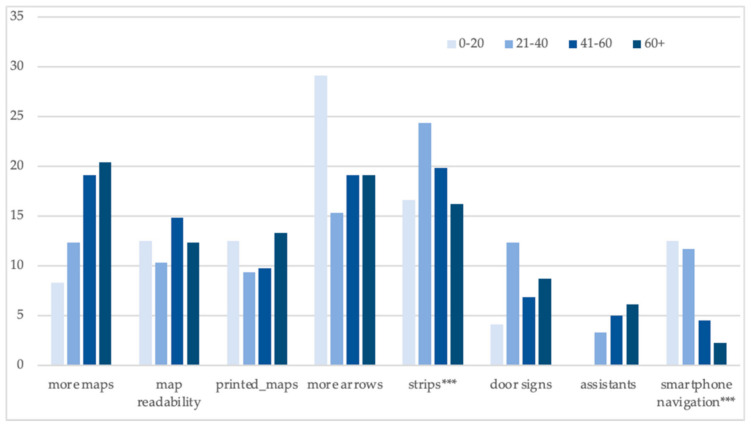
In this paper, we map navigational needs and preferences of patients and visitors to evaluate the appropriateness of a smartphone navigation application in the hospital in contrast to other, more traditional navigational cues. We test the effects of sociodemographic variables (age, gender, education) on wayfinding strategies and preferences of respondents (using chi2 tests). Empirical research is based on the survey among 928 patients/visitors of the Vítkovice Hospital in Ostrava, Czechia. We found a relatively weak association between gender and wayfinding-no major differences between men and women in navigational preferences were found. Age was the most important predictor of wayfinding. Respondents in the over-60-year age group were characteristic of a lower interest in changes of the navigational system and low willingness to use mobile applications for navigation-people between 41 years and 60 years were the biggest supporters of changes. Correspondingly, demand for improvement of navigation (including a mobile application) was positively correlated with educational level.
在本文中,我们绘制了患者和访客的导航需求和偏好图,以评估智能手机导航应用在医院中的适宜性,与其他更传统的导航提示相比。我们测试了社会人口统计学变量(年龄、性别、教育)对受访者寻路策略和偏好的影响(使用卡方检验)。实证研究基于对捷克奥斯特拉发维特科维采医院 928 名患者/访客的调查。我们发现,性别和寻路之间的关联较弱,男性和女性在导航偏好方面没有发现重大差异。年龄是寻路的最重要预测因素。60 岁以上的受访者对导航系统的变化兴趣较低,使用移动应用程序进行导航的意愿较低,而 41 岁至 60 岁的受访者是变化的最大支持者。相应地,对导航(包括移动应用程序)的改进需求与教育水平呈正相关。