Pan Ye, Steed Anthony
Virtual Environments and Computer Graphics Group, Department of Computer Science, University College London, London, United Kingdom.
Front Robot AI. 2019 Oct 30;6:104. doi: 10.3389/frobt.2019.00104. eCollection 2019.
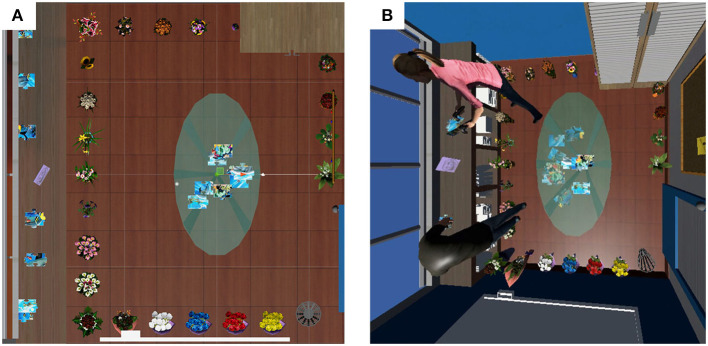
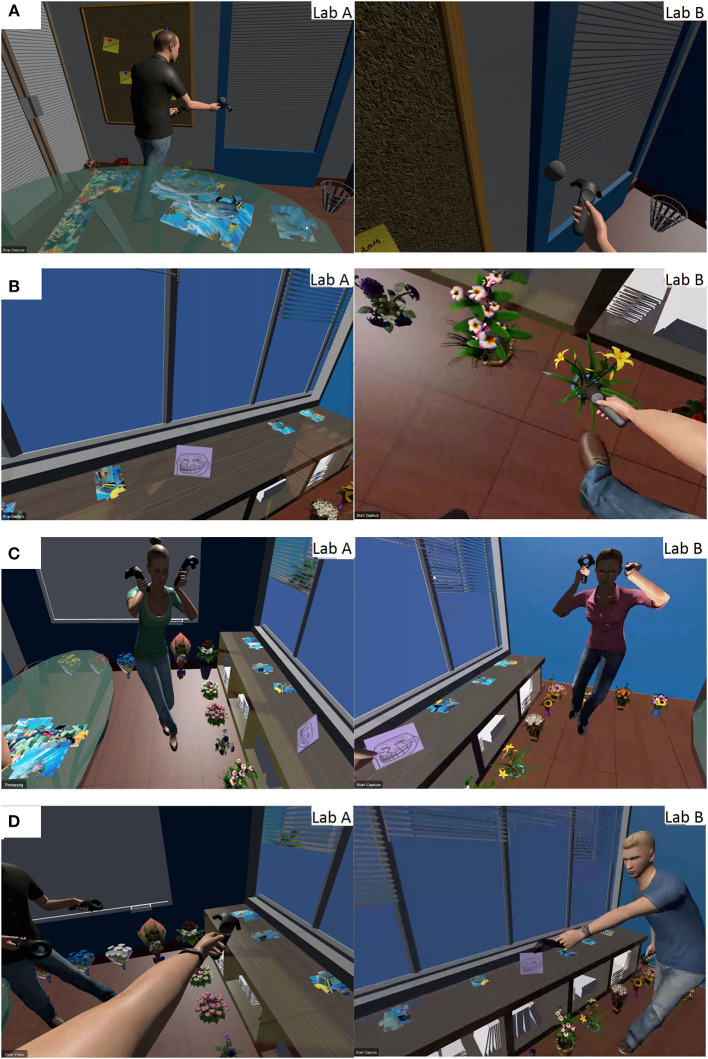
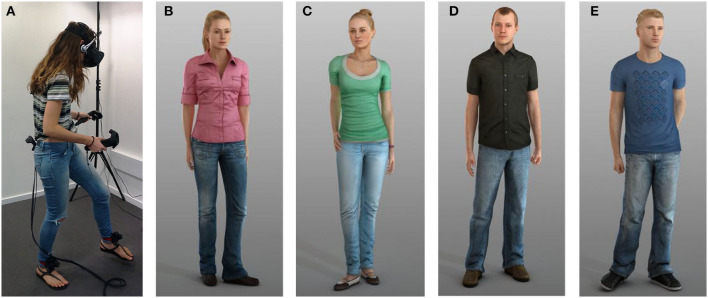
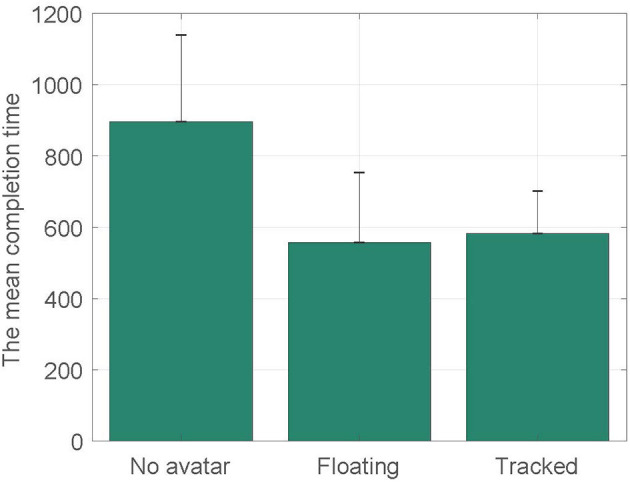
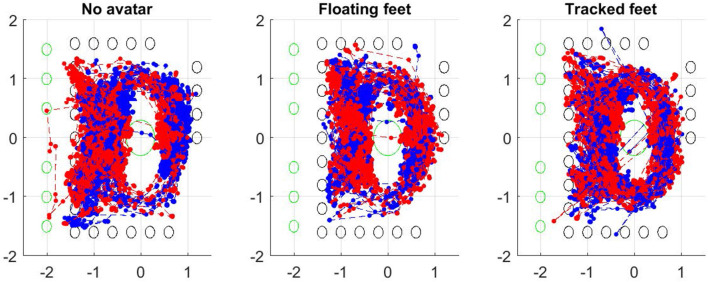
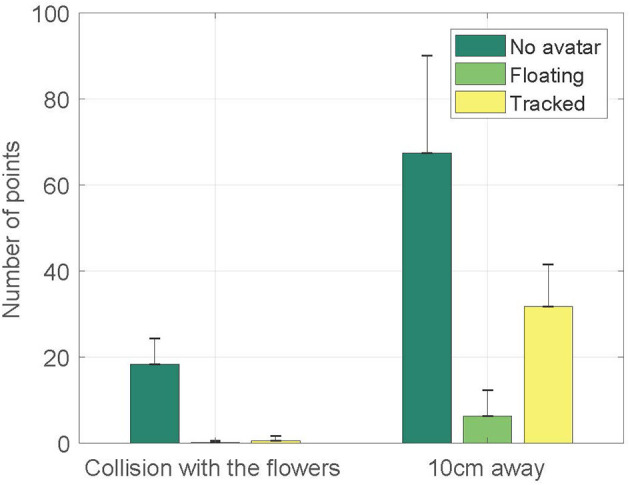
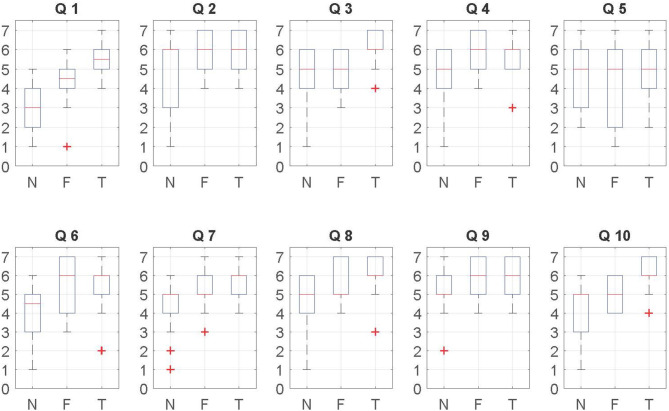
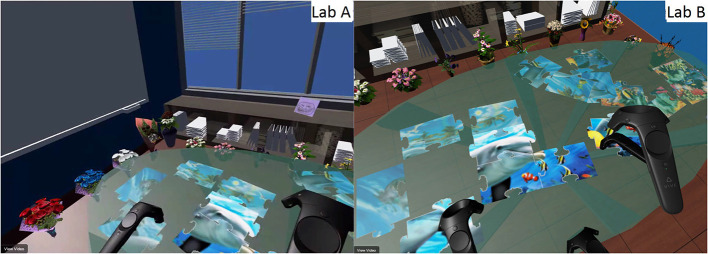
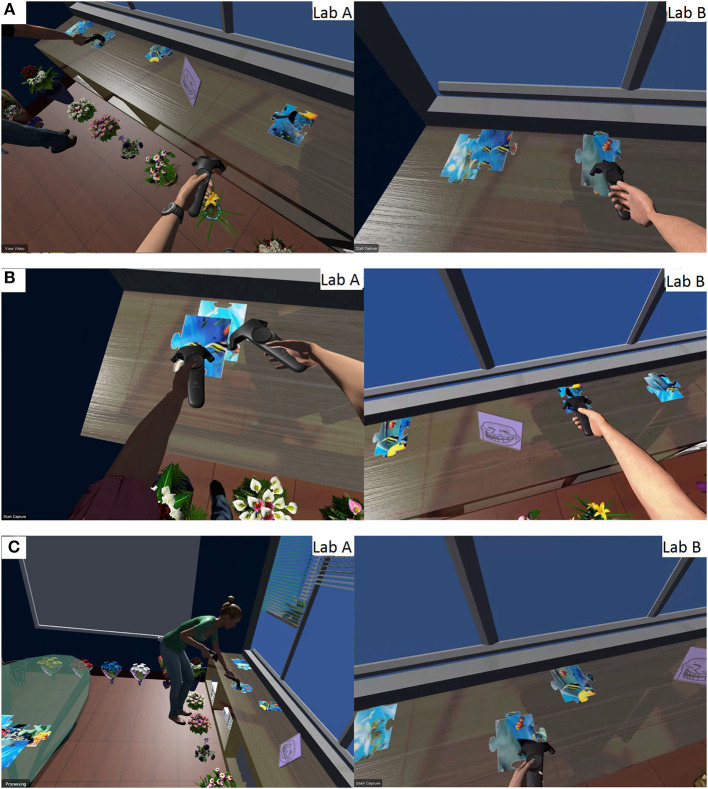
The use of a self-avatar representation in head-mounted displays has been shown to have important effects on user behavior. However, relatively few studies focus on feet and legs. We implemented a shared virtual reality for consumer virtual reality systems where each user could be represented by a gender-matched self-avatar controlled by multiple trackers. The self-avatar allowed users to see their feet, legs and part of their torso when they looked down. We implemented an experiment where participants worked together to solve jigsaw puzzles. Participants experienced either no-avatar, a self-avatar with floating feet, or a self-avatar with tracked feet, in a between-subjects manipulation. First, we found that participants could solve the puzzle more quickly with self-avatars than without self-avatars; but there was no significant difference between the latter two conditions, solely on task completion time. Second, we found participants with tracked feet placed their feet statistically significantly closer to obstacles than participants with floating feet, whereas participants who did not have a self-avatar usually ignored obstacles. Our post-experience questionnaire results confirmed that the use of a self-avatar has important effects on presence and interaction. Together the results show that although the impact of animated legs might be subtle, it does change how users behave around obstacles. This could have important implications for the design of virtual spaces for applications such as training or behavioral analysis.
头戴式显示器中使用自我虚拟形象已被证明对用户行为有重要影响。然而,相对较少的研究关注脚部和腿部。我们为消费级虚拟现实系统实现了一种共享虚拟现实,其中每个用户都可以由多个追踪器控制的性别匹配的自我虚拟形象来表示。当用户向下看时,自我虚拟形象能让他们看到自己的脚、腿和部分躯干。我们进行了一项实验,让参与者一起合作解决拼图游戏。在一项被试间操纵中,参与者分别体验无虚拟形象、脚漂浮的自我虚拟形象或脚可追踪的自我虚拟形象。首先,我们发现与没有自我虚拟形象相比,参与者使用自我虚拟形象时能更快地解决拼图;但仅在任务完成时间上,后两种情况之间没有显著差异。其次,我们发现脚可追踪的参与者在统计学上比脚漂浮的参与者更靠近障碍物放置他们的脚,而没有自我虚拟形象的参与者通常会忽略障碍物。我们的实验后问卷调查结果证实,使用自我虚拟形象对临场感和交互有重要影响。综合结果表明,尽管动画腿部的影响可能很微妙,但它确实会改变用户在障碍物周围的行为方式。这可能对诸如训练或行为分析等应用的虚拟空间设计具有重要意义。