Shah Vishank Arun, Nalleballe Krishna, Onteddu Sanjeeva Reddy
University of Arkansas for Medical Sciences, USA.
Brain Behav Immun Health. 2021 Mar;12:100207. doi: 10.1016/j.bbih.2021.100207. Epub 2021 Jan 19.
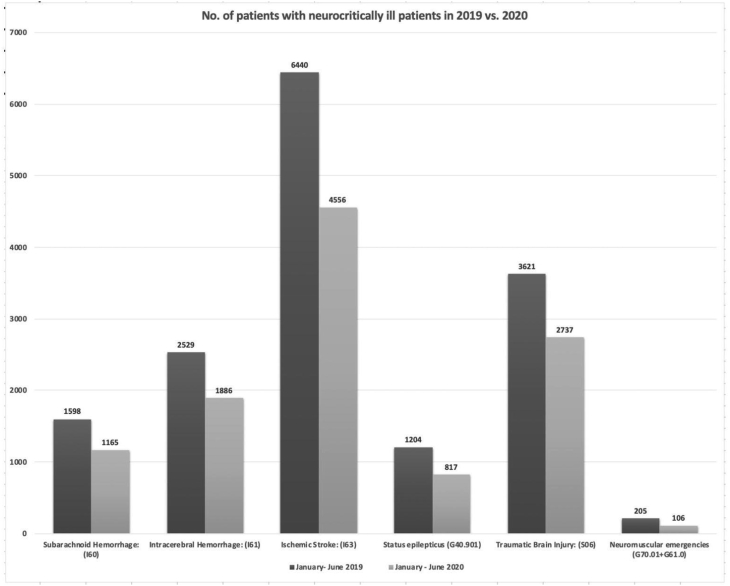
We aimed to evaluate utilization of inpatient hospital and critical care services among critically ill neurologic patients during the COVID-19 pandemic. We hypothesized, based on prior observations among ischemic stroke patients, that there would be significant decline in critically ill neurologic patients presenting to hospitals during the pandemic which may impact outcomes.
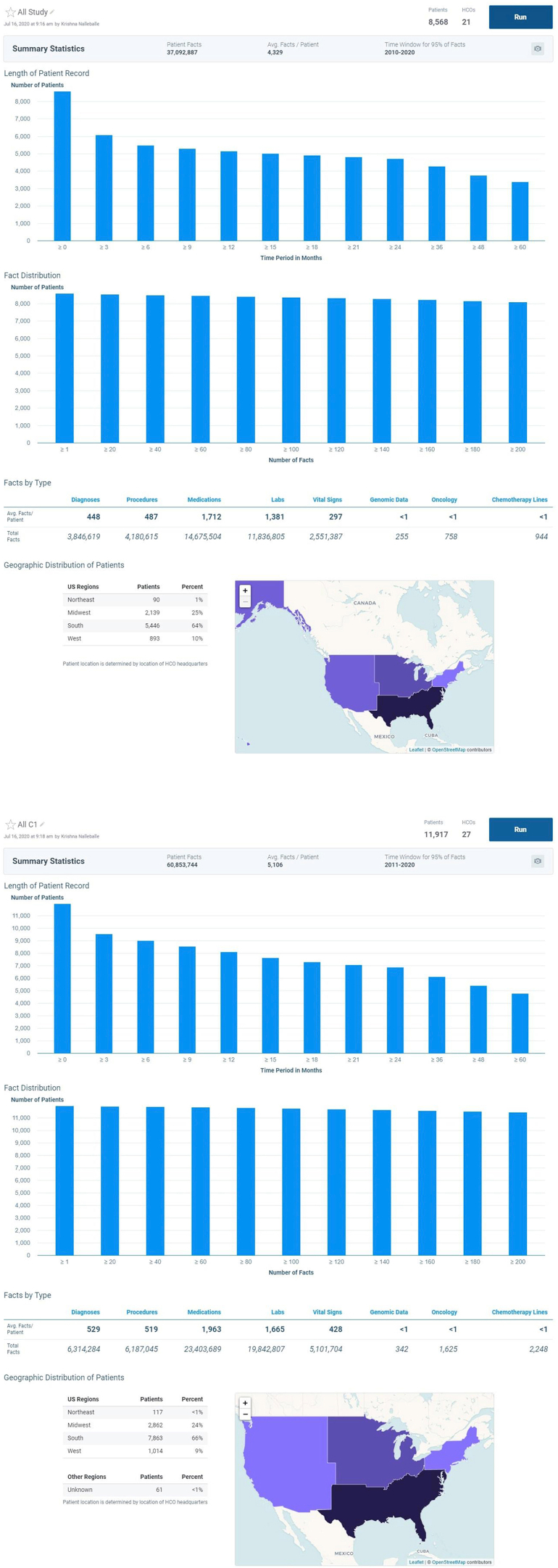
We used TriNetX, a large research network, collecting real-time electronic medical records data. We extracted data on utilization of critical care and hospital inpatient services among cohorts of patients with common neurocritical conditions between January-June 2020 and compared it to data from similar time-frames in previous years. We also compared clinical outcomes, comprising need for intubation and 30-day mortality, among these cohorts.
We found a 28.1% reduction in intensive care unit (ICU) admissions with critical neurologic illnesses in 2020 when compared to 2019 (8568 vs. 11,917 patients, p < 0.0001) and a 34.4% reduction compared to 2018 (8568 vs. 13,064 patients, p < 0.0001). However, there was no statistically significant difference in mortality (2020: 12.2 vs. 2019: 12.4%; p = 0.7; vs. 2018: 12.6%; p = 0.62) or intubation rates across the years among patients using critical care services. There was 1% increase in mortality among non-ICU patients with similar diagnoses in 2020 compared to previous years (2020: 3.9% vs. 2019: 2.9% vs. 2018: 3.1%; p < 0.0001, p = 0.0001), but no difference in intubation rates.
There was a significant reduction in hospital and ICU admissions among patients with acute neurologic emergencies in 2020, after onset of COVID-19 pandemic, compared to previous years. While we did not find a significant difference in mortality among patients admitted to the ICU, there was slightly higher mortality among non-ICU patients with same diagnoses in 2020 compared to previous years. Prospective evaluation and further investigation into the reasons for these trends is needed.
我们旨在评估2019冠状病毒病(COVID-19)大流行期间重症神经病患者的住院医院和重症监护服务的利用情况。基于既往对缺血性卒中患者的观察,我们推测大流行期间前往医院就诊的重症神经病患者数量将显著下降,这可能会影响治疗结果。
我们使用了大型研究网络TriNetX,收集实时电子病历数据。我们提取了2020年1月至6月期间患有常见神经危重症的患者队列中重症监护和医院住院服务的利用数据,并将其与前几年类似时间段的数据进行比较。我们还比较了这些队列中的临床结局,包括插管需求和30天死亡率。
与2019年相比,2020年患有严重神经系统疾病的重症监护病房(ICU)入院人数减少了28.1%(8568例 vs. 11917例患者,p < 0.0001),与2018年相比减少了34.4%(8568例 vs. 13064例患者,p < 0.0001)。然而,使用重症监护服务的患者多年来的死亡率(2020年:12.2% vs. 2019年:12.4%;p = 0.7;vs. 2018年:12.6%;p = 0.62)或插管率没有统计学上的显著差异。2020年,与前几年相比,诊断相似的非ICU患者死亡率增加了1%(2020年:3.9% vs. 2019年:2.9% vs. 2018年:3.1%;p < 0.0001,p = 0.0001),但插管率没有差异。
与前几年相比,2020年COVID-19大流行开始后,急性神经急症患者的医院和ICU入院人数显著减少。虽然我们没有发现入住ICU的患者死亡率有显著差异,但2020年诊断相同的非ICU患者死亡率略高于前几年。需要对这些趋势进行前瞻性评估和进一步调查其原因。