Department of Oral Health Sciences, Faculty of Dentistry, University of British Columbia, 2199 Wesbrook Mall, Vancouver, BC, V6T 1Z3, Canada.
Department of Oral Medicine and Oral Diagnosis, School of Dentistry and Dental Research Institute, Seoul National University, 101, Daehak-ro, Jongno-gu, Seoul, 03080, Republic of Korea.
Sci Rep. 2021 Jan 28;11(1):2568. doi: 10.1038/s41598-021-82041-6.
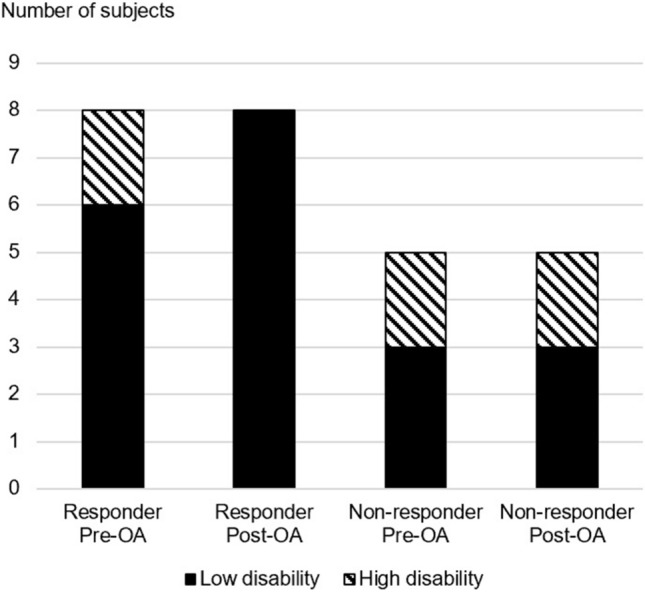
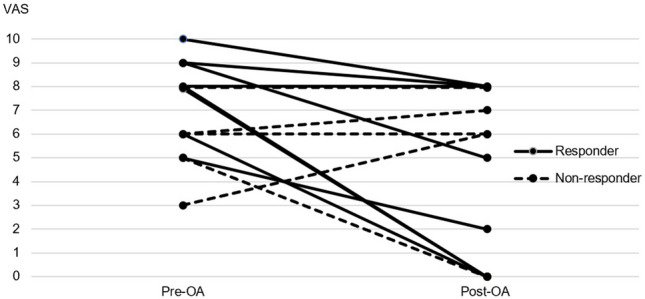
Changes in headache characteristics in obstructive sleep apnea (OSA) patients following oral appliance treatment was investigated for the first time. Thirteen OSA patients with headaches treated with a mandibular advancement device were investigated. Level I polysomnography and Migraine Disability Assessment Questionnaire were completed before and after treatment. Various headache characteristics and concomitant conditions were analyzed. The patient was considered a headache responder when ≥ 30% reduction in headache frequency following treatment. Differences in headache and polysomnographic parameters were compared between headache responder groups. Eight patients (62%) were headache responders. Eleven patients (85%) before and 7 (54%) after treatment reported morning headaches. Significantly more patients had bilateral headache in the responder group before treatment (P = 0.035). The severest headache intensity (P = 0.018) at baseline showed a significant decrease in the headache responder group after treatment. The time spent in N2 (r = - 0.663, P = 0.014), REM sleep (r = 0.704, P = 0.007) and mean oxygen saturation (r = 0.566, P = 0.044) showed a significant correlation with post-treatment average headache intensity. Pre-treatment lower PLM index (r = - 0.632, P = 0.027) and higher mean oxygen saturation levels (r = 0.592, P = 0.043) were significantly correlated with higher post-treatment severest headache intensity. Treatment with an oral appliance is beneficial for many OSA patients with headaches. It should be considered as an alternative treatment in headache patients with mild to moderate OSA.
首次研究了口腔矫治器治疗阻塞性睡眠呼吸暂停(OSA)患者后头痛特征的变化。研究了 13 例经下颌前伸装置治疗头痛的 OSA 患者。治疗前后完成了 I 级多导睡眠图和偏头痛残疾评估问卷。分析了各种头痛特征和伴随情况。当治疗后头痛频率至少降低 30%时,患者被认为是头痛缓解者。比较了头痛缓解者和非头痛缓解者的头痛和多导睡眠图参数差异。8 例患者(62%)为头痛缓解者。11 例患者(85%)在治疗前和 7 例患者(54%)在治疗后报告有晨起头痛。在治疗前,应答组患者双侧头痛明显更多(P=0.035)。最严重的头痛强度(P=0.018)在治疗后应答组明显降低。N2 期(r=-0.663,P=0.014)、快速眼动睡眠期(r=0.704,P=0.007)和平均血氧饱和度(r=0.566,P=0.044)的时间与治疗后平均头痛强度呈显著相关性。治疗前较低的周期性肢体运动指数(r=-0.632,P=0.027)和较高的平均血氧饱和度(r=0.592,P=0.043)与治疗后最严重头痛强度显著相关。口腔矫治器治疗对许多伴有头痛的 OSA 患者有益。对于轻度至中度 OSA 的头痛患者,应将其视为替代治疗方法。