Departments of Radiation Oncology, Samsung Medical Center, Sungkyunkwan University School of Medicine, 81 Irwon-ro, Gangnam-gu, Seoul, 06351, Republic of Korea.
Department of Medical Device Management and Research, Samsung Advanced Institute for Health Sciences and Technology, Sungkyunkwan University, Seoul, Republic of Korea.
Sci Rep. 2021 Jan 28;11(1):2614. doi: 10.1038/s41598-021-82177-5.
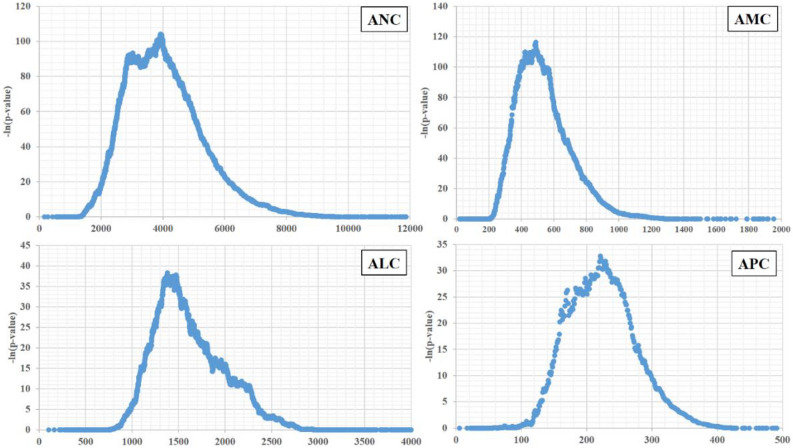
Although several studies have confirmed the clinical significance of the systemic inflammation markers in hepatocellular carcinoma (HCC), evaluating the clinical significance of each blood cell remains to be conducted. We aimed to evaluate the clinical importance of absolute counts of blood cells in the overall survival (OS) of patients with newly diagnosed HCC. We recruited patient cohorts from the prospective registry of newly diagnosed and previously untreated HCC at Samsung Medical Center, which included a training set of 6619 patients (2005-2013) and a validation set of 2084 patients (2014-2016). More than three-quarters of all patients had hepatitis B virus (HBV)-related HCC in both training and validation sets. The optimal cutoff values of the absolute counts of neutrophils, lymphocytes, monocytes, and platelets were 3917, 488, 1379, and 22,100, respectively, which correlated significantly with OS. The absolute blood cell counts categorized by each optimal cutoff value significantly correlated with liver function status determined by Child-Pugh class/albumin-bilirubin (ALBI) grade and the HCC burden determined by several staging systems/portal vein tumor thrombosis. Although the prognostic model based on these blood cells (ABC model) showed a lower prognostic ability than the Japan Integrated Staging or ALBI-T staging systems, it provided significant discrimination of survival in the subgroups of ALBI-T and showed the highest prognostic ability in the present study in the training and validation sets. Absolute counts of blood cells are independently associated with OS, though it is also significantly associated with liver function and tumor burden in newly diagnosed HCC.
虽然多项研究已经证实了系统性炎症标志物在肝细胞癌(HCC)中的临床意义,但评估每种血细胞的临床意义仍有待进行。我们旨在评估血液细胞绝对计数在新诊断 HCC 患者总生存期(OS)中的临床重要性。我们从三星医疗中心新诊断和未经治疗的 HCC 的前瞻性登记处招募了患者队列,其中包括 6619 名患者(2005-2013 年)的训练集和 2084 名患者(2014-2016 年)的验证集。训练集和验证集中,超过四分之三的患者均患有乙型肝炎病毒(HBV)相关 HCC。中性粒细胞、淋巴细胞、单核细胞和血小板的绝对计数的最佳截断值分别为 3917、488、1379 和 22100,与 OS 显著相关。根据每个最佳截断值分类的绝对血细胞计数与肝功能状态(Child-Pugh 分级/白蛋白-胆红素(ALBI)分级)和由几种分期系统/门静脉癌栓确定的 HCC 负担显著相关。虽然基于这些血细胞的预后模型(ABC 模型)显示出比日本综合分期或 ALBI-T 分期系统更低的预后能力,但它在 ALBI-T 亚组中提供了生存的显著区分,并在本研究的训练集和验证集中显示出最高的预后能力。血液细胞的绝对计数与 OS 独立相关,尽管它也与新诊断 HCC 中的肝功能和肿瘤负担显著相关。