Nguyen Thanh Thanh L, Liu Duan, Ho Ming-Fen, Athreya Arjun P, Weinshilboum Richard
Division of Clinical Pharmacology, Department of Molecular Pharmacology and Experimental Therapeutics, Mayo Clinic, Rochester, MN, United States.
Graduate School of Biomedical Sciences, Mayo Clinic, Rochester, MN, United States.
Front Pharmacol. 2021 Jan 11;11:614048. doi: 10.3389/fphar.2020.614048. eCollection 2020.
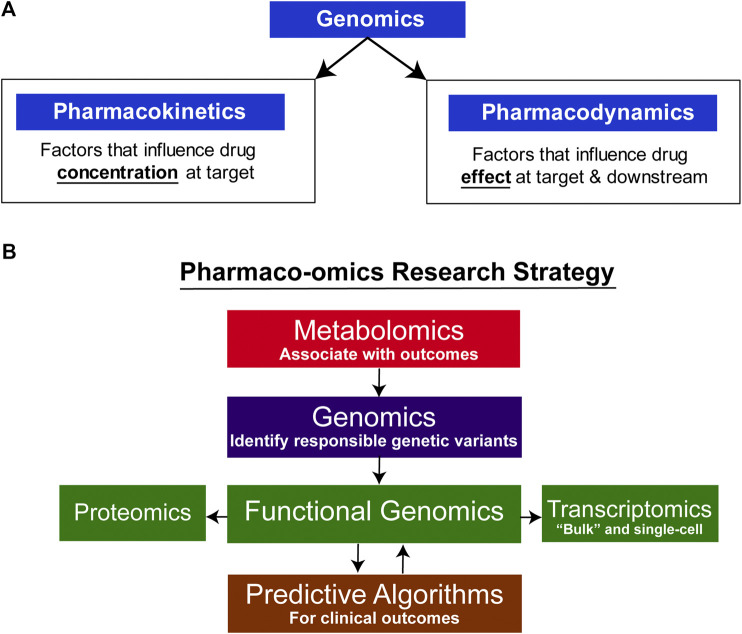
Selective serotonin reuptake inhibitors (SSRIs) are a standard of care for the pharmacotherapy of patients suffering from Major Depressive Disorder (MDD). However, only one-half to two-thirds of MDD patients respond to SSRI therapy. Recently, a "multiple omics" research strategy was applied to identify genetic differences between patients who did and did not respond to SSRI therapy. As a first step, plasma metabolites were assayed using samples from the 803 patients in the PGRN-AMPS SSRI MDD trial. The metabolomics data were then used to "inform" genomics by performing a genome-wide association study (GWAS) for plasma concentrations of the metabolite most highly associated with clinical response, serotonin (5-HT). Two genome-wide or near genome-wide significant single nucleotide polymorphism (SNP) signals were identified, one that mapped near the gene and another across the gene, both genes that are highly expressed in the brain. Knocking down TSPAN5 and ERICH3 resulted in decreased 5-HT concentrations in neuroblastoma cell culture media and decreased expression of enzymes involved in 5-HT biosynthesis and metabolism. Functional genomic studies demonstrated that ERICH3 was involved in clathrin-mediated vesicle formation and was an ethanol-responsive gene that may be a marker for response to acamprosate pharmacotherapy of alcohol use disorder (AUD), a neuropsychiatric disorder highly co-morbid with MDD. In parallel studies, kynurenine was the plasma metabolite most highly associated with MDD symptom severity and application of a metabolomics-informed pharmacogenomics approach identified and as genes associated with variation in plasma kynurenine levels. Both genes also contributed to kynurenine-related inflammatory pathways. Finally, a multiply replicated predictive algorithm for SSRI clinical response with a balanced predictive accuracy of 76% (compared with 56% for clinical data alone) was developed by including the SNPs in , , and . In summary, application of a multiple omics research strategy that used metabolomics to inform genomics, followed by functional genomic studies, identified novel genes that influenced monoamine biology and made it possible to develop a predictive algorithm for SSRI clinical outcomes in MDD. A similar pharmaco-omic research strategy might be broadly applicable for the study of other neuropsychiatric diseases and their drug therapy.
选择性5-羟色胺再摄取抑制剂(SSRIs)是重度抑郁症(MDD)患者药物治疗的标准疗法。然而,只有二分之一至三分之二的MDD患者对SSRI疗法有反应。最近,一种“多组学”研究策略被用于识别对SSRI疗法有反应和无反应的患者之间的基因差异。第一步,在PGRN-AMPS SSRI MDD试验中,使用803名患者的样本检测血浆代谢物。然后,通过对与临床反应最密切相关的代谢物——5-羟色胺(5-HT)的血浆浓度进行全基因组关联研究(GWAS),利用代谢组学数据来“指导”基因组学研究。识别出两个全基因组或接近全基因组显著的单核苷酸多态性(SNP)信号,一个位于 基因附近区域,另一个位于 基因区域,这两个基因在大脑中均高表达。敲低TSPAN5和ERICH3会导致神经母细胞瘤细胞培养基中5-HT浓度降低,并降低参与5-HT生物合成和代谢的酶的表达。功能基因组学研究表明,ERICH3参与网格蛋白介导的囊泡形成,并且是一个乙醇反应基因,可能是酒精使用障碍(AUD)阿坎酸药物治疗反应的标志物,AUD是一种与MDD高度共病的神经精神疾病。在平行研究中,犬尿氨酸是与MDD症状严重程度最密切相关的血浆代谢物,应用代谢组学指导的药物基因组学方法识别出 和 是与血浆犬尿氨酸水平变化相关的基因。这两个基因也参与了与犬尿氨酸相关的炎症途径。最后,通过纳入 、 、 和 中的SNP,开发了一种重复验证的SSRI临床反应预测算法,其平衡预测准确率为76%(相比之下,仅临床数据的预测准确率为56%)。总之,应用一种多组学研究策略,即利用代谢组学指导基因组学,随后进行功能基因组学研究,识别出影响单胺生物学的新基因,并使得开发MDD中SSRI临床结局的预测算法成为可能。类似的药物组学研究策略可能广泛适用于其他神经精神疾病及其药物治疗的研究。