Department of Psychology, Neuroscience and Behaviour, McMaster University, Psychology Building (PC), Room 102, 1280 Main Street West, Hamilton, ON, L8S 4K1, Canada.
School of the Arts, McMaster University, Hamilton, Canada.
Psychol Res. 2022 Feb;86(1):66-86. doi: 10.1007/s00426-020-01467-1. Epub 2021 Jan 29.
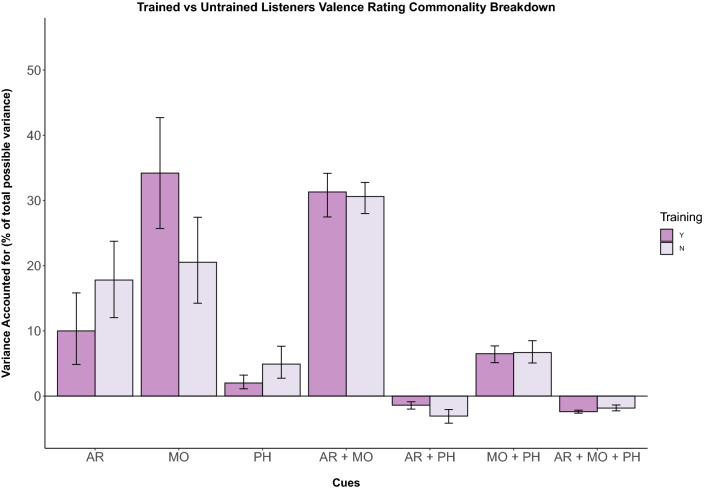
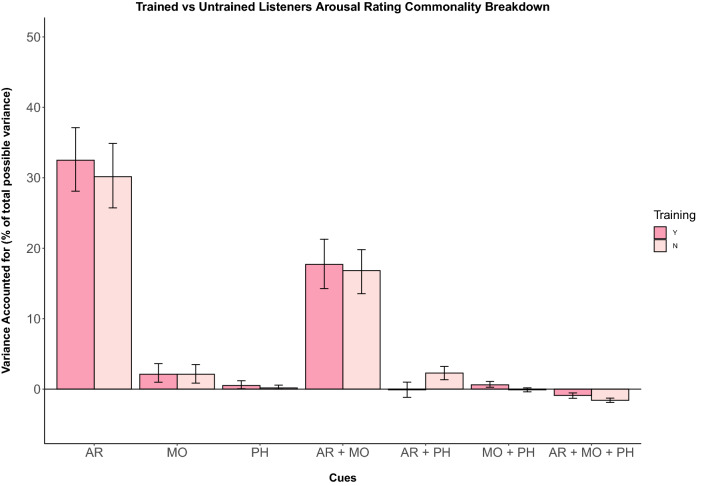
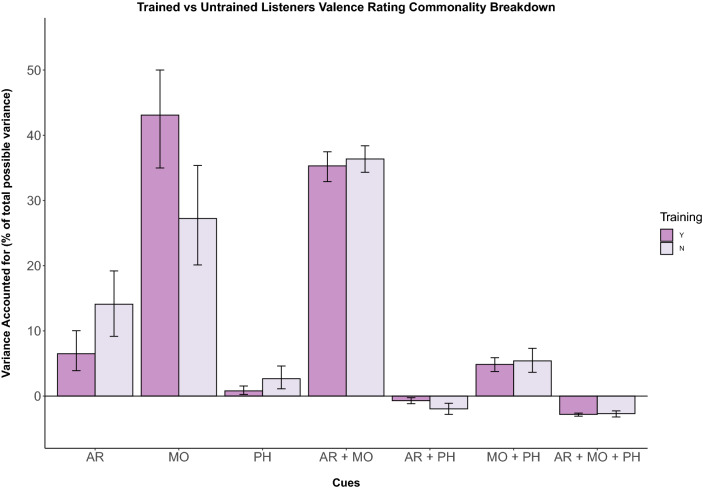
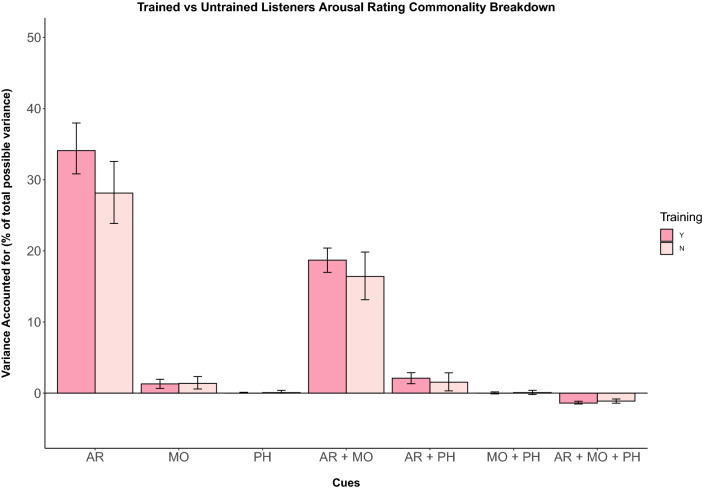
Although studies of musical emotion often focus on the role of the composer and performer, the communicative process is also influenced by the listener's musical background or experience. Given the equivocal nature of evidence regarding the effects of musical training, the role of listener expertise in conveyed musical emotion remains opaque. Here we examine emotional responses of musically trained listeners across two experiments using (1) eight measure excerpts, (2) musically resolved excerpts and compare them to responses collected from untrained listeners in Battcock and Schutz (2019). In each experiment 30 participants with six or more years of music training rated perceived emotion for 48 excerpts from Bach's Well-Tempered Clavier (WTC) using scales of valence and arousal. Models of listener ratings predict more variance in trained vs. untrained listeners across both experiments. More importantly however, we observe a shift in cue weights related to training. Using commonality analysis and Fischer Z score comparisons as well as margin of error calculations, we show that timing and mode affect untrained listeners equally, whereas mode plays a significantly stronger role than timing for trained listeners. This is not to say the emotional messages are less well recognized by untrained listeners-simply that training appears to shift the relative weight of cues used in making evaluations. These results clarify music training's potential impact on the specific effects of cues in conveying musical emotion.
尽管音乐情感的研究通常集中在作曲家和演奏者的角色上,但交流过程也受到听众音乐背景或经验的影响。鉴于音乐训练效果的证据存在模棱两可的性质,听众专业知识在传达音乐情感中的作用仍然不明确。在这里,我们使用(1)8 小节的片段和(2)音乐解析的片段,在两个实验中检查了受过音乐训练的听众的情感反应,并将其与 Battcock 和 Schutz(2019)中未受过训练的听众的反应进行了比较。在每个实验中,30 名具有六年或六年以上音乐训练的参与者使用效价和唤醒度量表对巴赫的《平均律钢琴曲集》(WTC)的 48 个片段进行了感知情绪的评分。听众评分模型预测在两个实验中,受过训练的听众比未受过训练的听众有更多的变化。然而更重要的是,我们观察到与训练相关的线索权重发生了变化。通过共同性分析和费希尔 Z 分数比较以及误差幅度计算,我们表明,对于未受过训练的听众来说,时间和模式的影响是相等的,而对于受过训练的听众来说,模式的影响比时间更为显著。这并不是说未受过训练的听众对情感信息的识别程度较低,只是训练似乎改变了在进行评估时使用线索的相对权重。这些结果阐明了音乐训练对传达音乐情感的线索的具体效果的潜在影响。