MRC Integrative Epidemiology Unit, Population Health Sciences, Bristol Medical School, University of Bristol, UK.
Centre for Environmental Sciences, Hasselt University, Diepenbeek, Belgium.
Int J Epidemiol. 2021 Aug 30;50(4):1297-1315. doi: 10.1093/ije/dyaa267.
Accumulating evidence links paternal adiposity in the periconceptional period to offspring health outcomes. DNA methylation has been proposed as a mediating mechanism, but very few studies have explored this possibility in humans.
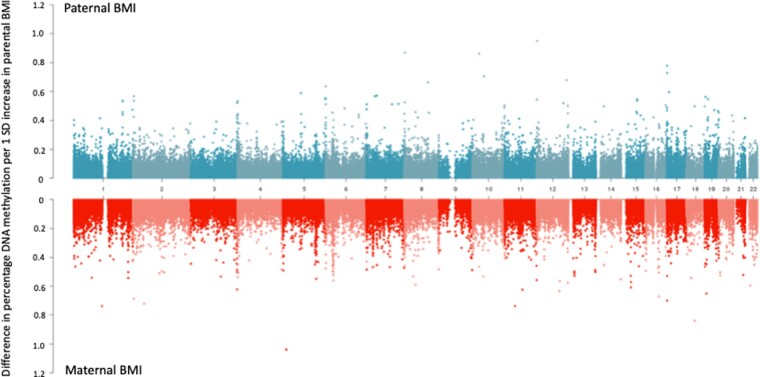
In the Pregnancy And Childhood Epigenetics (PACE) consortium, we conducted a meta-analysis of coordinated epigenome-wide association studies (EWAS) of paternal prenatal body mass index (BMI) (with and without adjustment for maternal BMI) in relation to DNA methylation in offspring blood at birth (13 data sets; total n = 4894) and in childhood (6 data sets; total n = 1982).
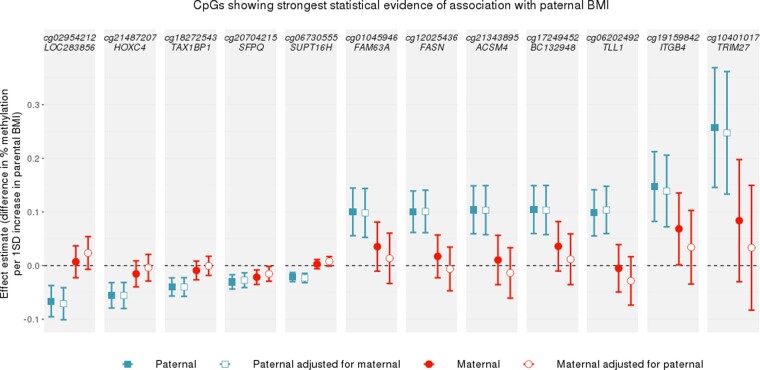
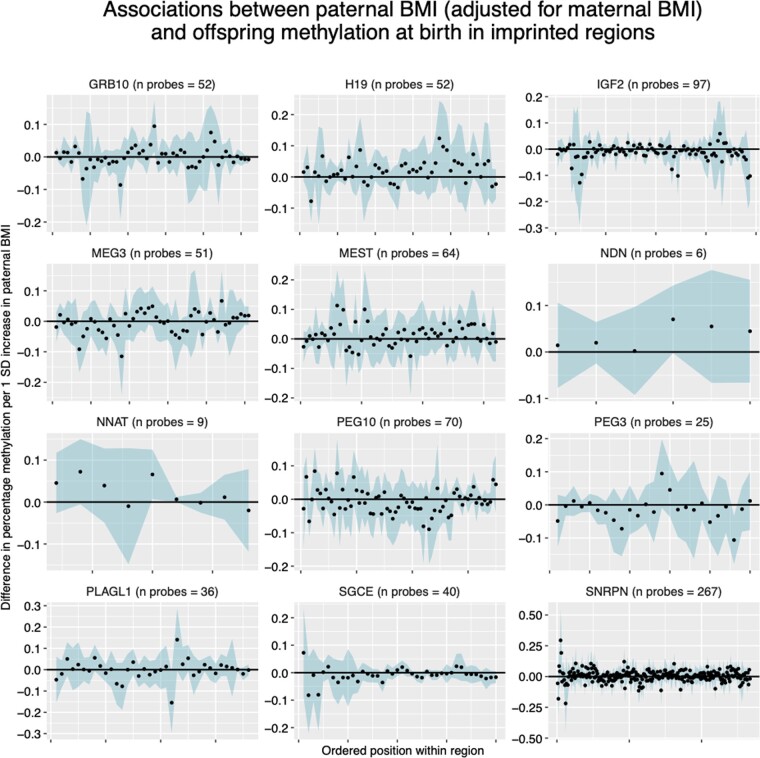
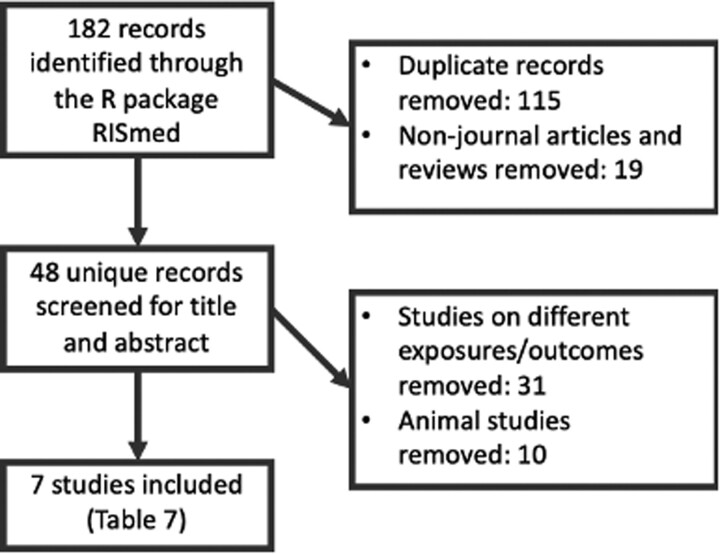
We found little evidence of an association at either time point: at all CpGs, the false-discovery-rate-adjusted P-values were >0.05. In secondary sex-stratified analyses, we found just four CpGs for which there was robust evidence of an association in female offspring. To compare our findings to those of other studies, we conducted a systematic review, which identified seven studies, including five candidate gene studies showing associations between paternal BMI/obesity and offspring or sperm DNA methylation at imprinted regions. However, in our own study, we found very little evidence of enrichment for imprinted genes.
Our findings do not support the hypothesis that paternal BMI around the time of pregnancy is associated with offspring-blood DNA methylation, even at imprinted regions.
越来越多的证据表明,围孕期父体肥胖与后代的健康结果有关。DNA 甲基化被认为是一种中介机制,但很少有研究在人类中探索这种可能性。
在妊娠和儿童表观遗传学(PACE)联合会中,我们对父体产前体重指数(BMI)与后代出生时(13 个数据集;总 n=4894)和儿童期(6 个数据集;总 n=1982)血液中的 DNA 甲基化的协同学究进行了荟萃分析。这些研究考虑了对母体 BMI 的调整和不调整。
我们几乎没有发现两个时间点之间存在关联的证据:在所有 CpG 中,错误发现率调整后的 P 值均大于 0.05。在二次性别分层分析中,我们发现只有四个 CpG 在女性后代中存在关联的强有力证据。为了将我们的发现与其他研究进行比较,我们进行了一项系统综述,该综述确定了七项研究,其中包括五项候选基因研究,这些研究表明父体 BMI/肥胖与印迹区域的后代或精子 DNA 甲基化有关。然而,在我们自己的研究中,我们几乎没有发现印迹基因富集的证据。
我们的研究结果不支持这样的假设,即妊娠期间父体 BMI 与后代血液 DNA 甲基化有关,即使在印迹区域也是如此。