Department of Neurology, The First Hospital of Jilin University, ChangChun, China.
Department of Hand and Foot Surgery, The First Hospital of Jilin University, ChangChun, China.
Drug Deliv. 2021 Dec;28(1):357-371. doi: 10.1080/10717544.2021.1879315.
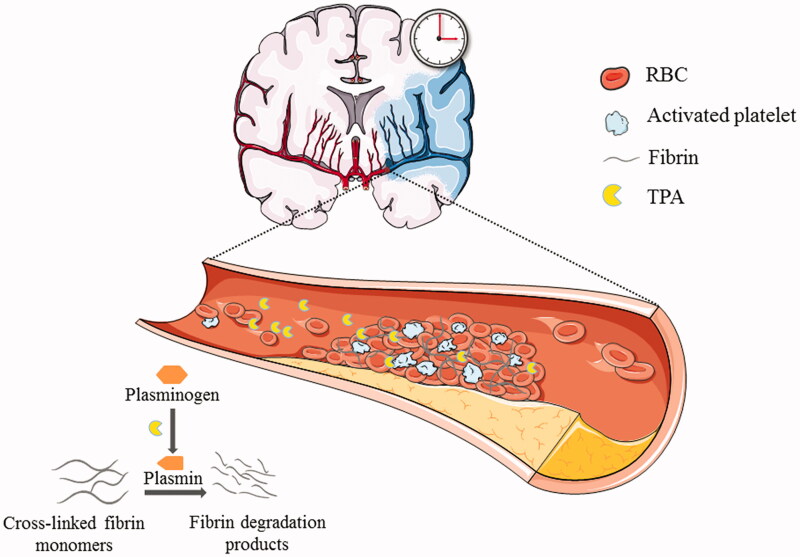
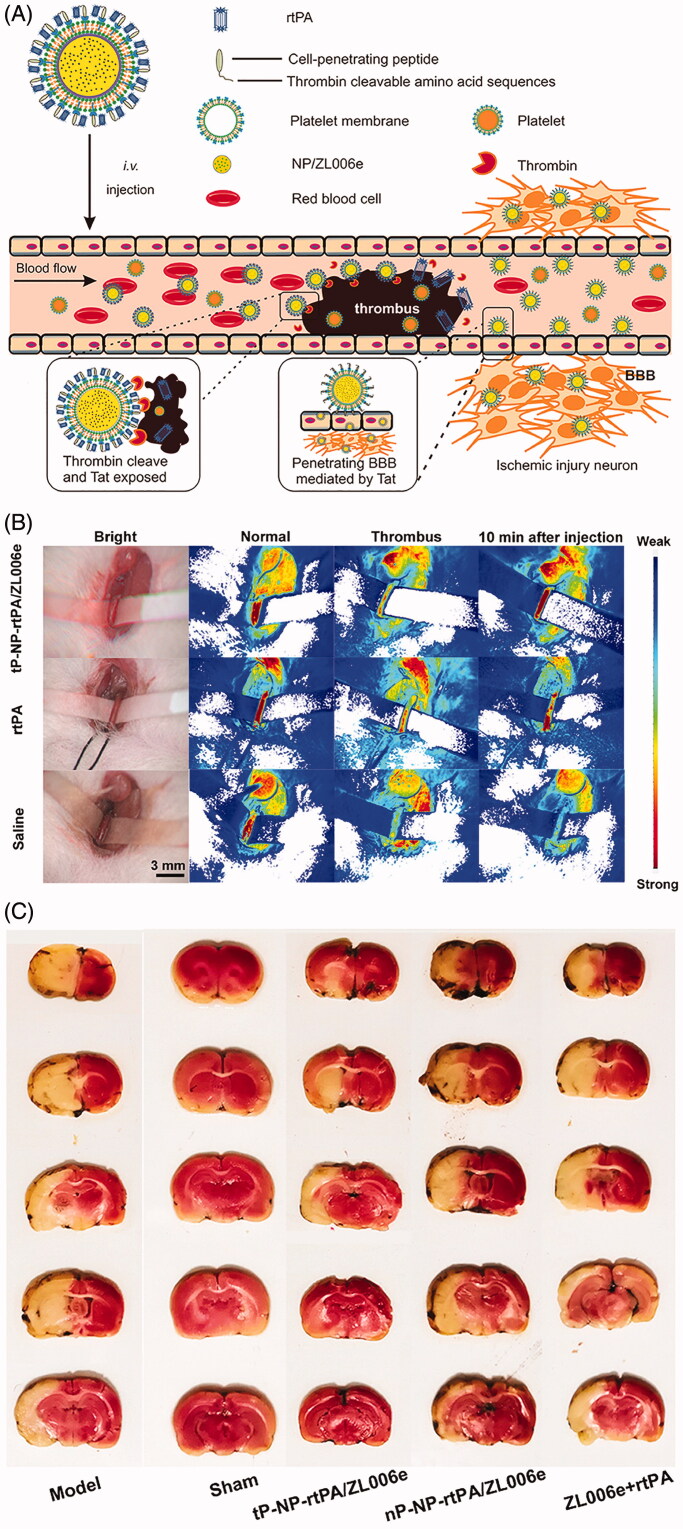
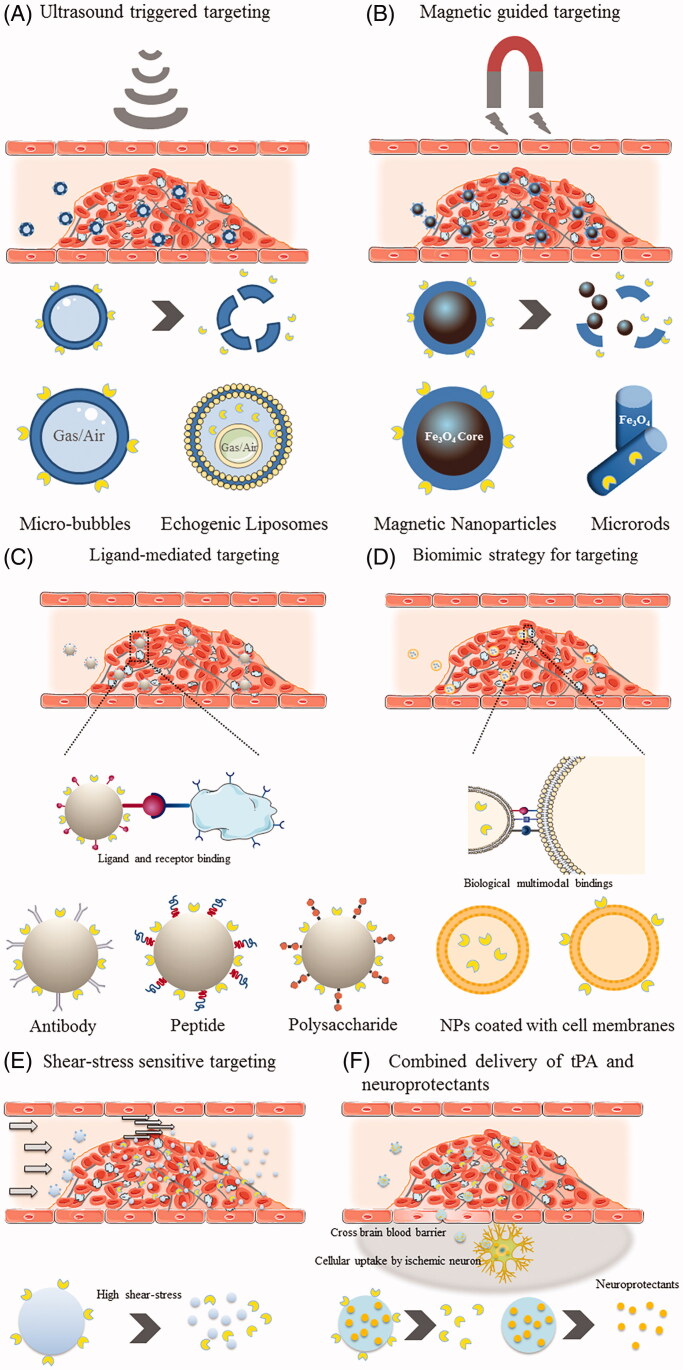
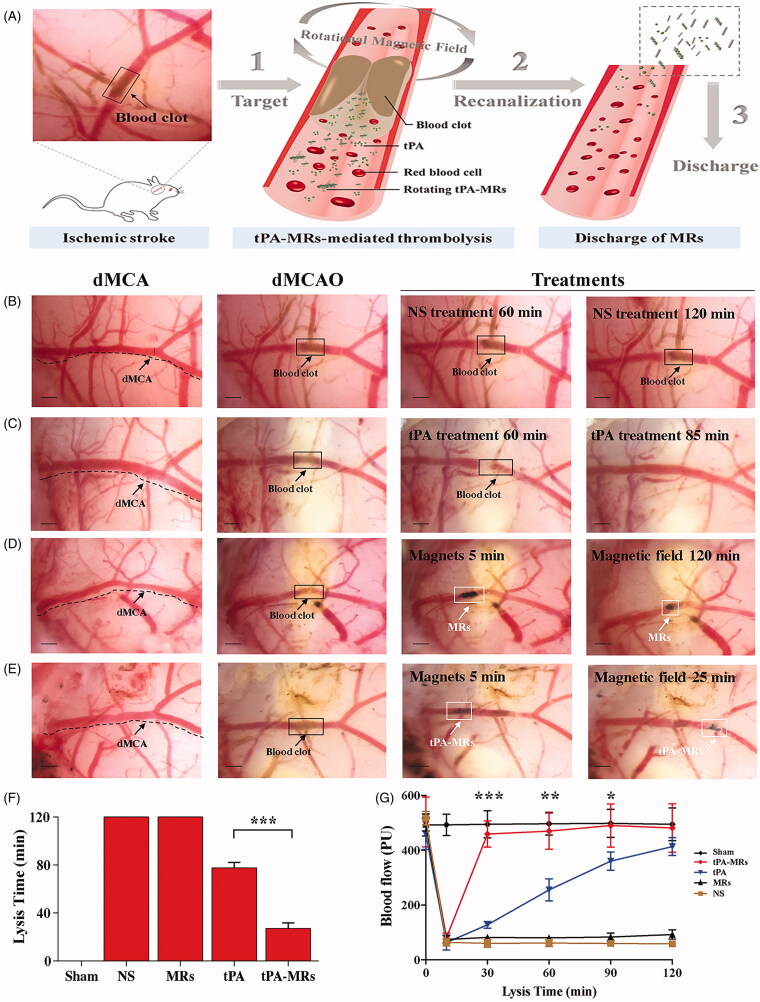
Ischemic stroke is one of the major causes of severe disability and death worldwide. It is mainly caused by a sudden reduction in cerebral blood flow due to obstruction of the supplying vessel by thrombi and subsequent initiation of a complex cascade of pathophysiological changes, which ultimately lead to brain ischemia and even irreversible infarction. Thus, timely and effective thrombolysis therapy remains a mainstay for acute ischemic stroke treatment. Tissue plasminogen activator (tPA), the only thrombolytic agent approved globally, provides substantial benefits by exerting a fibrinolysis effect, recovering the blood supply in occluded vessels and, thereby, salvaging the ischemic tissue. However, the clinical application of tPA was limited because of a few unsolved issues, such as a narrow therapeutic window, hemorrhagic complications, and limited thrombolytic efficacy, especially, for large thrombi. With the prosperous development of nanotechnology, a series of targeted delivery strategies and nanocomposites have been extensively investigated for delivering thrombolytic agents to facilitate thrombolysis treatment. Excitingly, numerous novel attempts have been reported to be effective in extending the half-life, targeting the thrombus site, and improving the thrombolytic efficacy in preclinical models. This article begins with a brief introduction to ischemic stroke, then describes the current state of thrombolysis treatment and, finally, introduces the application of various nanotechnology-based strategies for targeted delivery of thrombolytic agents. Representative studies are reviewed according to diverse strategies and nano-formulations, with the aim of providing integrated and up-to-date information and to improve the development of thrombolysis treatment for stroke patients.
缺血性脑卒中是全球范围内导致严重残疾和死亡的主要原因之一。它主要是由于供应血管被血栓阻塞导致脑血流突然减少,随后引发一系列复杂的病理生理变化,最终导致脑缺血甚至不可逆转的梗死。因此,及时有效的溶栓治疗仍然是急性缺血性脑卒中治疗的主要手段。组织型纤溶酶原激活剂(tPA)是全球唯一批准的溶栓药物,通过发挥纤溶作用、恢复闭塞血管的血液供应,从而挽救缺血组织,为患者带来显著获益。然而,由于存在一些尚未解决的问题,如治疗窗口狭窄、出血并发症和溶栓效果有限(尤其是对于大血栓),tPA 的临床应用受到限制。随着纳米技术的蓬勃发展,一系列靶向递药策略和纳米复合材料被广泛研究用于将溶栓药物递送至血栓部位,以促进溶栓治疗。令人兴奋的是,大量新的尝试已被报道在延长半衰期、靶向血栓部位和提高临床前模型中的溶栓效果方面具有有效性。本文首先简要介绍了缺血性脑卒中,然后描述了目前的溶栓治疗现状,最后介绍了各种基于纳米技术的靶向递药策略在溶栓药物中的应用。根据不同的策略和纳米制剂对代表性研究进行了综述,旨在提供全面和最新的信息,并促进针对脑卒中患者的溶栓治疗的发展。