School of Life Sciences, East China Normal University, Shanghai, China.
College of Agricultural, Liaocheng University, Liaocheng, China.
Poult Sci. 2021 Feb;100(2):565-574. doi: 10.1016/j.psj.2020.11.018. Epub 2020 Nov 19.
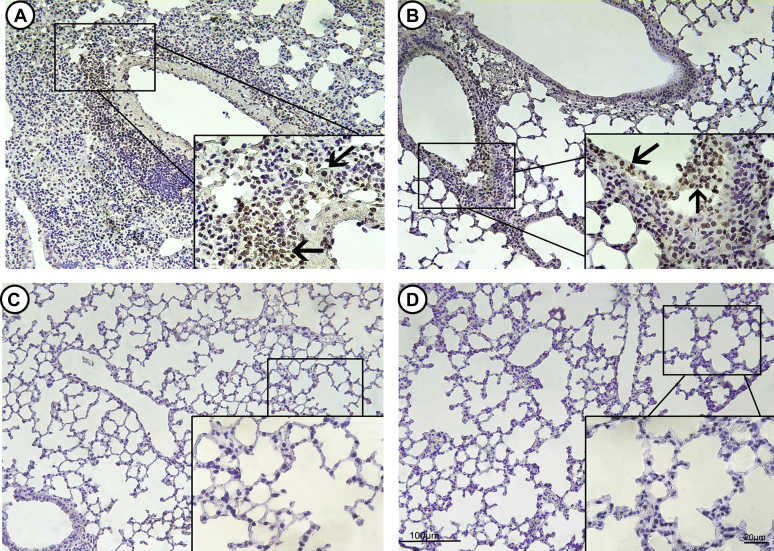
H7N7 avian influenza virus (AIV) can divided into low-pathogenic AIV and high-pathogenic AIV groups. It has been shown to infect humans and animals. Its prevalence state in wild birds in China remains largely unclear. In this study, a new strain of H7N7 AIV, designated CM1216, isolated from wild birds in Shanghai, China, was characterized. Phylogenetic and nucleotide sequence analyses of CM1216 revealed that HA, NA, PB1, NP, and M genes shared the highest nucleotide identity with the Japan H7 subtype AIV circulated in 2019; the PB2 and PA genes shared the highest nucleotide identity with the Korea H7 subtype AIV circulated in wild birds in 2018, while NS gene of CM1216 was 98.93% identical to that of the duck AIV circulating in Bangladesh, and they all belong to the Eurasian lineage. A Bayesian phylogenetic reconstruction of the 2 surface genes of CM1216 showed that multiple reassortments might have occurred in 2015. Mutations were found in HA (A135 T, T136S, and T160 A [H3 numbering]), M1 (N30D and T215 A), NS1 (P42S and D97 E), PB2 (R389 K), and PA (N383D) proteins; these mutations have been shown to be related to mammalian adaptation and changes in virulence of AIVs. Infection studies demonstrated that CM1216 could infect mice and cause symptoms characteristic of influenza virus infection and proliferate in the lungs without prior adaption. This study demonstrates the need for routine surveillance of AIVs in wild birds and detection of their evolution to become a virus with high pathogenicity and ability to infect humans.
H7N7 禽流感病毒(AIV)可分为低致病性 AIV 和高致病性 AIV 组。它已被证明可感染人类和动物。其在中国野生鸟类中的流行状态仍在很大程度上不清楚。在本研究中,对从中国上海野生鸟类中分离出的一株新型 H7N7 AIV,命名为 CM1216,进行了特征描述。CM1216 的 HA、NA、PB1、NP 和 M 基因的系统进化和核苷酸序列分析表明,与 2019 年在日本流行的 H7 亚型 AIV 相比,HA、NA、PB1、NP 和 M 基因具有最高的核苷酸相似性;PB2 和 PA 基因与 2018 年在野生鸟类中流行的韩国 H7 亚型 AIV 具有最高的核苷酸相似性,而 CM1216 的 NS 基因与在孟加拉国流行的鸭 AIV 完全相同,它们均属于欧亚谱系。CM1216 的 2 个表面基因的贝叶斯系统发育重建表明,在 2015 年可能发生了多次重配。在 HA(H3 编号的 A135T、T136S 和 T160A)、M1(N30D 和 T215A)、NS1(P42S 和 D97E)、PB2(R389K)和 PA(N383D)蛋白中发现了突变;这些突变已被证明与 AIV 对哺乳动物的适应性和毒力变化有关。感染研究表明,CM1216 可以感染小鼠并引起流感病毒感染的特征性症状,并且无需适应就可以在肺部中增殖。本研究表明,需要对野生鸟类中的 AIV 进行常规监测,并检测其进化成为一种具有高致病性和感染人类能力的病毒。