Mokhtari Reza, Jahangir Mohammad Hossein
Renewable Energies and Environmental Department, Faculty of New Science and Technologies, University of Tehran, Tehran, Iran.
Build Environ. 2021 Mar;190:107561. doi: 10.1016/j.buildenv.2020.107561. Epub 2020 Dec 28.
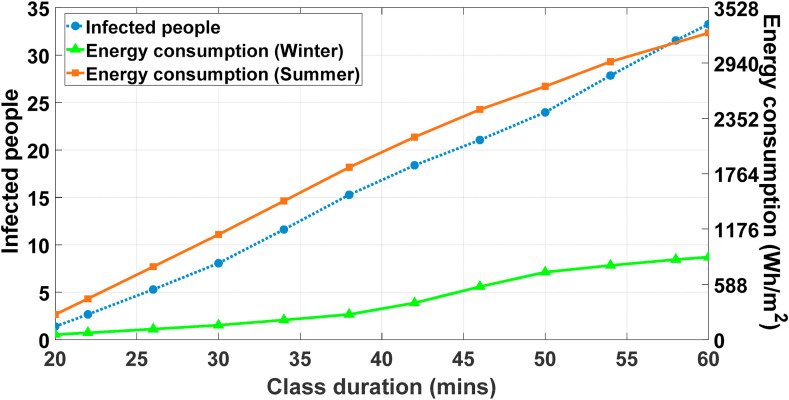
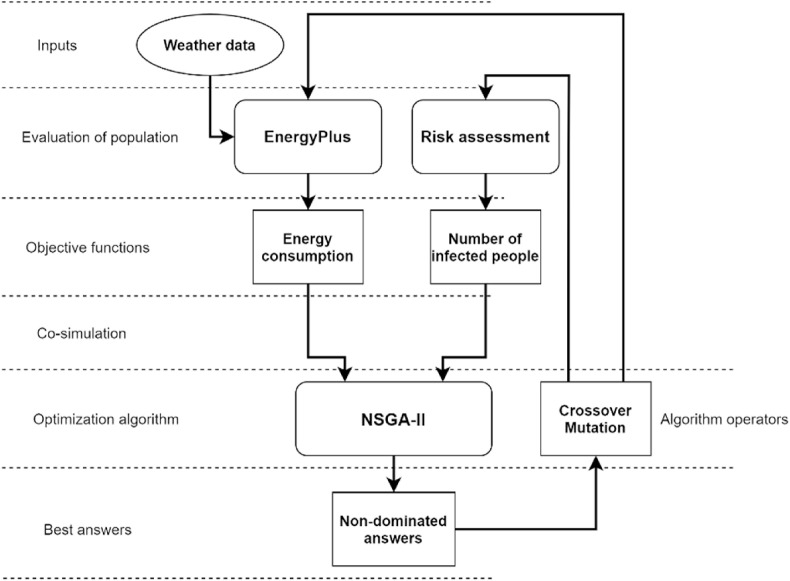
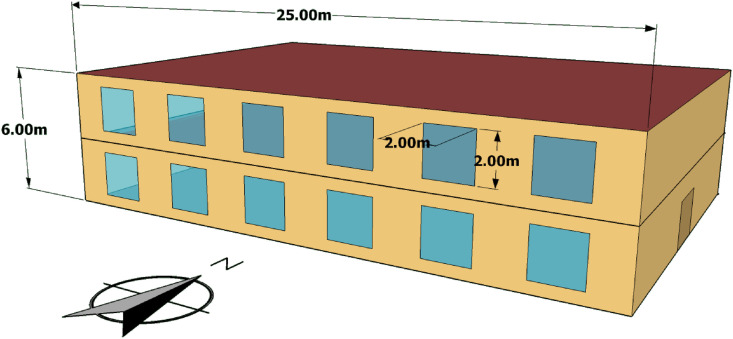
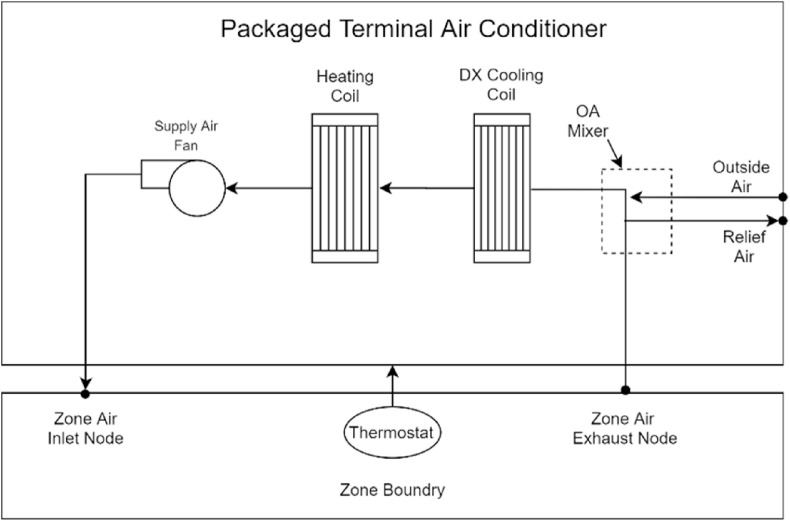
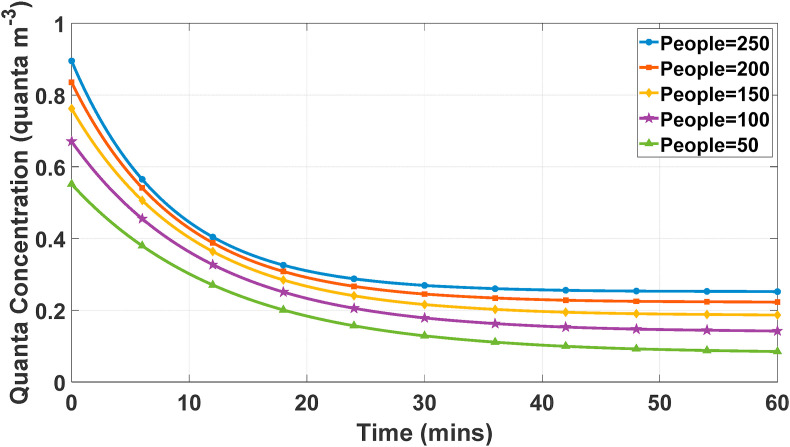
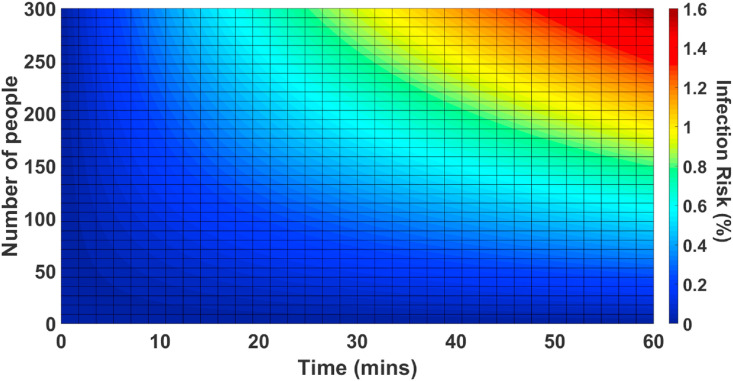
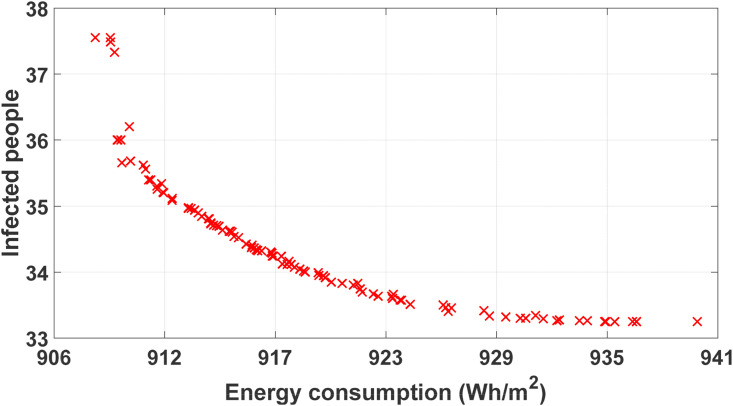
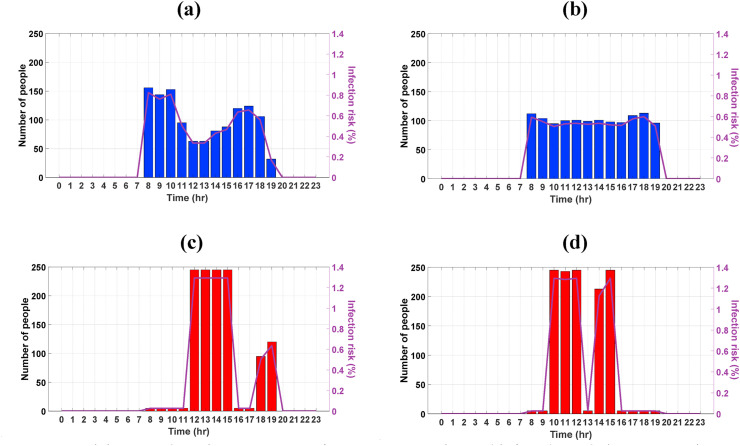
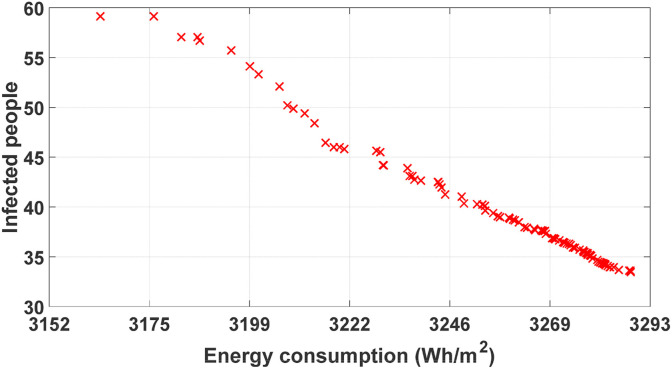
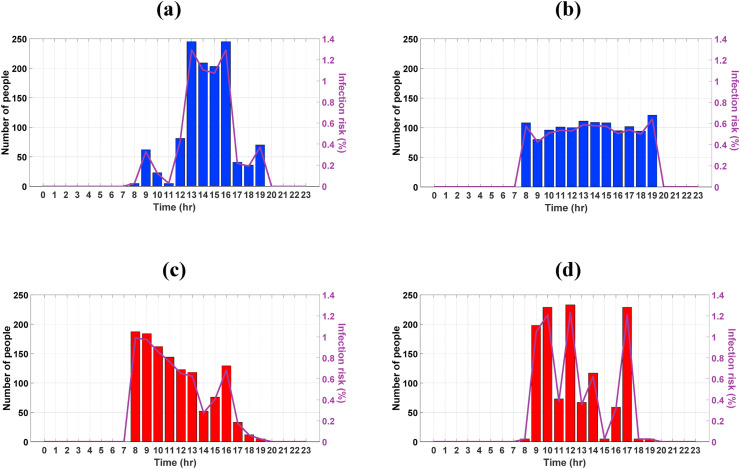
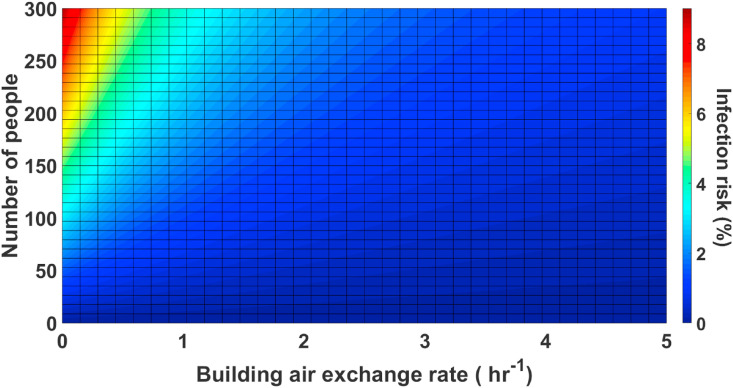
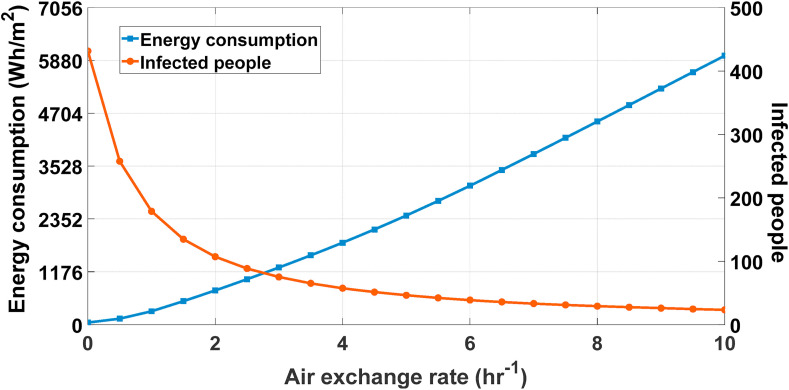
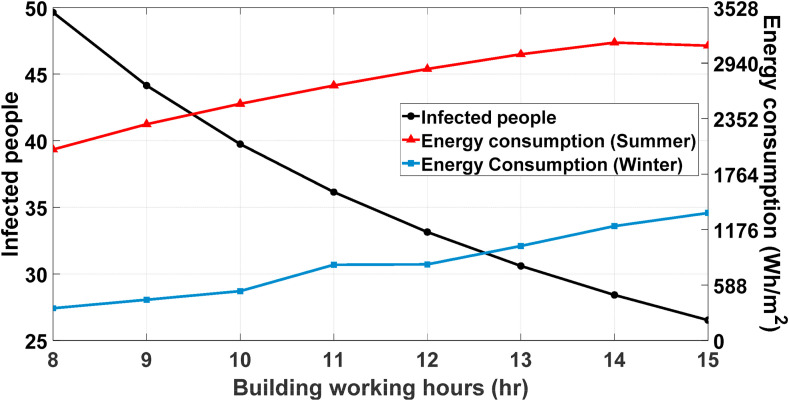
The occupant density in buildings is one of the major and overlooked parameters affecting the energy consumption and virus transmission risk in buildings. HVAC systems energy consumption is highly dependent on the number of occupants. Studies on the transmission of COVID-19 virus have indicated a direct relationship between occupant density and COVID-19 infection risk. This study aims to seek the optimum occupant distribution patterns that account for the lowest number of infected people and minimum energy consumption. A university building located in Tehran has been chosen as a case study, due to its flexibility in performing various occupant distribution patterns. This multi-objective optimization problem, with the objective functions of energy consumption and COVID-19 infected people, is solved by NSGA-II algorithm. Energy consumption is evaluated by EnergyPlus, then it is supplied to the algorithm through a co-simulation communication between EnergyPlus and MATLAB. Results of this optimization algorithm for 5 consequent winter and summer days, represent optimum occupant distribution patterns, associated with minimum energy consumption and COVID-19 infected people for winter and summer. Building air exchange rate, class duration, and working hours of the university, as the COVID-19 controlling approaches were studied, and promising results have been obtained. It was concluded that an optimal population distribution can reduce the number of infected people by up to 56% and energy consumption by 32%. Furthermore, it was concluded that virtual learning is an excellent approach in universities to control the number of infections and energy consumption.
建筑中的人员密度是影响建筑能源消耗和病毒传播风险的主要但被忽视的参数之一。暖通空调系统的能源消耗高度依赖于居住人数。对新冠病毒传播的研究表明,人员密度与新冠病毒感染风险之间存在直接关系。本研究旨在寻求能使感染人数最少且能源消耗最低的最佳人员分布模式。由于其在执行各种人员分布模式方面具有灵活性,位于德黑兰的一座大学建筑被选为案例研究对象。这个以能源消耗和新冠病毒感染人数为目标函数的多目标优化问题,通过NSGA-II算法求解。能源消耗由EnergyPlus评估,然后通过EnergyPlus与MATLAB之间的联合仿真通信提供给算法。该优化算法针对连续5个冬夏两季的结果,呈现出了与冬夏两季最低能源消耗和最少新冠病毒感染人数相关的最佳人员分布模式。研究了作为新冠病毒控制方法的建筑换气率、课程时长和大学的工作时间,并取得了有前景的结果。得出的结论是,最优的人员分布可将感染人数减少多达56%,能源消耗减少32%。此外,得出的结论是,虚拟学习是大学控制感染人数和能源消耗的一种极佳方法。