Clalit Research Institute, Innovation Division, Clalit Health Services, Toval 40, Ramat-Gan, Israel.
School of Public Health, Faculty of Health Sciences, Ben Gurion University of the Negev, Ben-Gurion blvd. 1, Be'er Sheva, Israel.
Nat Commun. 2020 Sep 7;11(1):4439. doi: 10.1038/s41467-020-18297-9.
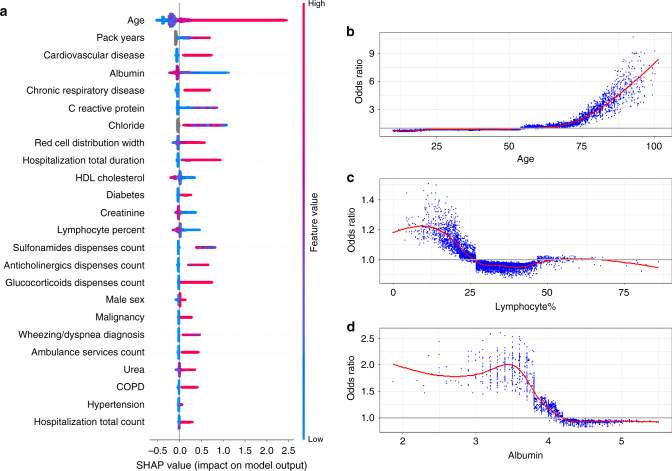
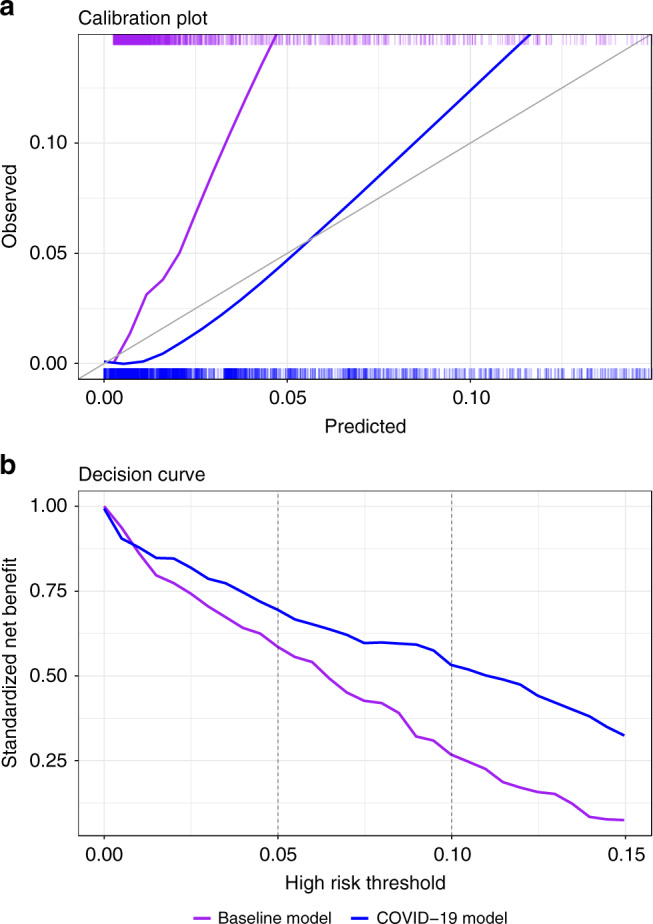
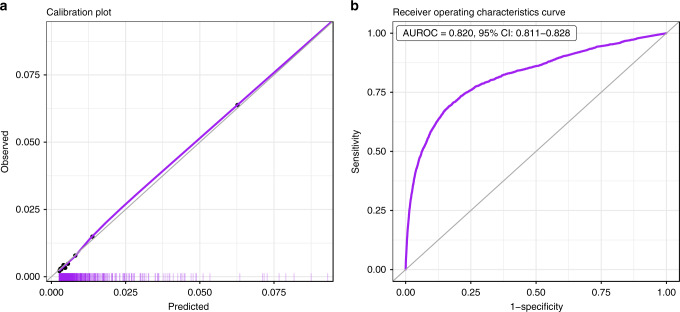
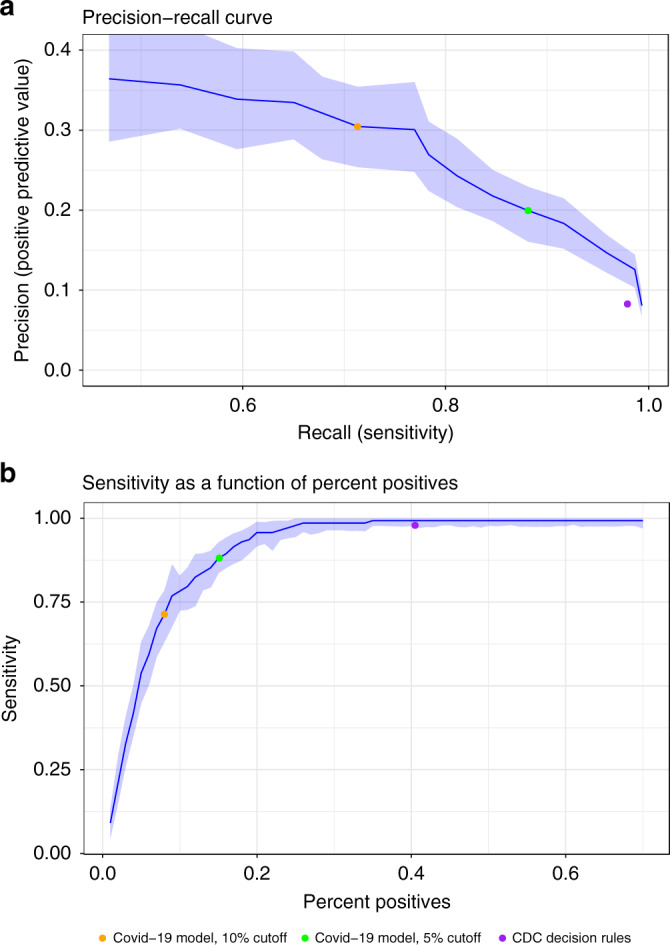
At the COVID-19 pandemic onset, when individual-level data of COVID-19 patients were not yet available, there was already a need for risk predictors to support prevention and treatment decisions. Here, we report a hybrid strategy to create such a predictor, combining the development of a baseline severe respiratory infection risk predictor and a post-processing method to calibrate the predictions to reported COVID-19 case-fatality rates. With the accumulation of a COVID-19 patient cohort, this predictor is validated to have good discrimination (area under the receiver-operating characteristics curve of 0.943) and calibration (markedly improved compared to that of the baseline predictor). At a 5% risk threshold, 15% of patients are marked as high-risk, achieving a sensitivity of 88%. We thus demonstrate that even at the onset of a pandemic, shrouded in epidemiologic fog of war, it is possible to provide a useful risk predictor, now widely used in a large healthcare organization.
在 COVID-19 大流行初期,当还没有 COVID-19 患者的个体数据时,就已经需要风险预测器来支持预防和治疗决策。在这里,我们报告了一种混合策略来创建这样的预测器,该策略结合了基线严重呼吸道感染风险预测器的开发和后处理方法,以将预测结果校准到报告的 COVID-19 病死率。随着 COVID-19 患者队列的积累,该预测器被验证具有良好的区分度(接收者操作特征曲线下面积为 0.943)和校准度(与基线预测器相比有显著提高)。在 5%的风险阈值下,15%的患者被标记为高风险,敏感性为 88%。因此,我们证明,即使在大流行初期,在充满流行病学战争迷雾的情况下,也有可能提供一个有用的风险预测器,该预测器现在已在一个大型医疗机构中广泛使用。