Wang Qian, Zhao Xin, Yuan Yuming, Shi Baoguo
Beijing Key Laboratory of Learning and Cognition, School of Psychology, Capital Normal University, Beijing, China.
Front Psychol. 2021 Jan 15;11:601104. doi: 10.3389/fpsyg.2020.601104. eCollection 2020.
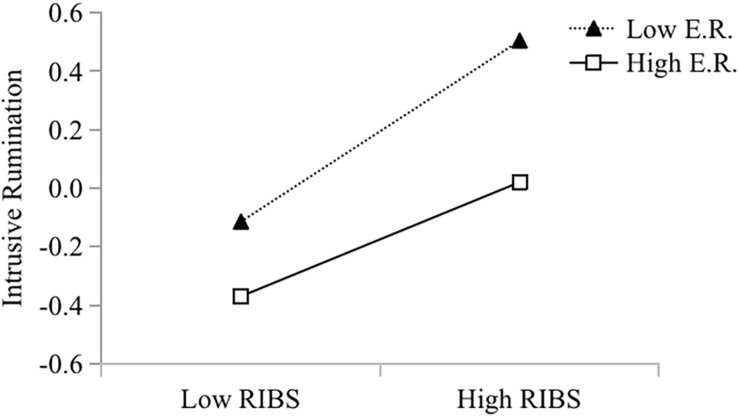
Coronavirus disease 2019 (COVID-19) has not only resulted in immeasurable life and property losses worldwide but has also impacted individuals' development, especially teenagers. After the COVID-19 pandemic, individual rumination as an important cognitive process should be given more attention because of its close associations with physical and mental health. Previous studies have shown that creativity as an antecedent variable can predict people's mental health or adaptation. However, few studies have focused on the relationship between creativity and individual cognitive rumination after traumatic events, and the mechanism underlying this relationship remains unclear. By using the Runco Ideational Behavior Scale (RIBS), the Event Related Rumination Inventory, and the Questionnaire of Adolescent Emotional Resilience, the current study explored the relationship between creativity and intrusive rumination among 1488 Chinese teenagers during the COVID-19 pandemic and analyzed the moderating effect of emotional resilience on the relationship. The results showed that creativity, as assessed by the RIBS, was positively related to teenagers' intrusive rumination, which implied that a higher level of creative performance could predict more intrusive rumination. Moreover, emotional resilience acted as a moderator in the relationship between creativity and intrusive rumination; the correlation was stronger when emotional resilience was low. These findings provide more evidence of the relationship between creativity and mental health and show the effect of this traumatic event on teenagers.
2019冠状病毒病(COVID-19)不仅在全球范围内造成了不可估量的生命和财产损失,还影响了个人的发展,尤其是青少年。在COVID-19大流行之后,个体沉思作为一个重要的认知过程,因其与身心健康密切相关而应受到更多关注。先前的研究表明,创造力作为一个先行变量可以预测人们的心理健康或适应能力。然而,很少有研究关注创伤事件后创造力与个体认知沉思之间的关系,且这种关系背后的机制仍不清楚。本研究通过使用朗科创意行为量表(RIBS)、事件相关沉思量表和青少年情绪复原力量表,探讨了1488名中国青少年在COVID-19大流行期间创造力与侵入性沉思之间的关系,并分析了情绪复原力对该关系的调节作用。结果表明,用RIBS评估的创造力与青少年的侵入性沉思呈正相关,这意味着更高水平的创造性表现可以预测更多的侵入性沉思。此外,情绪复原力在创造力与侵入性沉思的关系中起调节作用;当情绪复原力较低时,相关性更强。这些发现为创造力与心理健康之间的关系提供了更多证据,并显示了这一创伤事件对青少年的影响。