Houshdar Tehrani Mohammad Hassan, Gholibeikian Mohammadreza, Bamoniri Abdolhamid, Mirjalili Bi Bi Fatemeh
Department of Pharmaceutical Chemistry, School of Pharmacy, Shahid Beheshti University of Medical Sciences, Tehran, Iran.
Department of Organic Chemistry, Faculty of Chemistry, University of Kashan, Kashan, Iran.
Front Endocrinol (Lausanne). 2021 Jan 14;11:600856. doi: 10.3389/fendo.2020.600856. eCollection 2020.
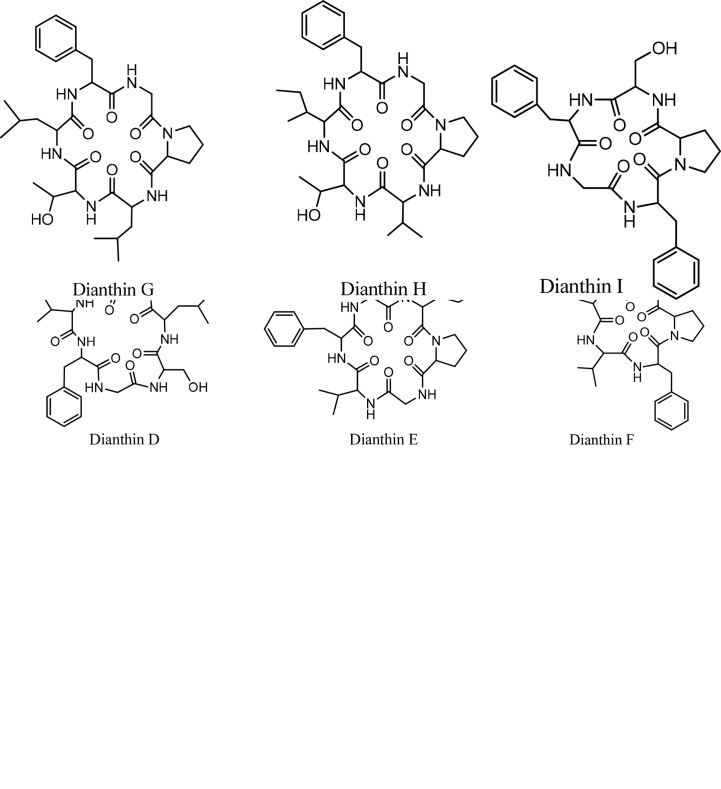
Cancer is one of the leading diseases, which, in the most cases, ends with death and, thus, continues to be a major concern in human beings worldwide. The conventional anticancer agents used in the clinic often face resistance among many cancer diseases. Moreover, heavy financial costs preclude patients from continuing treatment. Bioactive peptides, active in several diverse areas against man's health problems, such as infection, pain, hypertension, and so on, show the potential to be effective in cancer treatment and may offer promise as better candidates for combating cancer. Cyclopeptides, of natural or synthetic origin, have several advantages over other drug molecules with low toxicity and low immunogenicity, and they are easily amenable to several changes in their sequences. Given their many demanded homologues, they have created new hope of discovering better compounds with desired properties in the field of challenging cancer diseases. Caryophyllaceae-type cyclopeptides show several biological activities, including cancer cytotoxicity. These cyclopeptides have been discovered in several plant families but mainly are from the Caryophyllaceae family. In this review, a summary of biological activities found for these cyclopeptides is given; the focus is on the anticancer findings of these peptides. Among these cyclopeptides, information about Dianthins (including Longicalycinin A), isolated from different species of Caryophyllaceae, as well as their synthetic analogues is detailed. Finally, by comparing their structures and cytotoxic activities, finding the common figures of these kinds of cyclopeptides as well as their possible future place in the clinic for cancer treatment is put forward.
癌症是主要疾病之一,在大多数情况下,最终会导致死亡,因此仍然是全球人类主要关注的问题。临床上使用的传统抗癌药物在许多癌症疾病中常常面临耐药性。此外,高昂的经济成本使患者无法继续接受治疗。生物活性肽在对抗人类健康问题的多个不同领域发挥作用,如感染、疼痛、高血压等,显示出在癌症治疗中有效的潜力,有望成为对抗癌症的更好候选药物。天然或合成来源的环肽比其他药物分子具有几个优势,毒性低、免疫原性低,并且它们的序列易于进行多种改变。鉴于它们有许多所需的同系物,它们为在具有挑战性的癌症疾病领域发现具有所需特性的更好化合物带来了新希望。石竹科型环肽具有多种生物活性,包括癌症细胞毒性。这些环肽已在几个植物科中被发现,但主要来自石竹科。在这篇综述中,总结了这些环肽的生物活性;重点是这些肽的抗癌研究结果。在这些环肽中,详细介绍了从石竹科不同物种中分离出的石竹素(包括长萼石竹素A)及其合成类似物的信息。最后,通过比较它们的结构和细胞毒性活性,提出了这类环肽的共同特征以及它们未来在癌症治疗临床中可能的地位。