Chen Genghua, Chen Jiahui, Wu Jingwen, Ren Xueyi, Li Limin, Lu Shiyi, Cheng Tian, Tan Liangtian, Liu Manqing, Luo Qingbin, Liang Shaodong, Nie Qinghua, Zhang Xiquan, Luo Wen
Department of Animal Genetics, Breeding and Reproduction, College of Animal Science, South China Agricultural University, Guangzhou, China.
Key Lab of Chicken Genetics, Breeding and Reproduction, Ministry of Agriculture, South China Agricultural University, Guangzhou, China.
Front Genet. 2021 Jan 14;11:610605. doi: 10.3389/fgene.2020.610605. eCollection 2020.
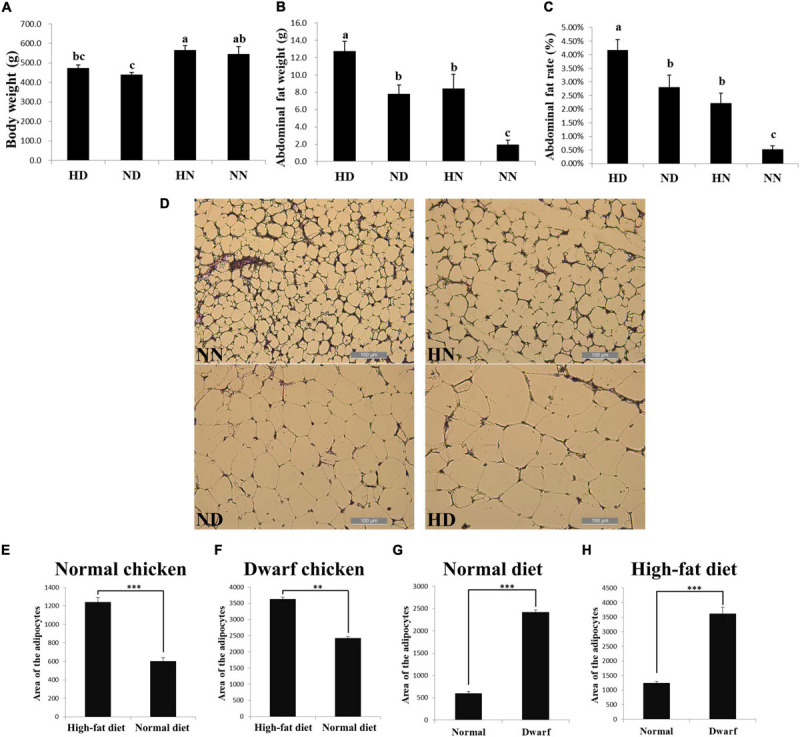
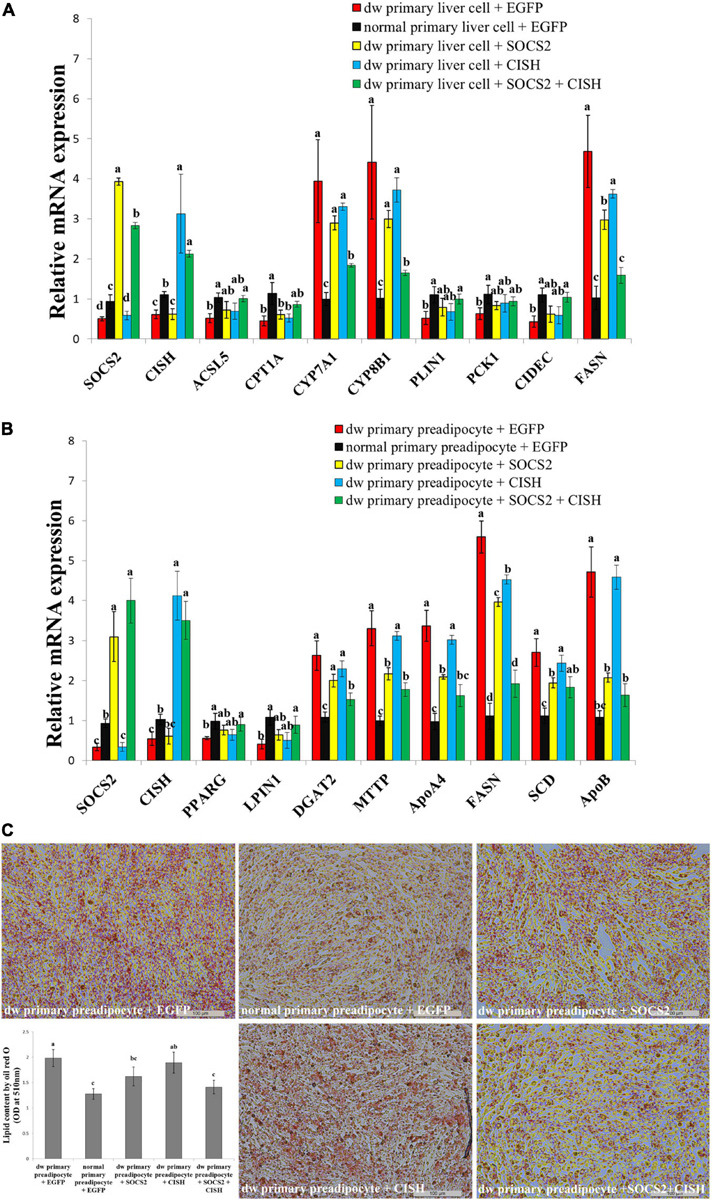
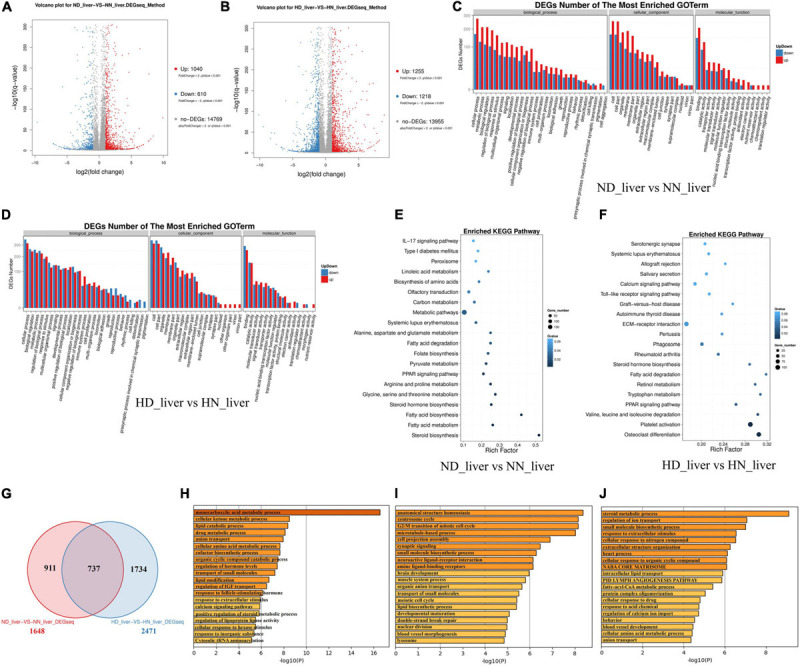
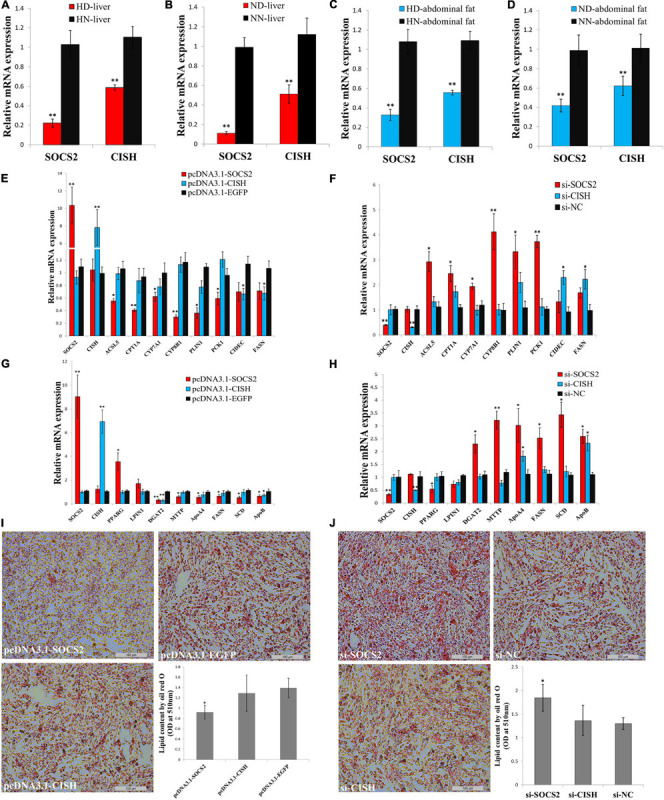
Sex-linked dwarf (SLD) chicken, which is caused by a recessive mutation of the growth hormone receptor (), has been widely used in the Chinese broiler industry. However, it has been found that the SLD chicken has more abdominal fat deposition than normal chicken. Excessive fat deposition not only reduced the carcass quality of the broilers but also reduced the immunity of broilers to diseases. To find out the key genes and the precise regulatory pathways that were involved in the mutation-induced excessive fat deposition, we used high-fat diet (HFD) and normal diet to feed the SLD chicken and normal chicken and analyzed the differentially expressed genes (DEGs) among the four groups. Results showed that the SLD chicken had more abdominal fat deposition and larger adipocytes size than normal chicken and HFD can promote abdominal fat deposition and induce adipocyte hypertrophy. RNA sequencing results of the livers and abdominal fats from the above chickens revealed that many DEGs between the SLD and normal chickens were enriched in fat metabolic pathways, such as peroxisome proliferator-activated receptor (PPAR) signaling, extracellular matrix (ECM)-receptor pathway, and fatty acid metabolism. Importantly, by constructing and analyzing the -downstream regulatory network, we found that suppressor of cytokine signaling 2 () and cytokine-inducible SH2-containing protein () may involve in the mutation-induced abdominal fat deposition in chicken. The ectopic expression of and in liver-related cell line leghorn strain M chicken hepatoma (LMH) cell and immortalized chicken preadipocytes (ICP) revealed that these two genes can regulate fatty acid metabolism, adipocyte differentiation, and lipid droplet accumulation. Notably, overexpression of and can rescue the hyperactive lipid metabolism and excessive lipid droplet accumulation of primary liver cell and preadipocytes that were isolated from the SLD chicken. This study found some genes and pathways involved in abdominal fat deposition of the SLD chicken and reveals that and are two key genes involved in the mutation-induced excessive fat deposition of the SLD chicken.
性连锁矮小(SLD)鸡是由生长激素受体的隐性突变引起的,已在中国肉鸡产业中广泛应用。然而,已发现SLD鸡比正常鸡有更多的腹部脂肪沉积。过多的脂肪沉积不仅降低了肉鸡的胴体品质,还降低了肉鸡对疾病的免疫力。为了找出参与该突变诱导的过多脂肪沉积的关键基因和精确调控途径,我们用高脂饮食(HFD)和正常饮食喂养SLD鸡和正常鸡,并分析了四组之间的差异表达基因(DEG)。结果表明,SLD鸡比正常鸡有更多的腹部脂肪沉积和更大的脂肪细胞尺寸,并且HFD可促进腹部脂肪沉积并诱导脂肪细胞肥大。上述鸡的肝脏和腹部脂肪的RNA测序结果显示,SLD鸡和正常鸡之间的许多DEG富集于脂肪代谢途径,如过氧化物酶体增殖物激活受体(PPAR)信号通路、细胞外基质(ECM)-受体途径和脂肪酸代谢。重要的是,通过构建和分析该下游调控网络,我们发现细胞因子信号转导抑制因子2(SOCS2)和细胞因子诱导含SH2蛋白(CISH)可能参与鸡中该突变诱导的腹部脂肪沉积。SOCS2和CISH在肝脏相关细胞系来航鸡M鸡肝癌(LMH)细胞和永生化鸡前脂肪细胞(ICP)中的异位表达表明,这两个基因可调节脂肪酸代谢、脂肪细胞分化和脂滴积累。值得注意的是,SOCS2和CISH的过表达可挽救从SLD鸡分离的原代肝细胞和前脂肪细胞的过度活跃的脂质代谢和过多的脂滴积累。本研究发现了一些参与SLD鸡腹部脂肪沉积的基因和途径,并揭示SOCS2和CISH是参与SLD鸡该突变诱导的过多脂肪沉积的两个关键基因。