Fisher Jason T, Burton A Cole
School of Environmental Studies University of Victoria Victoria BC Canada.
InnoTech Alberta Vegreville AB Canada.
Ecol Evol. 2020 Dec 17;11(2):900-911. doi: 10.1002/ece3.7103. eCollection 2021 Jan.
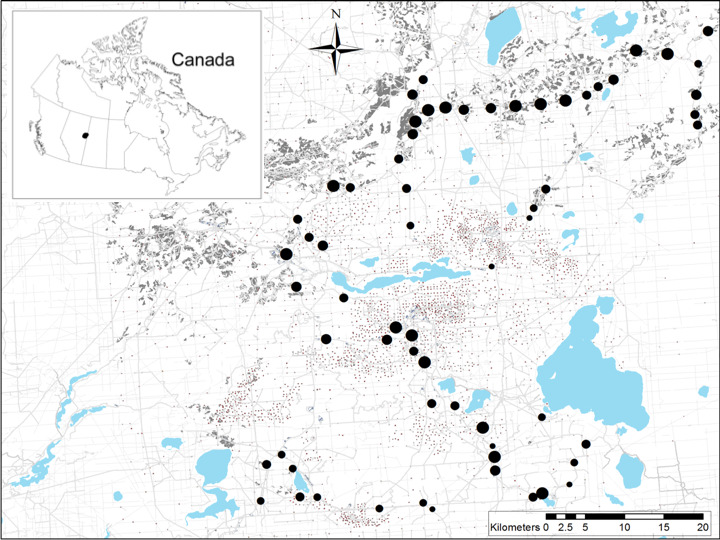
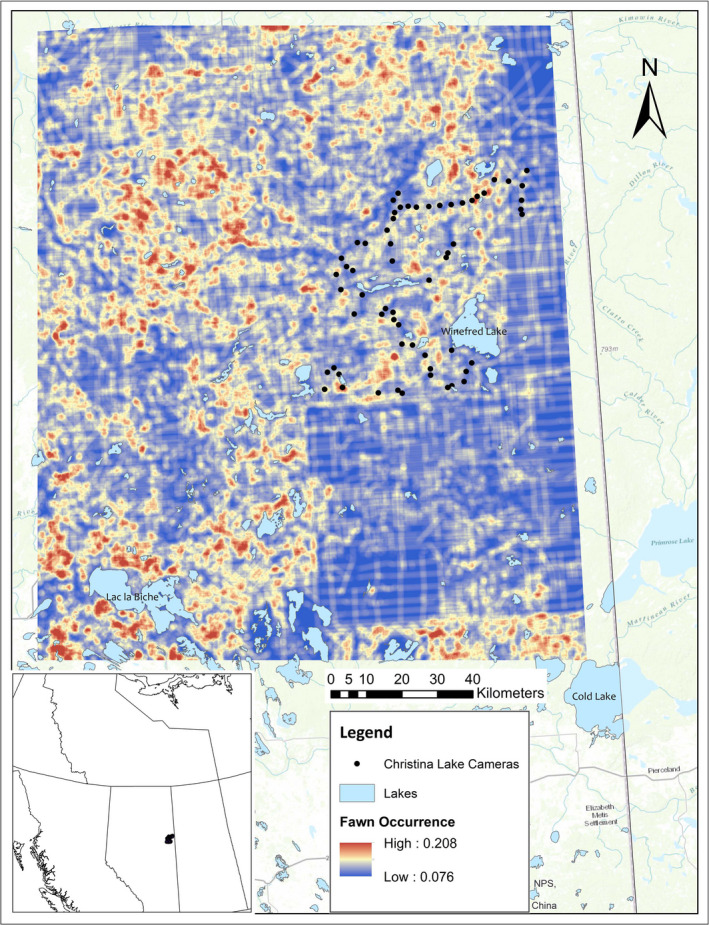
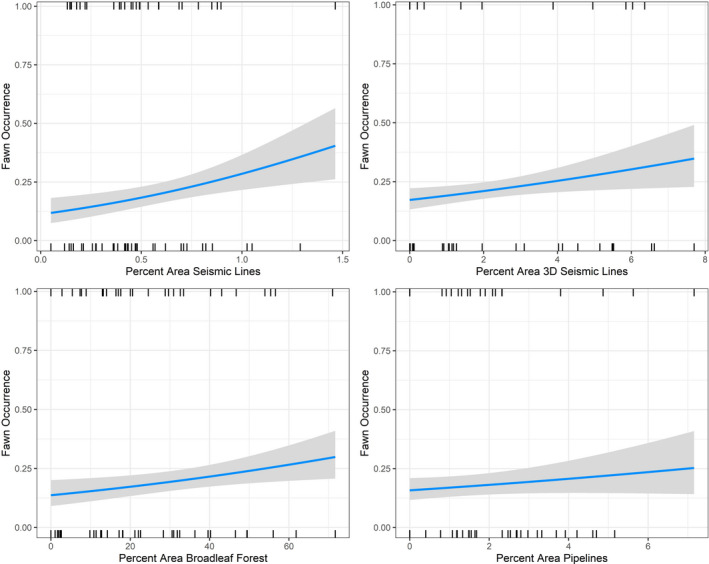
Landscape change is a key driver of biodiversity declines due to habitat loss and fragmentation, but spatially shifting resources can also facilitate range expansion and invasion. Invasive populations are reproductively successful, and landscape change may buoy this success.We show how modeling the spatial structure of reproductive success can elucidate the mechanisms of range shifts and sustained invasions for mammalian species with attendant young. We use an example of white-tailed deer (deer; ) expansion in the Nearctic boreal forest, a North American phenomenon implicated in severe declines of threatened woodland caribou ().We hypothesized that deer reproductive success is linked to forage subsidies provided by extensive landscape change resource extraction. We measured deer occurrence using data from 62 camera traps in northern Alberta, Canada, over three years. We weighed support for multiple competing hypotheses about deer reproductive success using multistate occupancy models and generalized linear models in an AIC-based model selection framework.Spatial patterns of reproductive success were best explained by features associated with petroleum exploration and extraction, which offer early-seral vegetation resource subsidies. Effect sizes of anthropogenic features eclipsed natural heterogeneity by two orders of magnitude. We conclude that anthropogenic early-seral forage subsidies support high springtime reproductive success, mitigating or exceeding winter losses, maintaining populations. . Modeling spatial structuring in reproductive success can become a key goal of remote camera-based global networks, yielding ecological insights into mechanisms of invasion and range shifts to inform effective decision-making for global biodiversity conservation.
景观变化是生物多样性下降的关键驱动因素,原因在于栖息地丧失和破碎化,但空间上转移的资源也能促进物种范围扩张和入侵。入侵种群在繁殖方面取得成功,而景观变化可能会助力这种成功。我们展示了如何通过对繁殖成功的空间结构进行建模,来阐明有幼崽陪伴的哺乳动物物种范围转移和持续入侵的机制。我们以北美寒温带森林中白尾鹿(鹿)的扩张为例,这是一种在北美出现的现象,与濒危的林地驯鹿()数量严重下降有关。我们假设鹿的繁殖成功与广泛的景观变化——资源开采所提供的觅食补贴有关。我们利用加拿大艾伯塔省北部62个相机陷阱在三年间的数据来测量鹿的出现情况。在基于AIC的模型选择框架中,我们使用多状态占用模型和广义线性模型来权衡对关于鹿繁殖成功的多个相互竞争假设的支持度。繁殖成功的空间模式最好由与石油勘探和开采相关的特征来解释,这些特征提供了早期演替植被资源补贴。人为特征的效应大小比自然异质性高出两个数量级。我们得出结论,人为的早期演替觅食补贴支持了春季的高繁殖成功率,减轻或超过了冬季的损失,维持了种群数量。对繁殖成功中的空间结构进行建模可以成为基于远程相机的全球网络的一个关键目标,从而对入侵和范围转移的机制产生生态见解,为全球生物多样性保护的有效决策提供依据。