University of Victoria, School of Environmental Studies, Victoria, British, Columbia, Canada.
Former address: InnoTech Alberta, Bag 4000, Vegreville, Alberta, T9C1T4, Canada.
Sci Rep. 2020 May 26;10(1):8742. doi: 10.1038/s41598-020-65385-3.
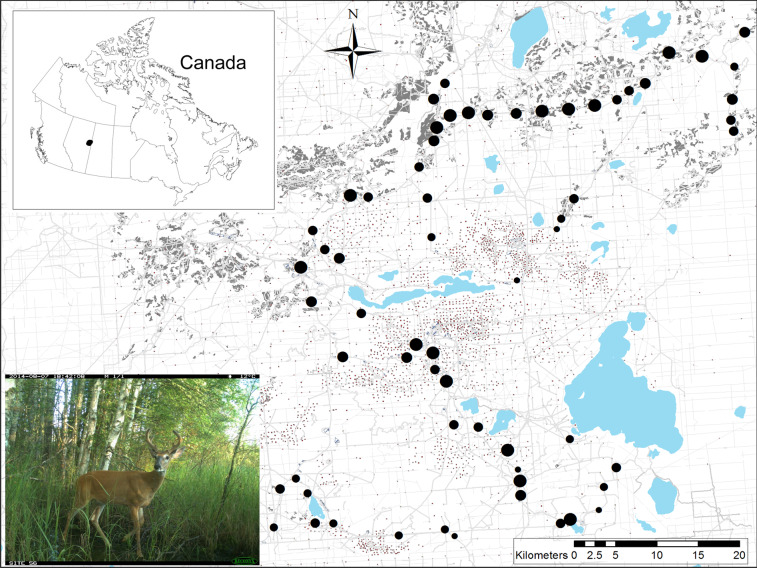
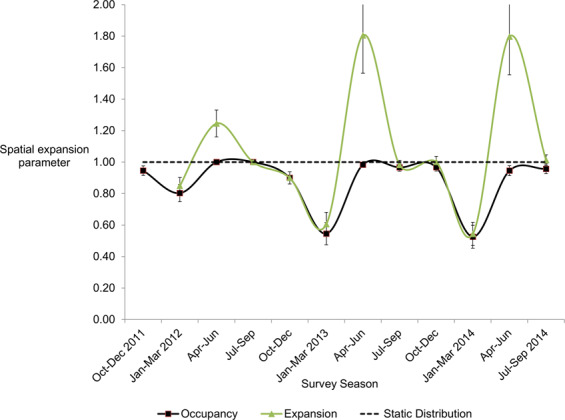
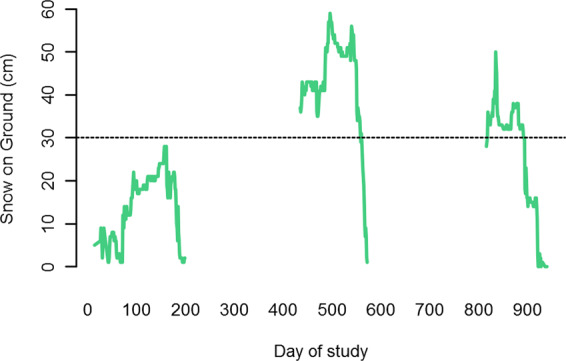
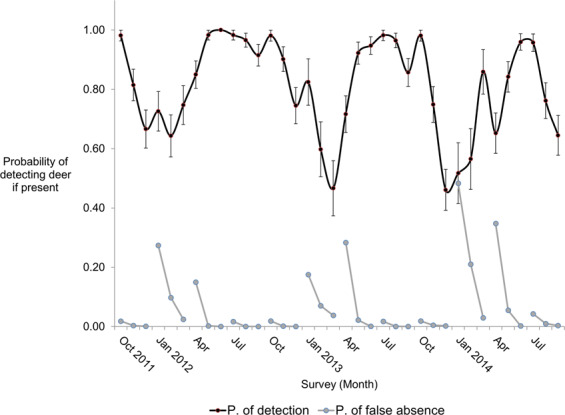
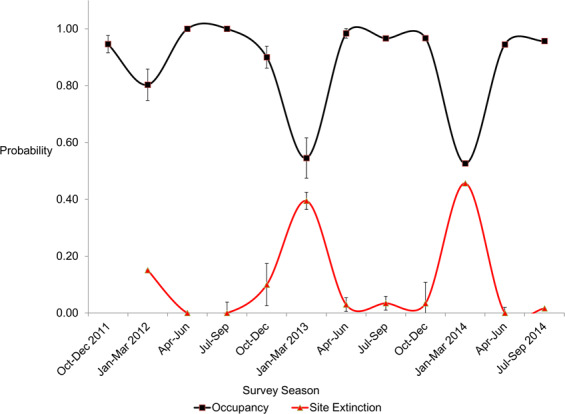
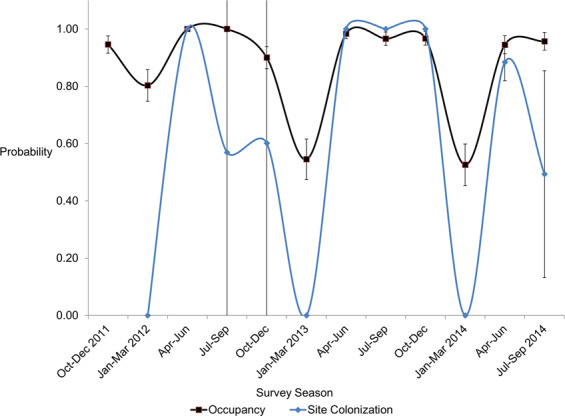
Climate and landscape change are drivers of species range shifts and biodiversity loss; understanding how they facilitate and sustain invasions has been empirically challenging. Winter severity is decreasing with climate change and is a predicted mechanism of contemporary and future range shifts. For example, white-tailed deer (Odocoileus virginianus) expansion is a continental phenomenon across the Nearctic with ecological consequences for entire biotic communities. We capitalized on recent temporal variation in winter severity to examine spatial and temporal dynamics of invasive deer distribution in the Nearctic boreal forest. We hypothesized deer distribution would decrease in severe winters reflecting historical climate constraints, and remain more static in moderate winters reflecting recent climate. Further, we predicted that regardless of winter severity, deer distribution would persist and be best explained by early seral forage subsidies from extensive landscape change via resource extraction. We applied dynamic occupancy models in time, and species distribution models in space, to data from 62 camera traps sampled over 3 years in northeastern Alberta, Canada. Deer distribution shrank more markedly in severe winters but rebounded each spring regardless of winter severity. Deer distribution was best explained by anthropogenic landscape features assumed to provide early seral vegetation subsidy, accounting for natural landcover. We conclude that deer dynamics in the northern boreal forest are influenced both by landscape change across space and winter severity through time, the latter expected to further decrease with climate change. We contend that the combined influence of these two drivers is likely pervasive for many species, with changing resources offsetting or augmenting physiological limitations.
气候和景观变化是物种分布范围转移和生物多样性丧失的驱动因素;了解它们如何促进和维持入侵一直是具有挑战性的。随着气候变化,冬季的严酷程度正在降低,这是当代和未来分布范围转移的一个预测机制。例如,白尾鹿(Odocoileus virginianus)在整个北美大陆的扩张是一种现象,对整个生物群落都有生态后果。我们利用冬季严酷程度的近期时间变化,来研究近北极地区北方森林中入侵性鹿类分布的时空动态。我们假设,由于历史气候限制,在严重的冬季,鹿类的分布会减少,而在温和的冬季,鹿类的分布会保持更加稳定。此外,我们预测,无论冬季的严酷程度如何,鹿类的分布将持续存在,并且可以通过资源开采来解释广泛的景观变化所带来的早期演替饲料的影响。我们在时间上应用了动态占有模型,在空间上应用了物种分布模型,这些模型基于加拿大阿尔伯塔省东北部 62 个相机陷阱 3 年来的数据。在严重的冬季,鹿类的分布明显缩小,但无论冬季的严酷程度如何,每年春天都会反弹。鹿类的分布最好由假设提供早期演替植被补贴的人为景观特征来解释,这些特征考虑了自然土地覆盖。我们得出结论,北方北方森林中的鹿类动态受到空间上的景观变化和时间上的冬季严酷程度的影响,而随着气候变化,后者预计会进一步降低。我们认为,这两个驱动因素的综合影响可能对许多物种都普遍存在,随着资源的变化,生理限制得到了弥补或增强。