Watanabe Takumi, Hayashi Kyoko, Kan Tatsuhiko, Ohwaki Makoto, Kawahara Toshio
Graduate School of Engineering, Chubu University, 1200 Matsumoto, Kasugai, Aichi 487-8501, Japan.
Bio-Lab Co., Ltd., 2-1-3 Komagawa, Hidaka, Saitama 350-1249, Japan.
Biosci Microbiota Food Health. 2021;40(1):43-49. doi: 10.12938/bmfh.2020-019. Epub 2020 Sep 12.
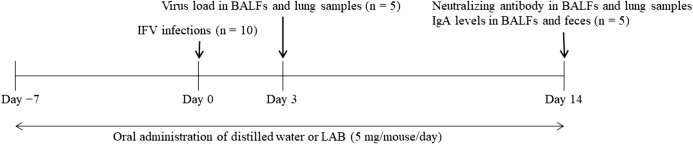
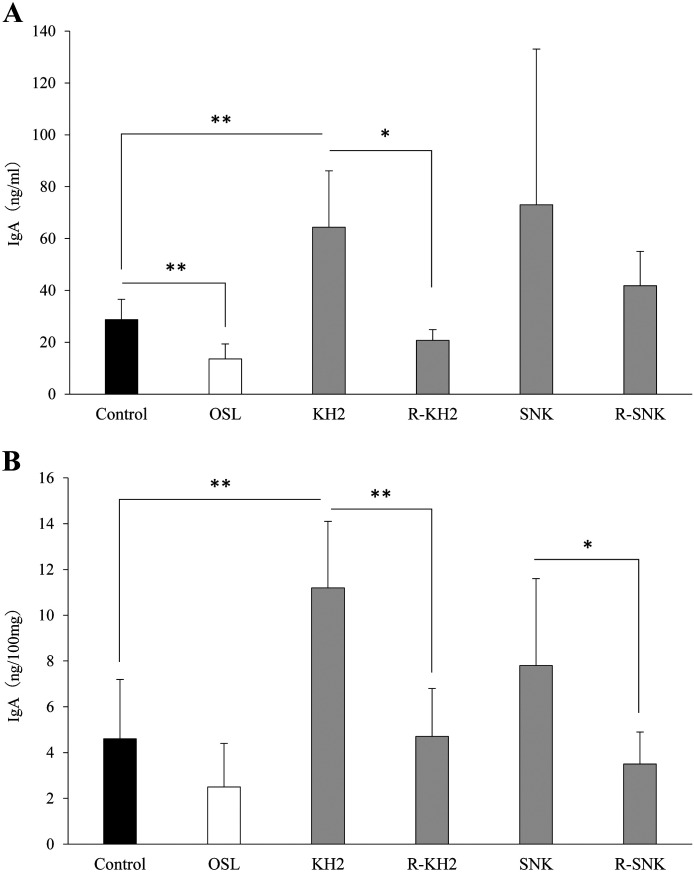
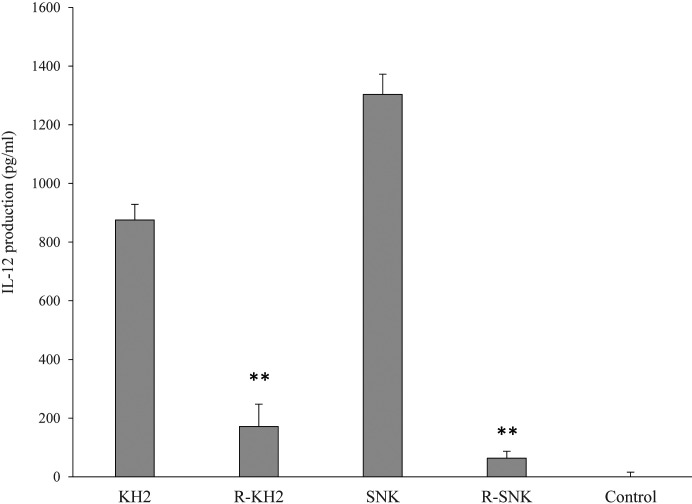
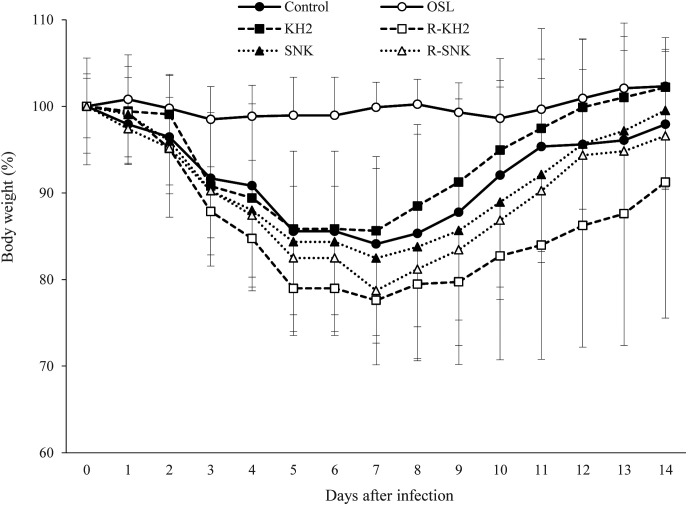
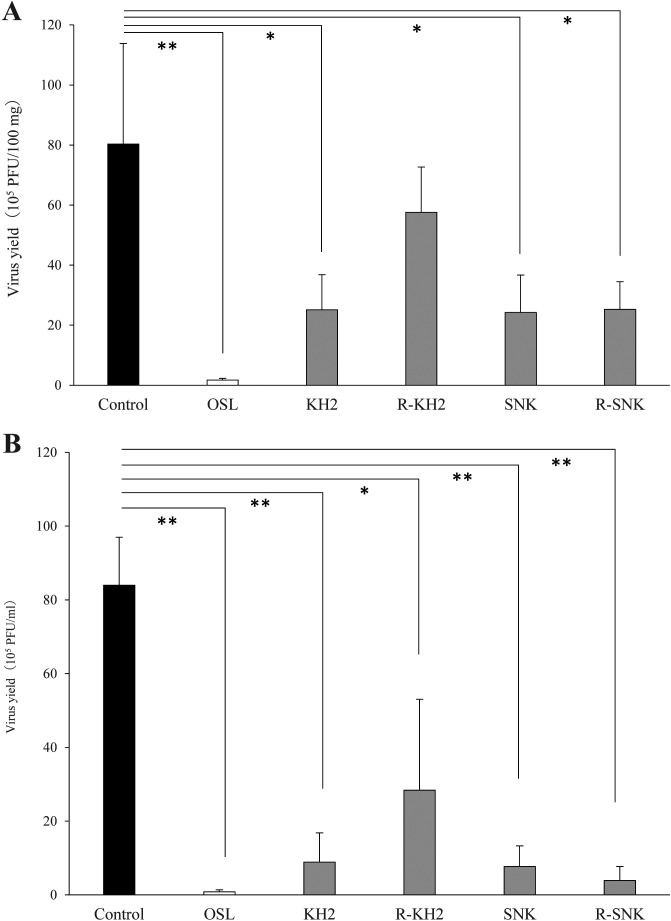
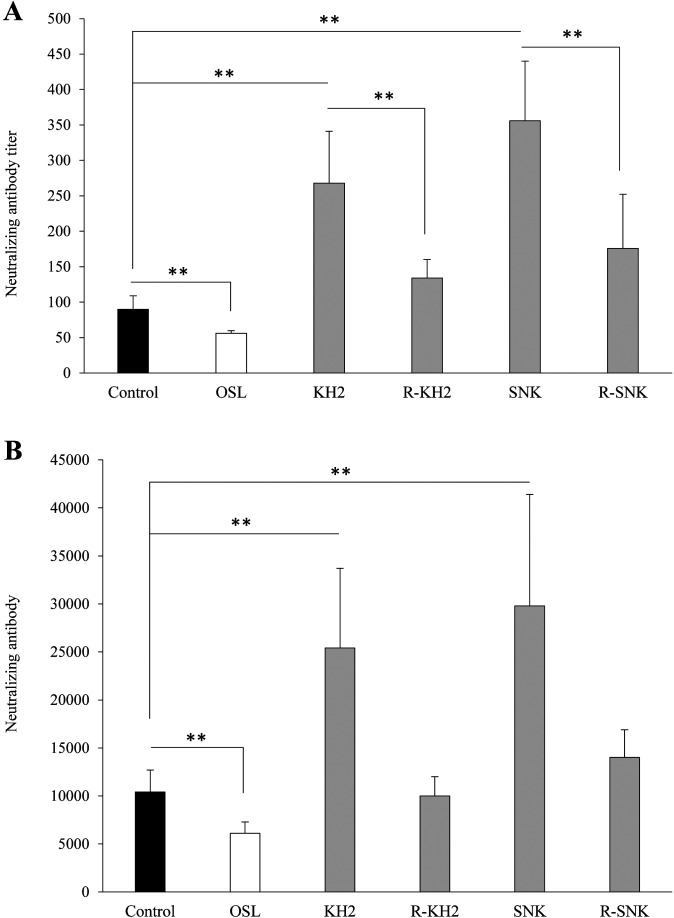
Bacterial RNA has recently emerged as an immune-stimulating factor during viral infection. The immune response in an organism is directly related to the progression of virus infections. Lactic acid bacteria in particular have anticancer, bioprotective, and antiallergic effects by modulating immunity. Here, we aimed to demonstrate the effect of bacterial RNA on production of IL-12, a proinflammatory cytokine, and on activity against influenza A virus (IFV) infection. Oral administration of heat-killed KH2 (KH2) or SNK12 (SNK) in IFV-infected mice suppressed viral replication and stimulated production of virus-specific antibodies. However, ribonuclease-treated KH2 or SNK abrogated the effect, reducing IL-12 production and anti-IFV effects . Taken together, KH2 or SNK showed antiviral effects when administered orally, and the RNAs of KH2 and SNK play a part in these effects, despite the phylogenetic differences between the bacteria.
细菌RNA最近已成为病毒感染期间的一种免疫刺激因子。生物体中的免疫反应与病毒感染的进展直接相关。特别是乳酸菌通过调节免疫力具有抗癌、生物保护和抗过敏作用。在此,我们旨在证明细菌RNA对促炎细胞因子IL-12产生以及对甲型流感病毒(IFV)感染的活性的影响。在IFV感染的小鼠中口服热灭活的KH2(KH2)或SNK12(SNK)可抑制病毒复制并刺激病毒特异性抗体的产生。然而,经核糖核酸酶处理的KH2或SNK消除了这种作用,降低了IL-12的产生和抗IFV作用。综上所述,KH2或SNK口服给药时显示出抗病毒作用,并且尽管细菌之间存在系统发育差异,但KH2和SNK的RNA在这些作用中发挥了作用。