Zhao Yongmei, Wang Kaikai, Zheng Yuanlin, Zeng Xiaobao, Lim Yi Chieh, Liu Tianqing
School of Pharmacy, Nantong University, Nantong, China.
Danish Cancer Society Research Center, Copenhagen, Denmark.
Front Chem. 2021 Jan 15;8:601649. doi: 10.3389/fchem.2020.601649. eCollection 2020.
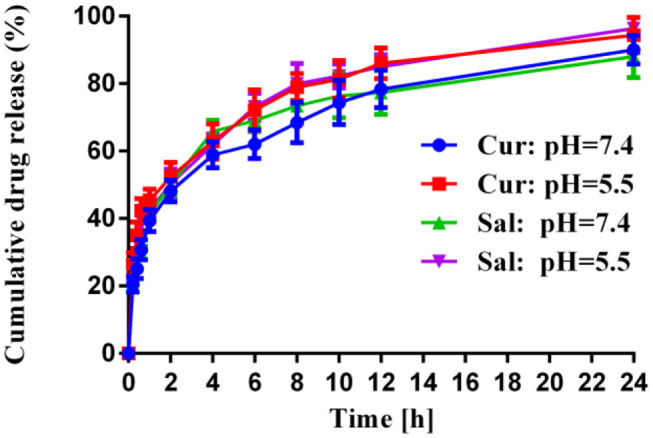
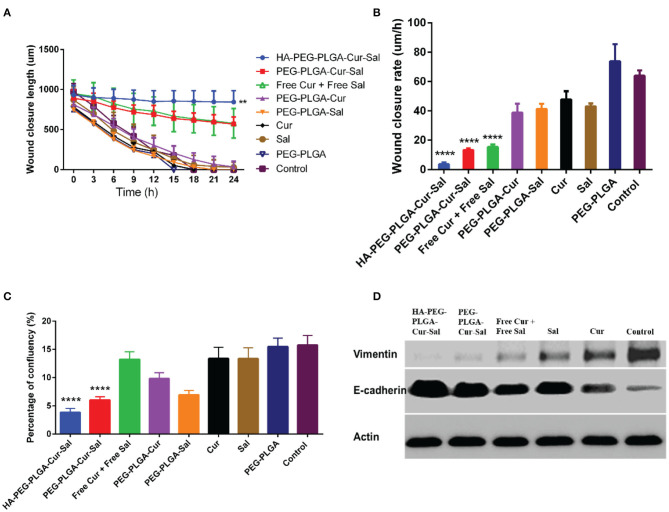
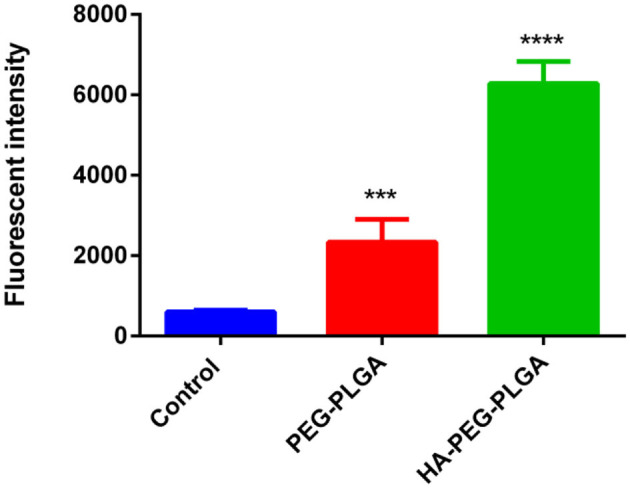
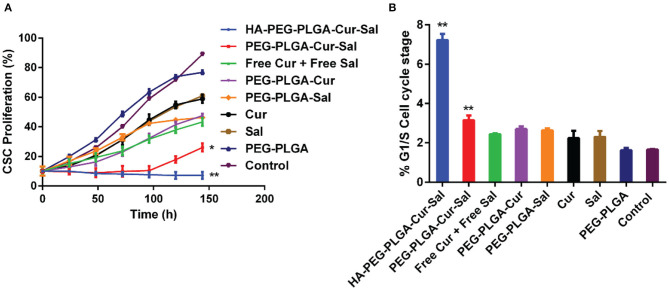
Malignant cancer is a devastating disease often associated with a poor clinical prognosis. For decades, modern drug discoveries have attempted to identify potential modulators that can impede tumor growth. Cancer stem cells however are more resistant to therapeutic intervention, which often leads to treatment failure and subsequent disease recurrence. Here in this study, we have developed a specific multi-target drug delivery nanoparticle system against breast cancer stem cells (BCSCs). Therapeutic agents curcumin and salinomycin have complementary functions of limiting therapeutic resistance and eliciting cellular death, respectively. By conjugation of CD44 cell-surface glycoprotein with poly(lactic-co-glycolic acid) (PLGA) nanoparticles that are loaded with curcumin and salinomycin, we investigated the cellular uptake of BCSCs, drug release, and therapeutic efficacy against BCSCs. We determined CD44-targeting co-delivery nanoparticles are highly efficacious against BCSCs by inducing G cell cycle arrest and limiting epithelial-mesenchymal transition. This curcumin and salinomycin co-delivery system can be an efficient treatment approach to target malignant cancer without the repercussion of disease recurrence.
恶性肿瘤是一种破坏性疾病,通常与不良的临床预后相关。几十年来,现代药物研发一直试图寻找能够抑制肿瘤生长的潜在调节剂。然而,癌症干细胞对治疗干预更具抗性,这常常导致治疗失败及随后的疾病复发。在本研究中,我们开发了一种针对乳腺癌干细胞(BCSCs)的特异性多靶点药物递送纳米颗粒系统。治疗药物姜黄素和沙林霉素分别具有限制治疗抗性和引发细胞死亡的互补功能。通过将CD44细胞表面糖蛋白与负载姜黄素和沙林霉素的聚乳酸-羟基乙酸共聚物(PLGA)纳米颗粒偶联,我们研究了BCSCs的细胞摄取、药物释放以及对BCSCs的治疗效果。我们确定靶向CD44的共递送纳米颗粒通过诱导G期细胞周期停滞和限制上皮-间质转化对BCSCs具有高效性。这种姜黄素和沙林霉素共递送系统可以成为一种有效的治疗恶性肿瘤的方法,而不会有疾病复发的后果。