Jose Thulasee, Warner David O, O'Horo John C, Peters Steve G, Chaudhry Rajeev, Binnicker Matthew J, Burger Charles D
Department of Anesthesiology and Perioperative Medicine, Mayo Clinic, Rochester, MN.
Department of Internal Medicine, Mayo Clinic, Rochester, MN.
Mayo Clin Proc Innov Qual Outcomes. 2021 Feb;5(1):109-117. doi: 10.1016/j.mayocpiqo.2020.12.004. Epub 2020 Dec 14.
To describe the design, implementation, and utilization of electronic health record (EHR)-based digital health surveillance strategies used to manage the coronavirus disease 2019 (COVID-19) pandemic and to ensure delivery of high-quality clinical care, such as case identification, remote monitoring, telemedicine services, and recruitment to clinical trials at Mayo Clinic.
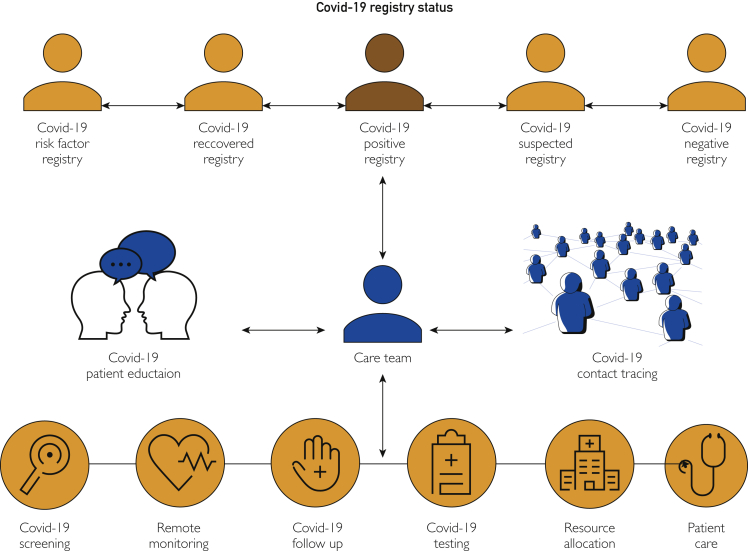
The design and implementation work described in this report was performed at Mayo Clinic, a large multistate integrated health care system with more than 1.5 million annual patient visits that uses the Epic EHR system. Rule-based live registries were designed in the EHR system to classify patients who currently test positive for COVID-19, patients who test positive but have recovered from COVID-19, patients who are thought to have COVID-19 but do not yet meet clinical diagnostic criteria, patients who test negative for COVID-19, and patients who exceed a risk score for serious complications from COVID-19.
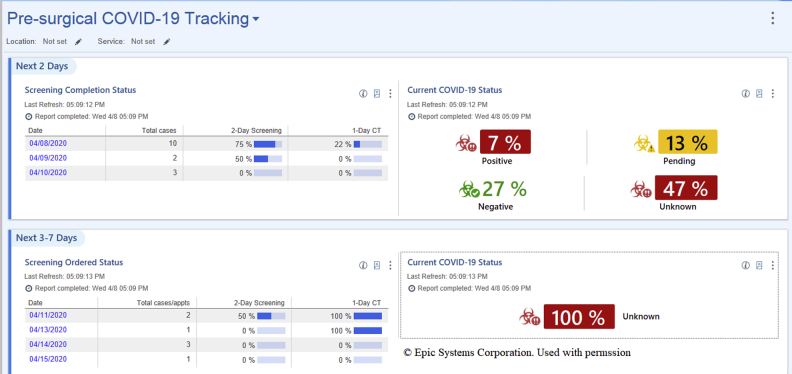
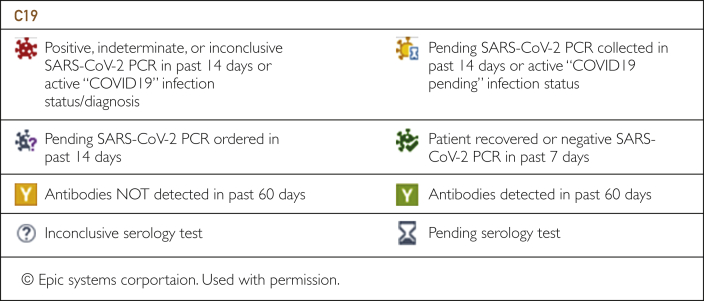
By use of registries, custom dashboards and operational reports were developed to provide a daily high-level summary for clinical practice use and up-to-date information to manage individual patients affected by COVID-19, including support of case identification, contact isolation, and other care management tasks.
We developed and implemented a systematic approach to the use of EHR patient registries to manage the COVID-19 pandemic that proved feasible and useful in a large multistate group clinical practice. The key to harnessing the potential of digital surveillance tools to promote patient-centered care during the COVID-19 pandemic was to use the registry data, reports, and dashboards as informatics tools to inform decision-making
描述基于电子健康记录(EHR)的数字健康监测策略的设计、实施和应用,这些策略用于管理2019冠状病毒病(COVID-19)大流行,并确保提供高质量的临床护理,如病例识别、远程监测、远程医疗服务以及梅奥诊所的临床试验招募。
本报告中描述的设计和实施工作在梅奥诊所进行,梅奥诊所是一个大型的多州综合医疗保健系统,每年有超过150万患者就诊,使用Epic EHR系统。在EHR系统中设计了基于规则的实时登记册,以对目前COVID-19检测呈阳性的患者、COVID-19检测呈阳性但已康复的患者、被认为感染COVID-19但尚未符合临床诊断标准的患者、COVID-19检测呈阴性的患者以及COVID-19严重并发症风险评分超标的患者进行分类。
通过使用登记册,开发了定制仪表板和运营报告,以提供每日临床实践使用的高级摘要以及管理受COVID-19影响的个体患者的最新信息,包括支持病例识别、接触隔离和其他护理管理任务。
我们开发并实施了一种系统方法,利用EHR患者登记册来管理COVID-19大流行,在一个大型多州团体临床实践中证明是可行且有用的。在COVID-19大流行期间,利用数字监测工具促进以患者为中心的护理的关键在于将登记册数据、报告和仪表板用作信息学工具来为决策提供依据。