Chou Ann F, Duncan Ashten R, Hallford Gene, Kelley David M, Dean Lori Williamson
Department of Family and Preventive Medicine, College of Medicine, The University of Oklahoma Health Sciences Center (OUHSC), 900 NE 10th St., Oklahoma City, OK, 73151, USA.
School of Community Medicine, OUHSC, Tulsa, OK, USA.
J Community Genet. 2021 Jul;12(3):291-309. doi: 10.1007/s12687-021-00508-5. Epub 2021 Feb 1.
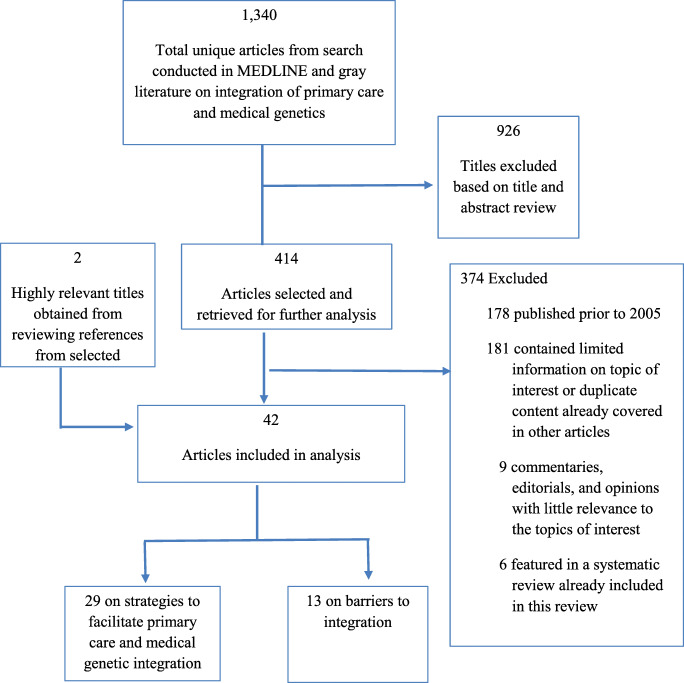
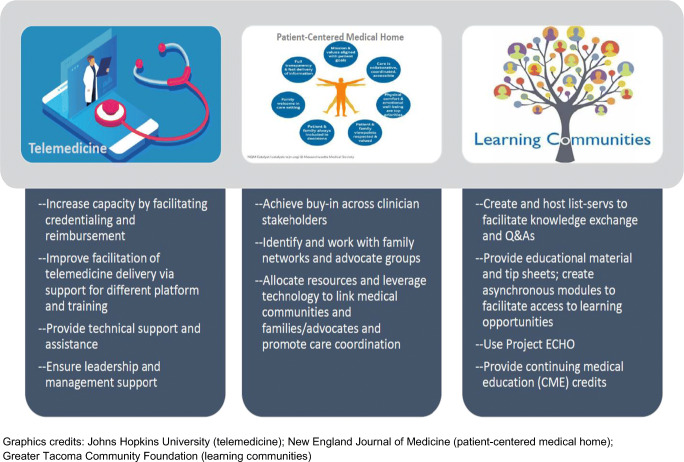
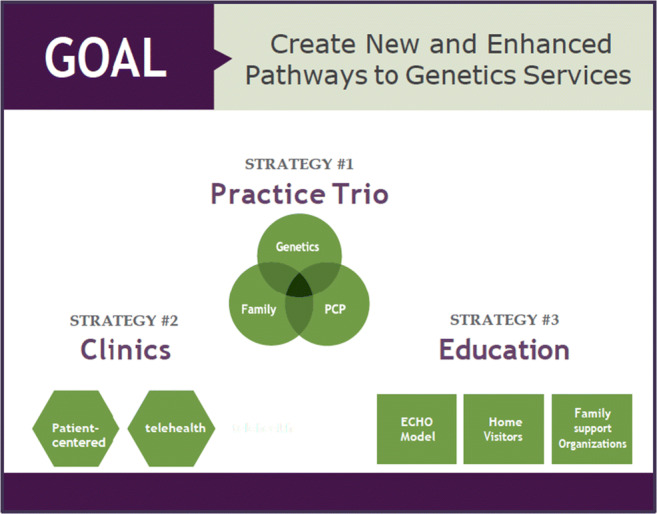
Despite clinical and technological advances, serious gaps remain in delivering genetic services due to disparities in workforce distribution and lack of coverage for genetic testing and counseling. Genetic services delivery, particularly in medically underserved populations, may rely heavily on primary care providers (PCPs). This study aims to identify barriers to integrating genetic services and primary care, and strategies to support integration, by conducting a scoping review. Literature synthesis found barriers most frequently cited by PCPs including insufficient knowledge about genetics and risk assessment, lack of access to geneticists, and insufficient time to address these challenges. Telegenetics, patient-centered care, and learning communities are strategies to overcome these barriers. Telegenetics supplements face-to-face clinics by providing remote access to genetic services. It may also be used for physician consultations and education. Patient-centered care allows providers, families, and patients to coordinate services and resources. Access to expert information provides a critical resource for PCPs. Learning communities may represent a mechanism that facilitates information exchange and knowledge sharing among different providers. As PCPs often play a crucial role caring for patients with genetic disorders in underserved areas, barriers to primary care-medical genetics integration must be addressed to improve access. Strategies, such as telegenetics, promotion of evidence-based guidelines, point-of-care risk assessment tools, tailored education in genetics-related topics, and other system-level strategies, will facilitate better genetics and primary care integration, which in turn, may improve genetic service delivery to patients residing in underserved communities.
尽管在临床和技术方面取得了进展,但由于劳动力分布不均以及基因检测和咨询服务覆盖不足,在提供基因服务方面仍存在严重差距。基因服务的提供,尤其是在医疗服务欠缺的人群中,可能严重依赖初级保健提供者(PCP)。本研究旨在通过进行范围综述,确定整合基因服务和初级保健的障碍以及支持整合的策略。文献综合分析发现,初级保健提供者最常提到的障碍包括对遗传学和风险评估的知识不足、难以接触到遗传学家以及处理这些挑战的时间不足。远程遗传学、以患者为中心的护理和学习社区是克服这些障碍的策略。远程遗传学通过提供远程基因服务补充面对面诊所。它还可用于医生咨询和教育。以患者为中心的护理使提供者、家庭和患者能够协调服务和资源。获取专家信息为初级保健提供者提供了关键资源。学习社区可能是促进不同提供者之间信息交流和知识共享的一种机制。由于初级保健提供者在为服务欠缺地区的遗传疾病患者提供护理方面往往发挥关键作用,因此必须解决初级保健与医学遗传学整合的障碍,以改善服务可及性。诸如远程遗传学、推广循证指南、即时护理风险评估工具、针对遗传学相关主题的定制教育以及其他系统层面的策略,将促进更好的遗传学与初级保健整合,进而可能改善为居住在服务欠缺社区的患者提供的基因服务。