Neuroradiology Research Unit, Section of Neuroradiology, Department of Radiology, Aarhus University Hospital, Aarhus, Denmark.
Center of Functionally Integrative Neuroscience, Department of Clinical Medicine, Aarhus University, Aarhus, Denmark.
Physiol Rep. 2021 Feb;9(3):e14726. doi: 10.14814/phy2.14726.
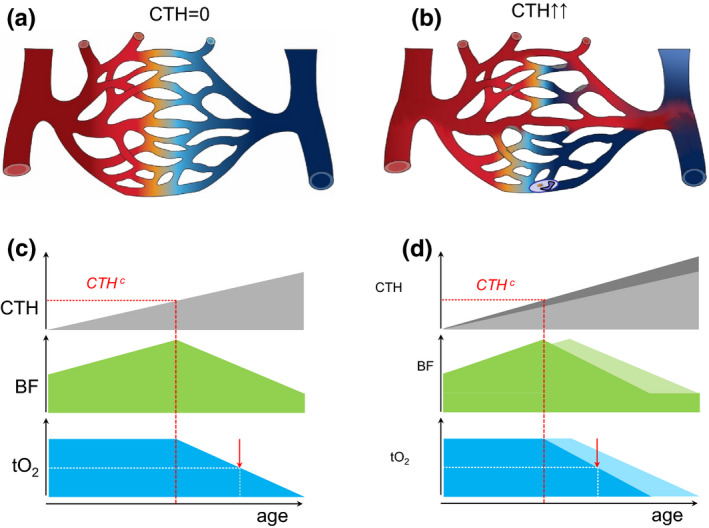
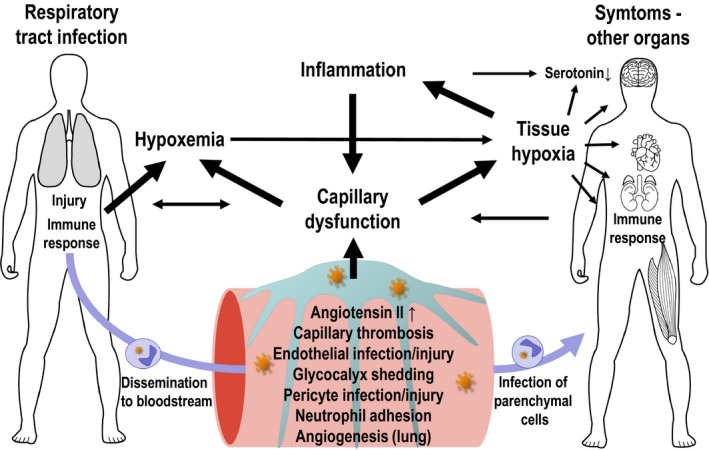
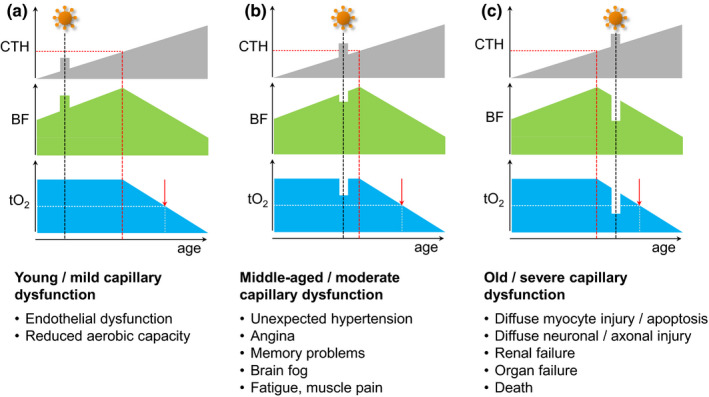
Corona virus disease 2019 (COVID-19) causes symptoms from multiple organs after infection by severe acute respiratory syndrome corona virus 2 (SARS CoV-2). They range from early, low blood oxygen levels (hypoxemia) without breathlessness ("silent hypoxia"), delirium, rashes, and loss of smell (anosmia), to persisting chest pain, muscle weakness and -pain, fatigue, confusion, memory problems and difficulty to concentrate ("brain fog"), mood changes, and unexpected onset of hypertension or diabetes. SARS CoV-2 affects the microcirculation, causing endothelial cell swelling and damage (endotheliitis), microscopic blood clots (microthrombosis), capillary congestion, and damage to pericytes that are integral to capillary integrity and barrier function, tissue repair (angiogenesis), and scar formation. Similar to other instances of critical illness, COVID-19 is also associated with elevated cytokine levels in the systemic circulation. This review examines how capillary damage and inflammation may contribute to these acute and persisting COVID-19 symptoms by interfering with blood and tissue oxygenation and with brain function. Undetectable by current diagnostic methods, capillary flow disturbances limit oxygen diffusion exchange in lungs and tissue and may therefore cause hypoxemia and tissue hypoxia. The review analyzes the combined effects of COVID-19-related capillary damage, pre-existing microvascular changes, and upstream vascular tone on tissue oxygenation in key organs. It identifies a vicious cycle, as infection- and hypoxia-related inflammation cause capillary function to deteriorate, which in turn accelerates hypoxia-related inflammation and tissue damage. Finally, the review addresses the effects of low oxygen and high cytokine levels in brain tissue on neurotransmitter synthesis and mood. Methods to assess capillary functions in human organs and therapeutic means to protect capillary functions and stimulate capillary bed repair may prove important for the individualized management of COVID-19 patients and targeted rehabilitation strategies.
新型冠状病毒病 2019(COVID-19)是由严重急性呼吸综合征冠状病毒 2(SARS CoV-2)感染引起的多器官疾病。其症状从早期低血氧水平(低氧血症)但无呼吸困难(“静默性低氧血症”)、意识障碍、皮疹和嗅觉丧失(嗅觉障碍),到持续性胸痛、肌肉无力和疼痛、疲劳、意识混乱、记忆问题和注意力集中困难(“脑雾”)、情绪变化以及高血压或糖尿病的意外发作。SARS CoV-2 影响微循环,导致内皮细胞肿胀和损伤(血管内皮炎)、微血管血栓形成(微血栓形成)、毛细血管充血以及对周细胞的损伤,而周细胞是毛细血管完整性和屏障功能、组织修复(血管生成)和瘢痕形成的重要组成部分。与其他危重症情况类似,COVID-19 也与全身循环中细胞因子水平升高有关。本综述探讨了毛细血管损伤和炎症如何通过干扰血液和组织氧合以及大脑功能,导致这些急性和持续性 COVID-19 症状。目前的诊断方法无法检测到毛细血管血流紊乱,限制了肺部和组织中的氧气扩散交换,因此可能导致低氧血症和组织缺氧。该综述分析了 COVID-19 相关毛细血管损伤、先前存在的微血管变化以及上游血管张力对关键器官组织氧合的综合影响。它确定了一个恶性循环,即感染和缺氧相关的炎症导致毛细血管功能恶化,反过来又加速了与缺氧相关的炎症和组织损伤。最后,该综述探讨了脑组织中低氧和高细胞因子水平对神经递质合成和情绪的影响。评估人体器官毛细血管功能的方法以及保护毛细血管功能和刺激毛细血管床修复的治疗手段,可能对 COVID-19 患者的个体化管理和有针对性的康复策略具有重要意义。