NIHR Biomedical Research Centre, University Hospital Southampton NHS Foundation Trust, Southampton SO16 6YD, UK.
Clinical and Experimental Sciences, Faculty of Medicine, University of Southampton, Southampton SO16 6YD, UK.
Med Sci (Basel). 2023 Nov 1;11(4):70. doi: 10.3390/medsci11040070.
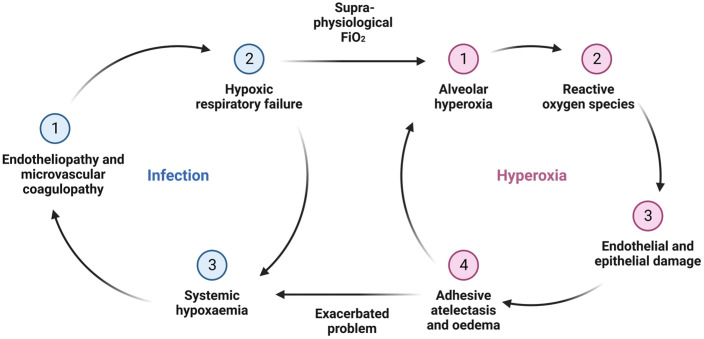
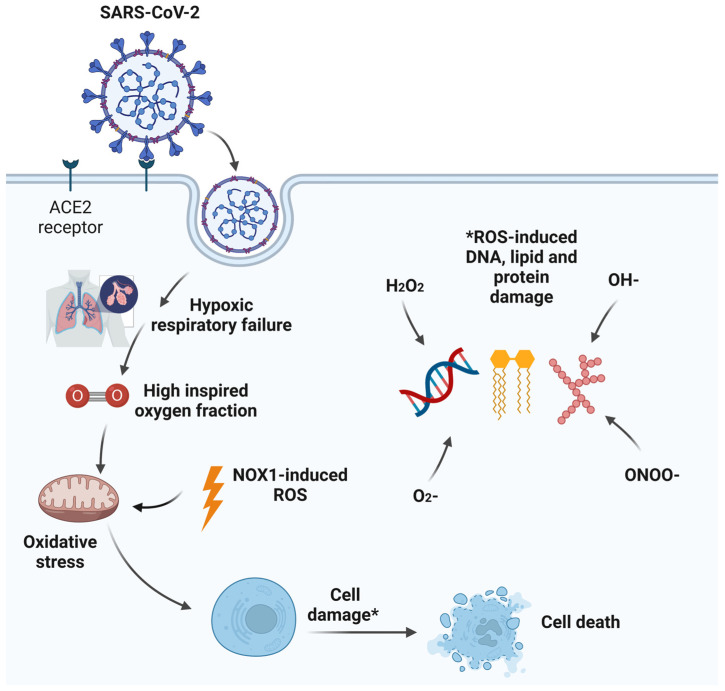
Acute hypoxic respiratory failure (AHRF) is a prominent feature of severe acute respiratory syndrome coronavirus 2 (SARS-CoV-2) critical illness. The severity of gas exchange impairment correlates with worse prognosis, and AHRF requiring mechanical ventilation is associated with substantial mortality. Persistent impaired gas exchange leading to hypoxemia often warrants the prolonged administration of a high fraction of inspired oxygen (FiO). In SARS-CoV-2 AHRF, systemic vasculopathy with lung microthrombosis and microangiopathy further exacerbates poor gas exchange due to alveolar inflammation and oedema. Capillary congestion with microthrombosis is a common autopsy finding in the lungs of patients who die with coronavirus disease 2019 (COVID-19)-associated acute respiratory distress syndrome. The need for a high FiO to normalise arterial hypoxemia and tissue hypoxia can result in alveolar hyperoxia. This in turn can lead to local alveolar oxidative stress with associated inflammation, alveolar epithelial cell apoptosis, surfactant dysfunction, pulmonary vascular abnormalities, resorption atelectasis, and impairment of innate immunity predisposing to secondary bacterial infections. While oxygen is a life-saving treatment, alveolar hyperoxia may exacerbate pre-existing lung injury. In this review, we provide a summary of oxygen toxicity mechanisms, evaluating the consequences of alveolar hyperoxia in COVID-19 and propose established and potential exploratory treatment pathways to minimise alveolar hyperoxia.
急性低氧性呼吸衰竭(AHRF)是严重急性呼吸综合征冠状病毒 2 型(SARS-CoV-2)危重病的突出特征。气体交换受损的严重程度与预后较差相关,需要机械通气的 AHRF与较高的死亡率相关。持续的气体交换受损导致低氧血症,通常需要长时间给予高吸入氧分数(FiO)。在 SARS-CoV-2 型 AHRF 中,系统性血管病伴肺微血栓和微血管病进一步加重了由于肺泡炎症和水肿导致的气体交换不良。毛细血管充血伴微血栓是死于与 2019 年冠状病毒病(COVID-19)相关的急性呼吸窘迫综合征的患者肺部的常见尸检发现。为了使动脉低氧血症和组织缺氧正常化而需要高 FiO,可能导致肺泡过度氧合。这反过来又可能导致局部肺泡氧化应激,伴发炎症、肺泡上皮细胞凋亡、表面活性剂功能障碍、肺血管异常、吸收性肺不张和固有免疫受损,从而容易继发细菌感染。虽然氧气是一种救命的治疗方法,但肺泡过度氧合可能会加重先前存在的肺损伤。在这篇综述中,我们总结了氧毒性机制,评估了 COVID-19 中肺泡过度氧合的后果,并提出了既定和潜在的探索性治疗途径,以尽量减少肺泡过度氧合。