School of Medicine, West Virginia University, Morgantown, WV, 26505, USA.
West Virginia Clinical and Translational Science Institute, Morgantown, WV, USA.
Subst Abuse Treat Prev Policy. 2021 Feb 1;16(1):14. doi: 10.1186/s13011-021-00349-y.
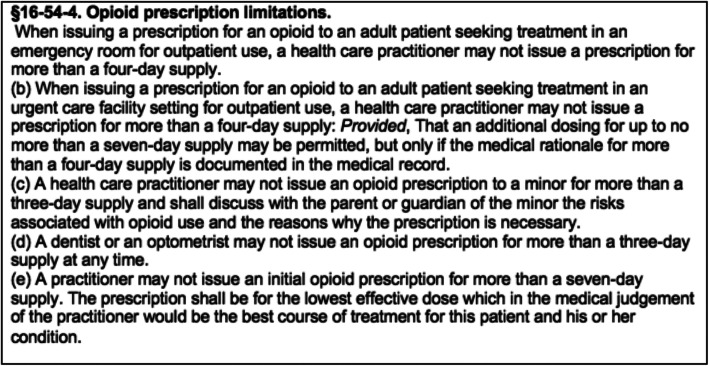
The Opioid Reduction Act (SB 273) took effect in West Virginia in June 2018. This legislation limited ongoing chronic opioid prescriptions to 30 days' supply, and first-time opioid prescriptions to 7 days' supply for surgeons and 3 days' for emergency rooms and dentists. The purpose of this study was to determine the effect of this legislation on reducing opioid prescriptions in West Virginia, with the goal of informing future similar policy efforts.
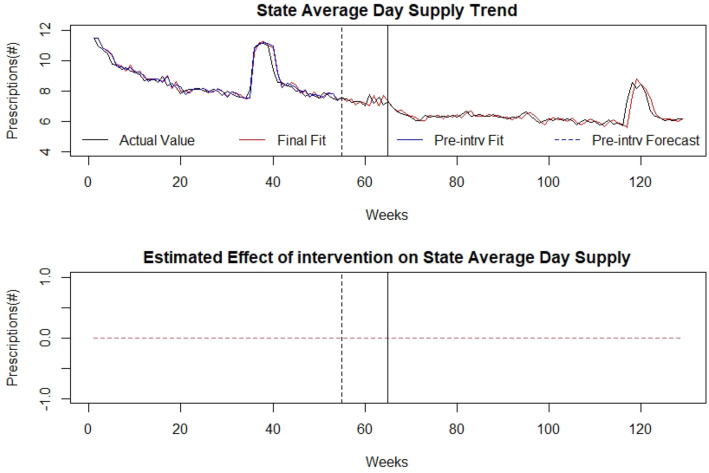
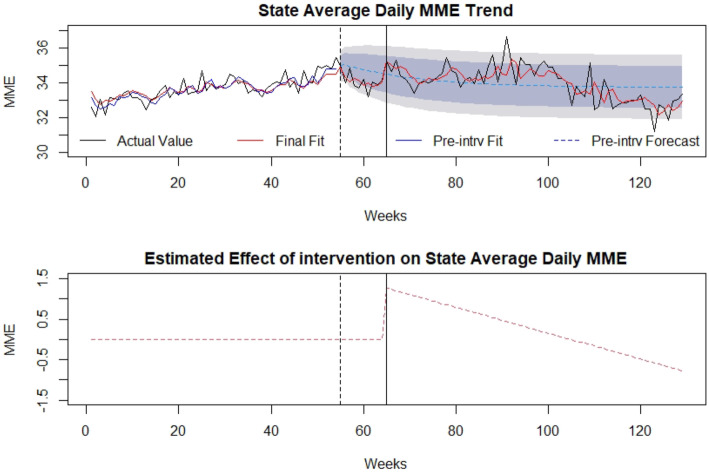
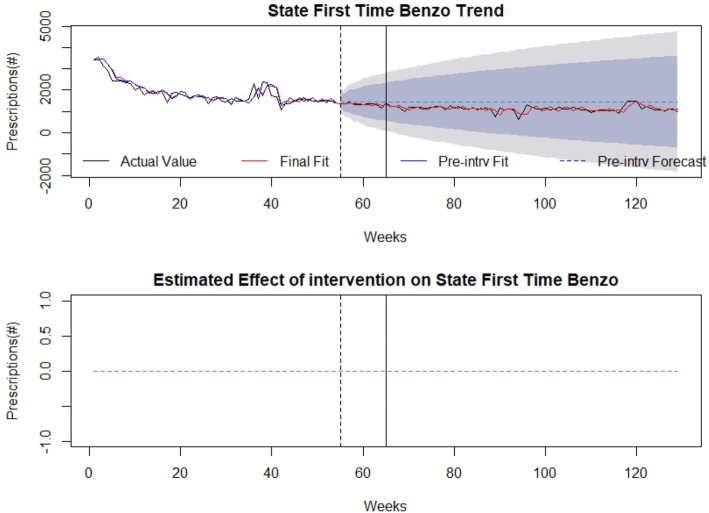
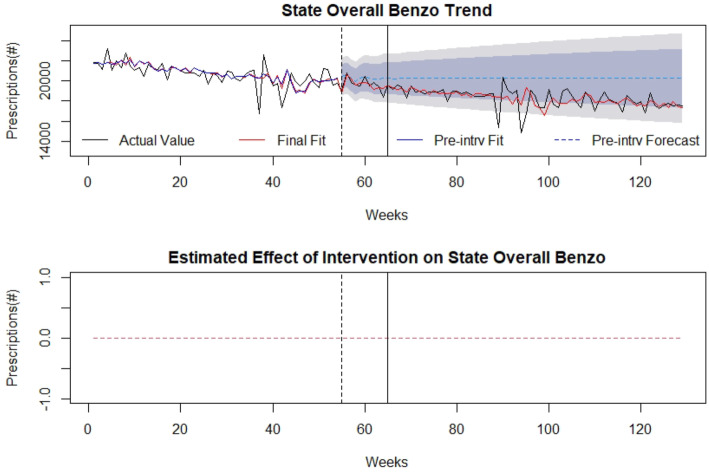
Data were requested from the state Prescription Drug Monitoring Program (PDMP) including overall number of opioid prescriptions, number of first-time opioid prescriptions, average daily morphine milligram equivalents (MME) and prescription duration (expressed as "days' supply") given to adults during the 64 week time periods before and after legislation enactment. Statistical analysis was done utilizing an autoregressive integrated moving average (ARIMA) interrupted time series analysis to assess impact of both legislation announcement and enactment while controlling secular trends and considering autocorrelation trends. Benzodiazepine prescriptions were utilized as a control.
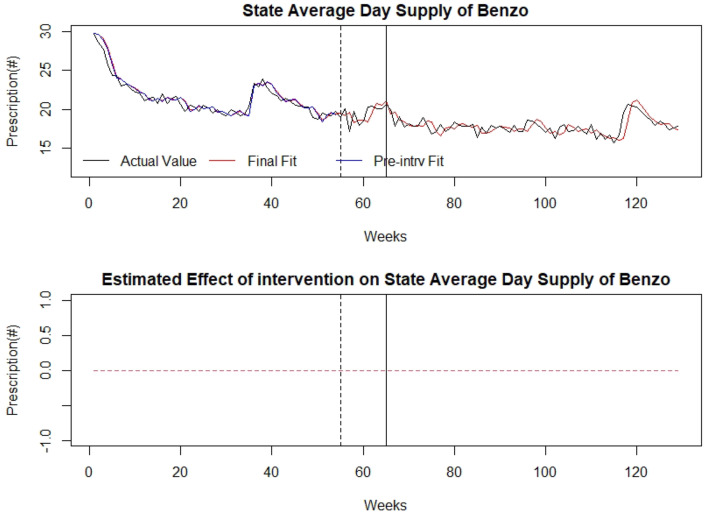
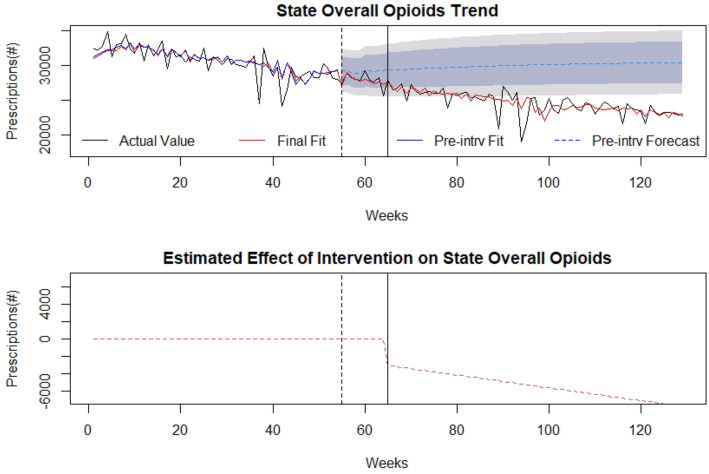
Our analysis demonstrates a significant decrease in overall state opioid prescribing as well as a small change in average daily MME associated with the date of the legislation's enactment when considering serial correlation in the time series and accounting for pre-intervention trends. There was no such association found with benzodiazepine prescriptions.
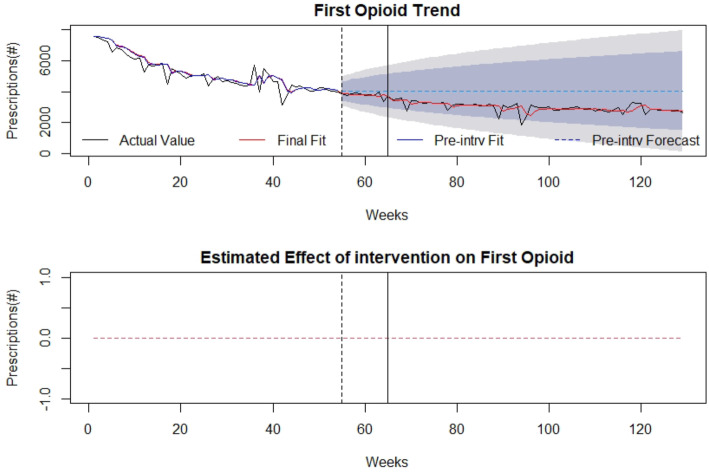
Results of the current study suggest that SB 273 was associated with an average 22.1% decrease of overall opioid prescriptions and a small change in average daily MME relative to the date of legislative implementation in West Virginia. There was, however, no association of the legislation on first-time opioid prescriptions or days' supply of opioid medication, and all variables were trending downward prior to implementation of SB 273. The control demonstrated no relationship to the law.
《阿片类药物减少法案》(SB 273)于 2018 年 6 月在西弗吉尼亚州生效。该法案将持续的慢性阿片类药物处方限制在 30 天供应量以内,首次开阿片类药物处方的外科医生为 7 天供应量,急诊室和牙医为 3 天供应量。本研究的目的是确定该立法对减少西弗吉尼亚州阿片类药物处方的影响,以期为未来类似的政策努力提供信息。
从州处方药物监测计划(PDMP)中请求数据,包括在立法颁布前后的 64 周时间内,成年人的阿片类药物总处方数量、首次阿片类药物处方数量、平均每日吗啡毫克当量(MME)和处方持续时间(表示为“供应天数”)。利用自回归综合移动平均(ARIMA)中断时间序列分析进行统计分析,以评估立法公告和颁布对控制季节性趋势和考虑自相关趋势的影响。苯二氮䓬类药物处方被用作对照。
我们的分析表明,在考虑时间序列中的序列相关性并考虑干预前趋势的情况下,整体州阿片类药物处方显著减少,与立法颁布日期相关的平均每日 MME 略有变化。然而,苯二氮䓬类药物处方没有发现这种关联。
当前研究的结果表明,SB 273 与西弗吉尼亚州立法实施日期相关,整体阿片类药物处方平均减少 22.1%,平均每日 MME 略有变化。然而,立法对首次阿片类药物处方或阿片类药物供应天数没有影响,并且在实施 SB 273 之前,所有变量都呈下降趋势。控制变量与法律没有关系。