Instituto Cajal, Consejo Superior de Investigaciones Cientificas (CSIC), Madrid, Spain.
University of Copenhagen, Copenhagen, Denmark.
Life Sci Alliance. 2021 Feb 1;4(3). doi: 10.26508/lsa.202000693. Print 2021 Mar.
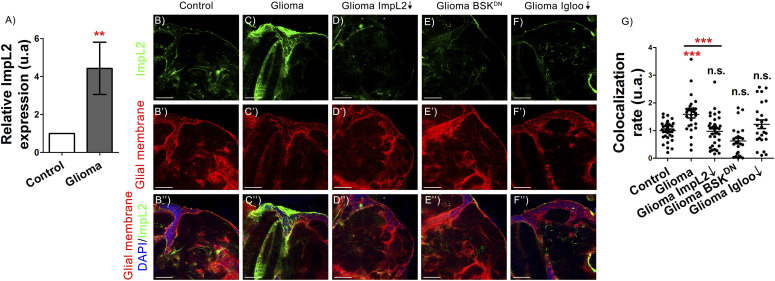
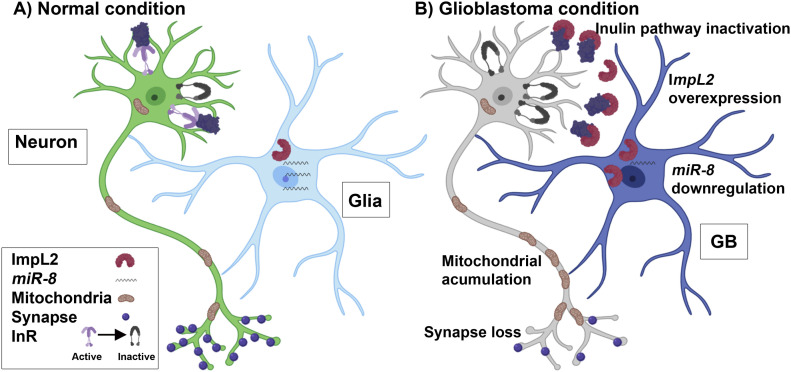
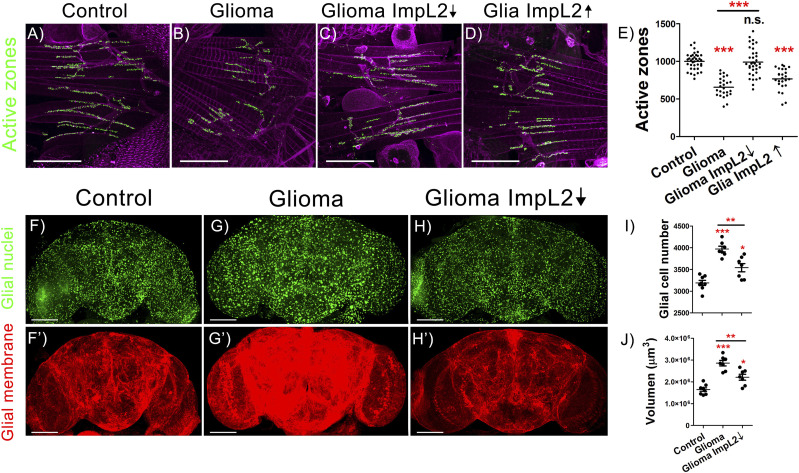
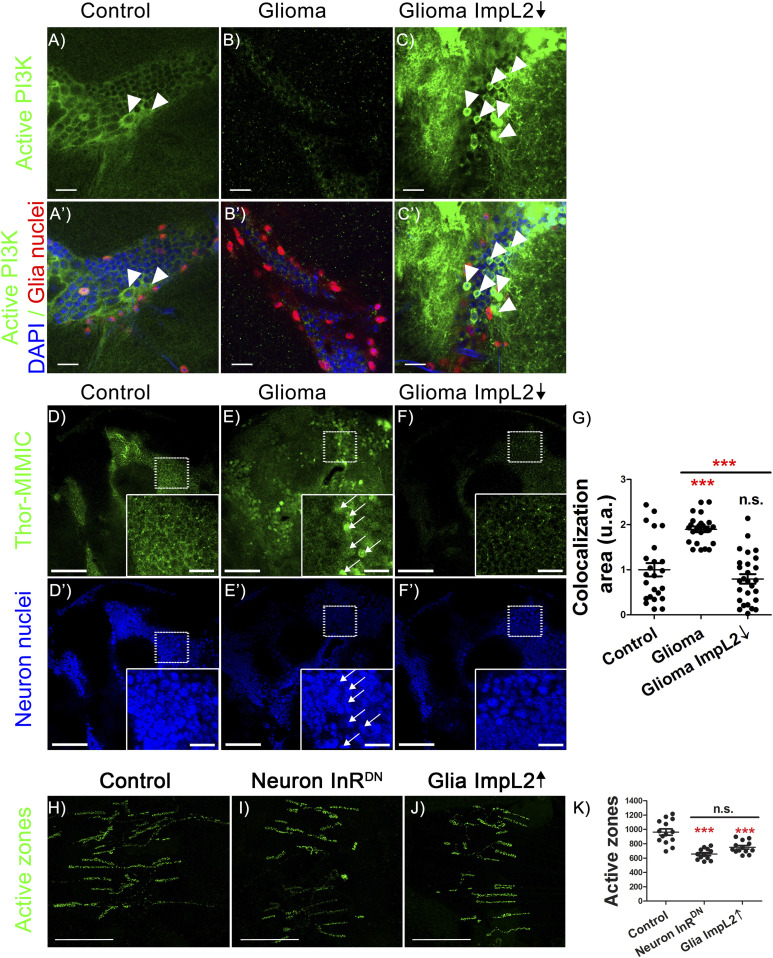
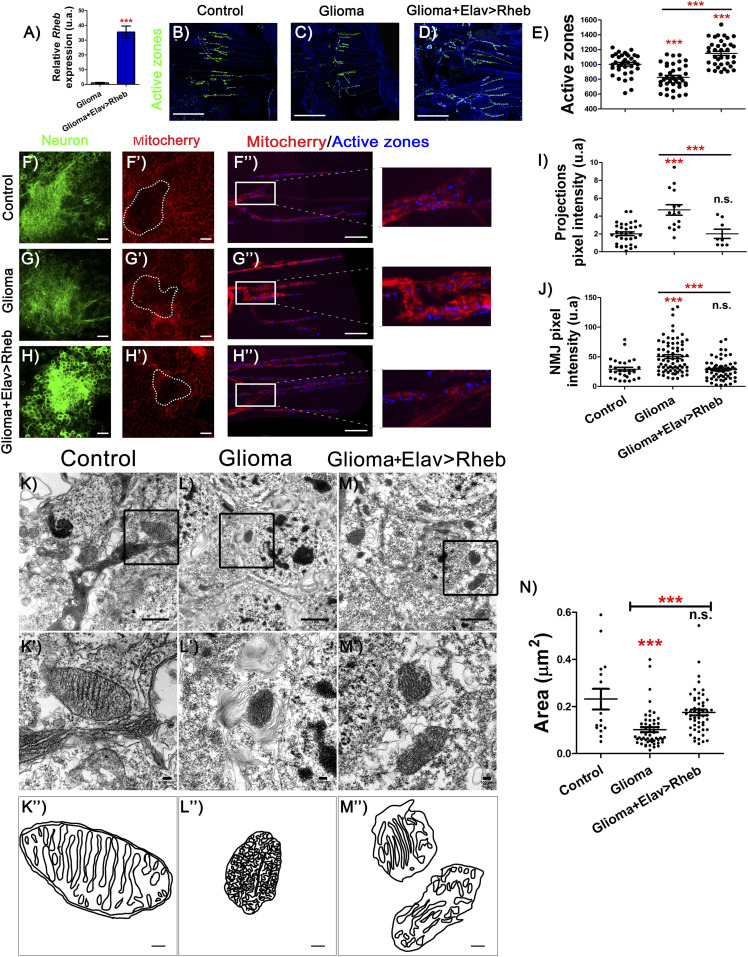
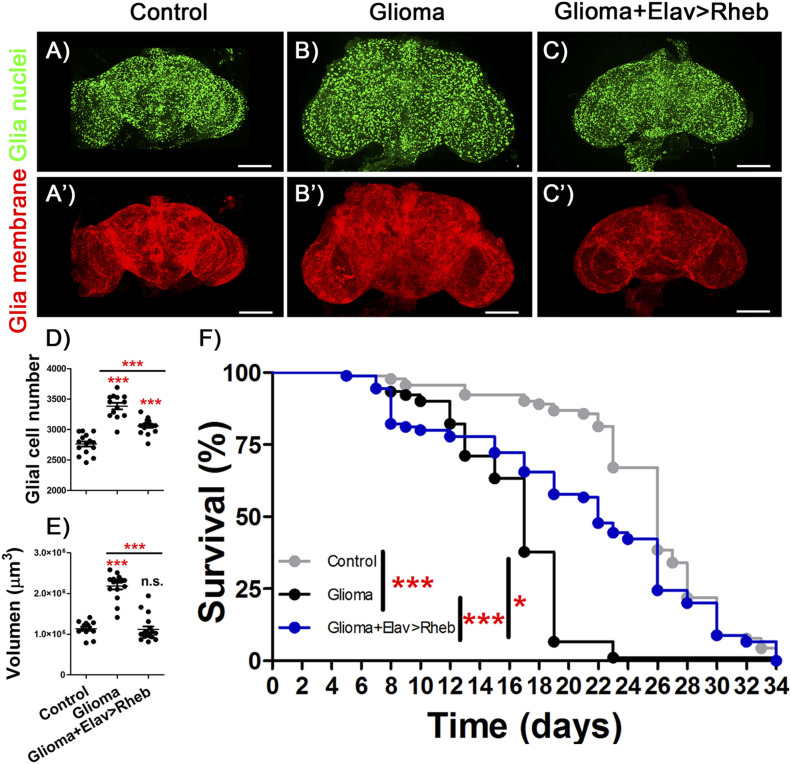
Cell to cell communication facilitates tissue development and physiology. Under pathological conditions, brain tumors disrupt glia-neuron communication signals that in consequence, promote tumor expansion at the expense of surrounding healthy tissue. The glioblastoma is one of the most aggressive and frequent primary brain tumors. This type of glioma expands and infiltrates into the brain, causing neuronal degeneration and neurological decay, among other symptoms. Here, we describe in a model how glioblastoma cells produce ImpL2, an antagonist of the insulin pathway, which targets neighboring neurons and causes mitochondrial disruption as well as synapse loss, both early symptoms of neurodegeneration. Furthermore, glioblastoma progression requires insulin pathway attenuation in neurons. Restoration of neuronal insulin activity is sufficient to rescue synapse loss and to delay the premature death caused by glioma. Therefore, signals from glioblastoma to neuron emerge as a potential field of study to prevent neurodegeneration and to develop anti-tumoral strategies.
细胞间通讯促进组织发育和生理机能。在病理条件下,脑肿瘤破坏神经胶质-神经元通讯信号,从而促进肿瘤扩张,损害周围健康组织。胶质母细胞瘤是最具侵袭性和最常见的原发性脑肿瘤之一。这种类型的神经胶质瘤会扩张并渗透到大脑中,导致神经元退化和神经功能衰退等症状。在这里,我们在模型中描述了胶质母细胞瘤如何产生 ImpL2,这是胰岛素通路的拮抗剂,它靶向邻近的神经元,并导致线粒体破坏和突触丢失,这都是神经退行性变的早期症状。此外,胶质母细胞瘤的进展需要神经元中胰岛素通路的衰减。恢复神经元的胰岛素活性足以挽救突触丢失,并延迟由神经胶质瘤引起的过早死亡。因此,来自胶质母细胞瘤的神经元信号成为预防神经退行性变和开发抗肿瘤策略的一个潜在研究领域。