Department of Dermatology, Boston University, Boston, Massachusetts.
Section of Dermatology, University of Chicago, Chicago, Illinois.
Cancer Res. 2021 Apr 15;81(8):2071-2085. doi: 10.1158/0008-5472.CAN-19-1668. Epub 2021 Feb 1.
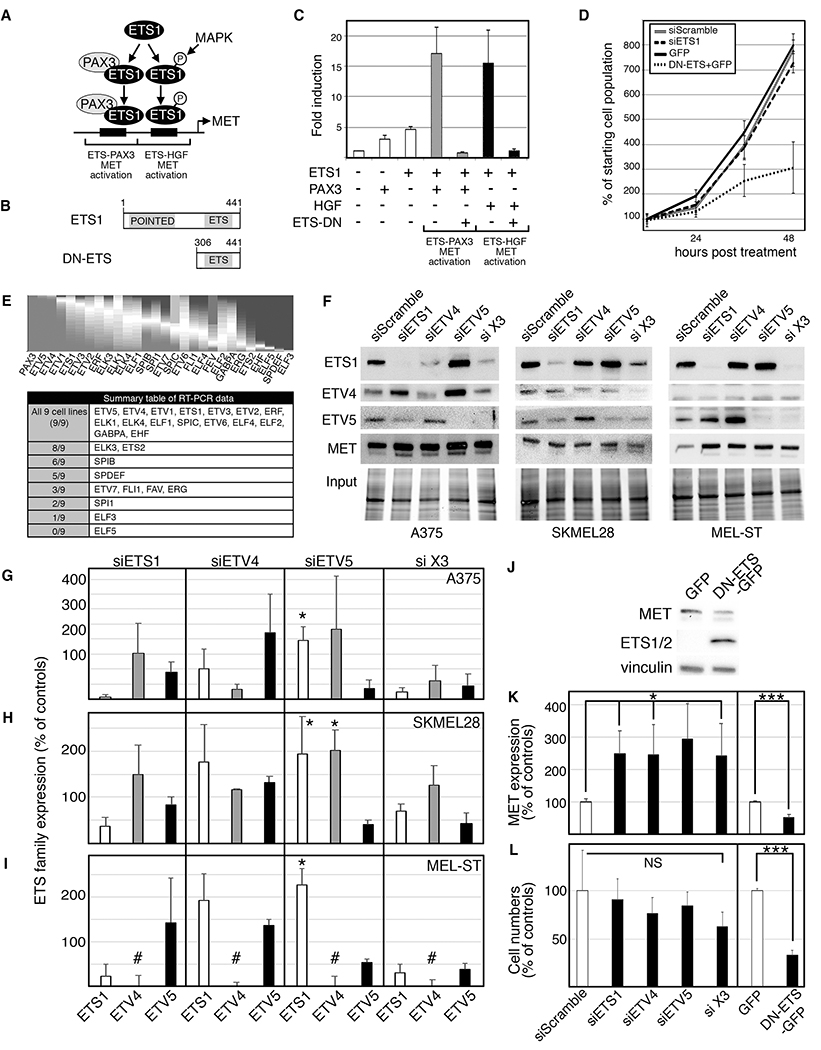
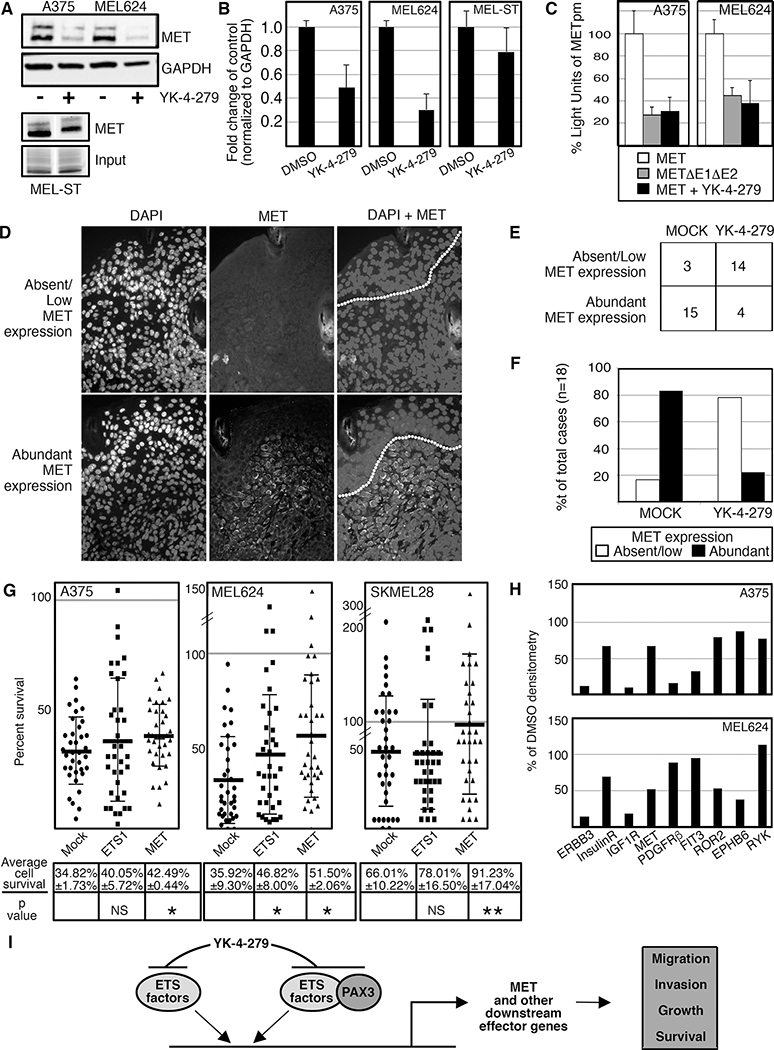
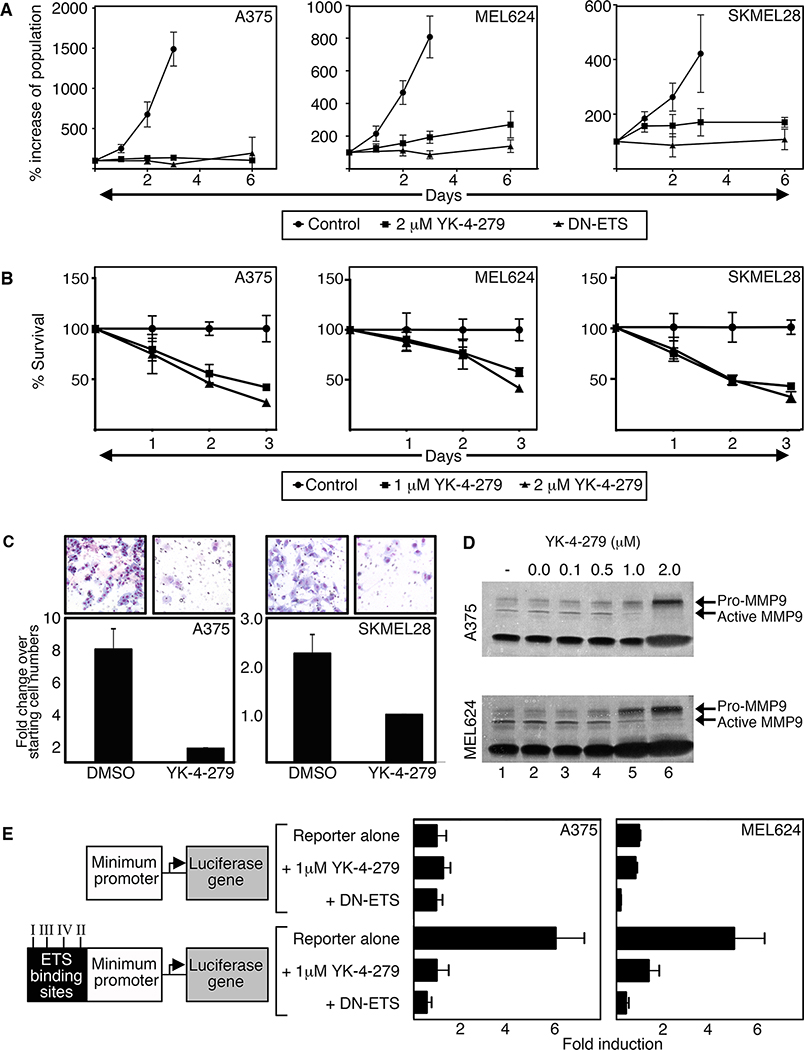
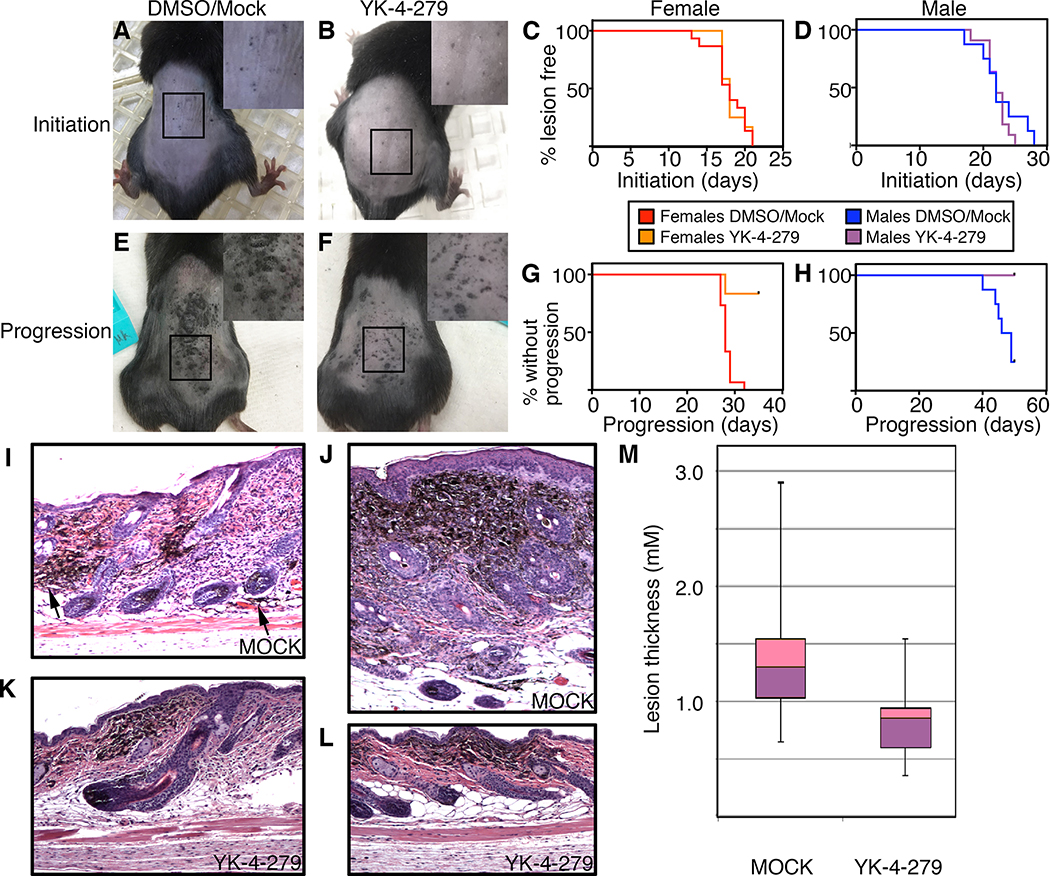
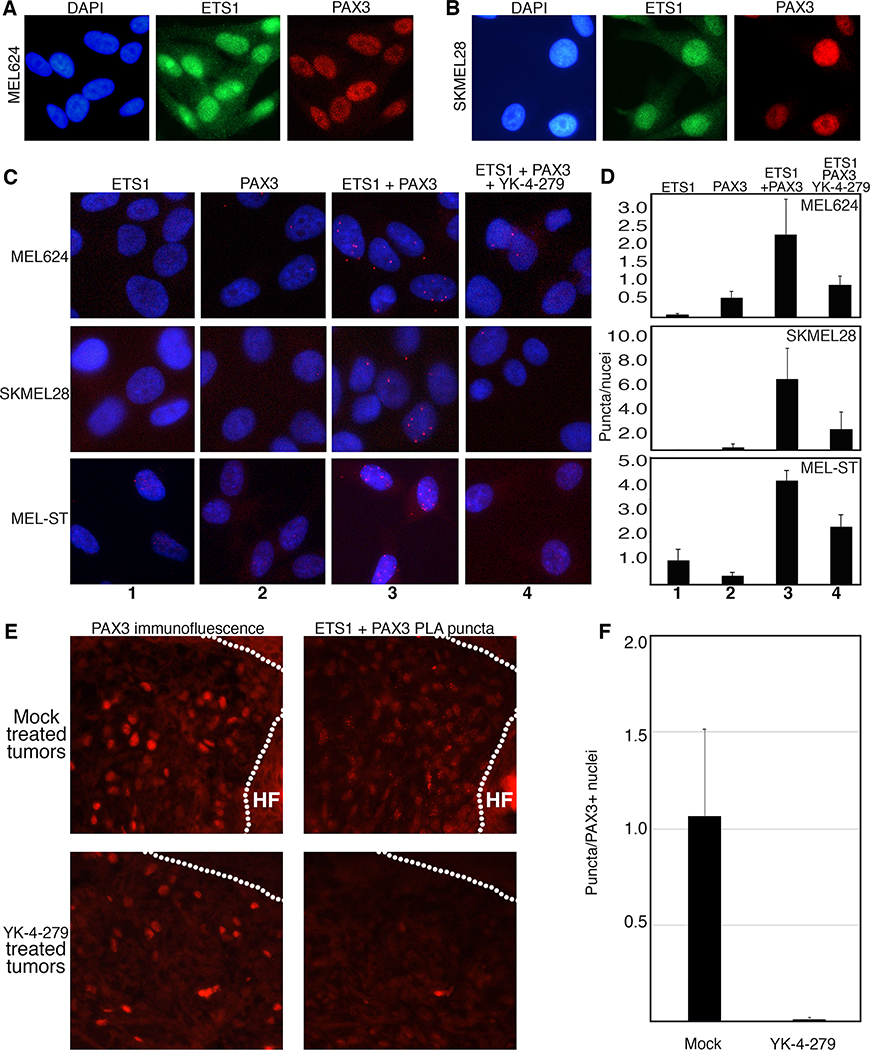
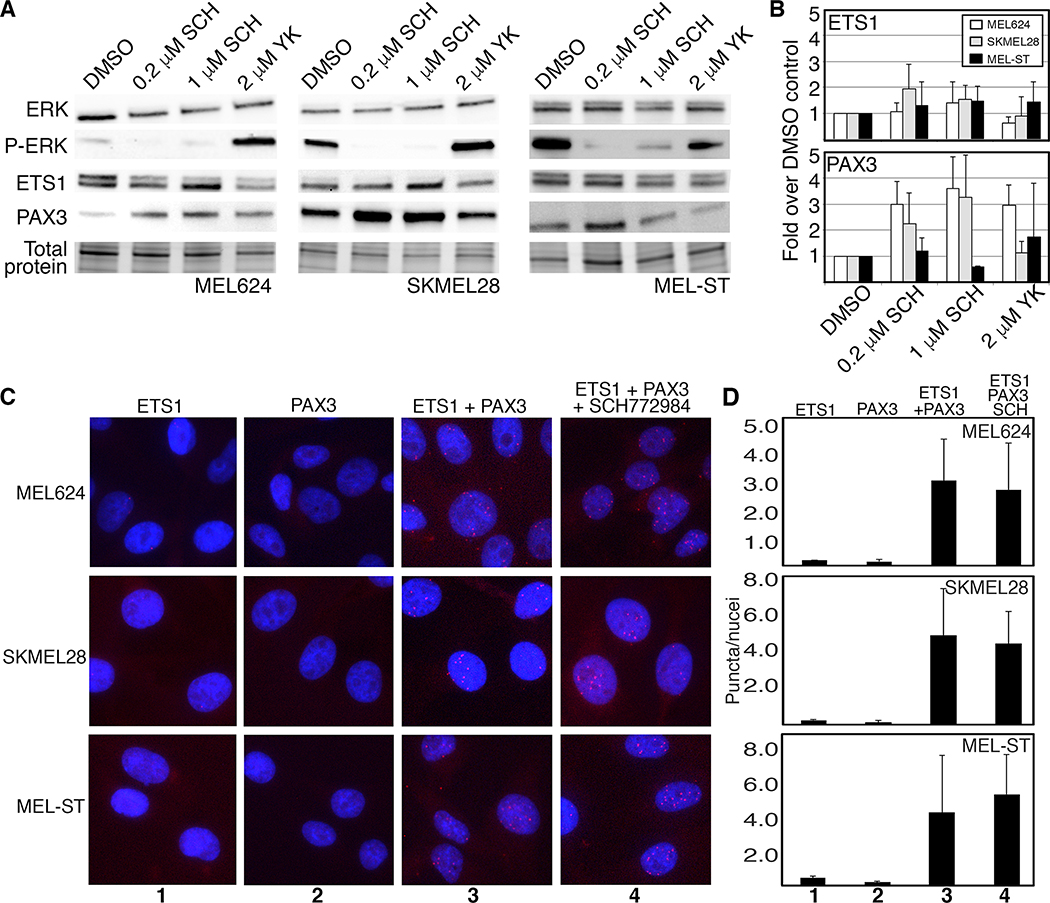
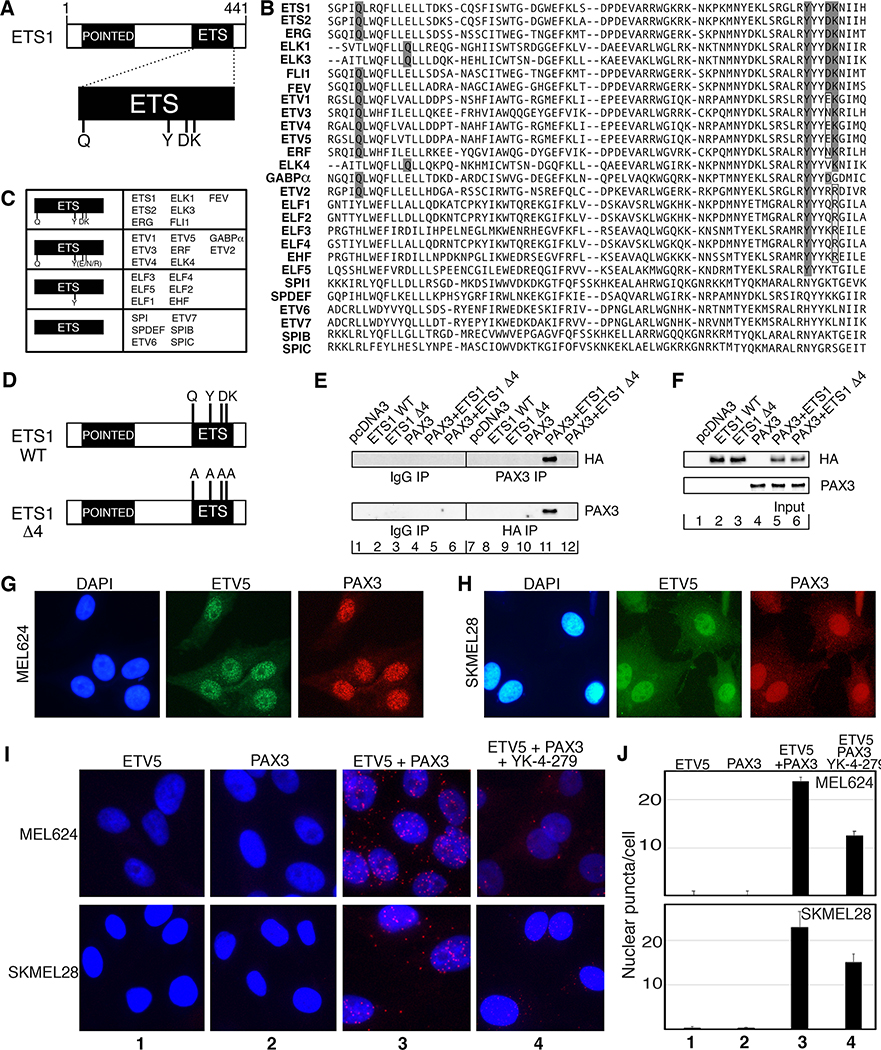
The failure of once promising target-specific therapeutic strategies often arises from redundancies in gene expression pathways. Even with new melanoma treatments, many patients are not responsive or develop resistance, leading to disease progression in terms of growth and metastasis. We previously discovered that the transcription factors ETS1 and PAX3 drive melanoma growth and metastasis by promoting the expression of the MET receptor. Here, we find that there are multiple ETS family members expressed in melanoma and that these factors have redundant functions. The small molecule YK-4-279, initially developed to target the ETS gene-containing translocation product EWS-FLI1, significantly inhibited cellular growth, invasion, and ETS factor function in melanoma cell lines and a clinically relevant transgenic mouse model, BrafCA;Tyr-CreERT2;Ptenf/f. One of the antitumor effects of YK-4-279 in melanoma is achieved via interference of multiple ETS family members with PAX3 and the expression of the PAX3-ETS downstream gene MET. Expression of exogenous MET provided partial rescue of the effects of YK-4-279, further supporting that MET loss is a significant contributor to the antitumor effects of the drug. This is the first study identifying multiple overlapping functions of the ETS family promoting melanoma. In addition, targeting all factors, rather than individual members, demonstrated impactful deleterious consequences in melanoma progression. Given that multiple ETS factors are known to have oncogenic functions in other malignancies, these findings have a high therapeutic impact. SIGNIFICANCE: These findings identify YK-4-279 as a promising therapeutic agent against melanoma by targeting multiple ETS family members and blocking their ability to act as transcription factors.
曾经有前途的靶向治疗策略的失败往往是由于基因表达途径的冗余造成的。即使有了新的黑色素瘤治疗方法,许多患者还是没有反应或产生耐药性,导致疾病在生长和转移方面进展。我们之前发现转录因子 ETS1 和 PAX3 通过促进 MET 受体的表达来驱动黑色素瘤的生长和转移。在这里,我们发现有多个 ETS 家族成员在黑色素瘤中表达,这些因子具有冗余功能。最初开发用于靶向 ETS 基因包含易位产物 EWS-FLI1 的小分子 YK-4-279,显著抑制了黑色素瘤细胞系和临床相关的转基因小鼠模型 BrafCA;Tyr-CreERT2;Ptenf/f 中的细胞生长、侵袭和 ETS 因子功能。YK-4-279 在黑色素瘤中的一种抗肿瘤作用是通过干扰多种 ETS 家族成员与 PAX3 和 PAX3-ETS 下游基因 MET 的表达来实现的。外源性 MET 的表达部分挽救了 YK-4-279 的作用,进一步支持 MET 缺失是药物抗肿瘤作用的一个重要贡献者。这是第一项确定 ETS 家族促进黑色素瘤的多种重叠功能的研究。此外,靶向所有因素,而不是单个成员,在黑色素瘤进展中显示出有影响力的有害后果。鉴于多个 ETS 因子在其他恶性肿瘤中具有致癌功能,这些发现具有很高的治疗意义。意义:这些发现确定 YK-4-279 是一种有前途的治疗黑色素瘤的药物,通过靶向多个 ETS 家族成员并阻断它们作为转录因子的作用。