Kimani-Murage Elizabeth W, Kimiywe Judith, Mutoro Antonina N, Wilunda Calistus, Wekesah Frederick Murunga, Muriuki Peter, Mwangi Bonaventure M, Samburu Betty Mogesi, Madise Nyovani Janet, McGarvey Stephen T, Griffiths Paula L
Maternal and Child Wellbeing Unit, African Population and Health Research Center, Nairobi, Kenya.
International Health Institute, School of Medicine, Dentistry and Nursing, College of Medical, Veterinary & Life of Public Health, Brown University, Providence, RI, USA.
Matern Child Nutr. 2021 Jul;17(3):e13142. doi: 10.1111/mcn.13142. Epub 2021 Feb 2.
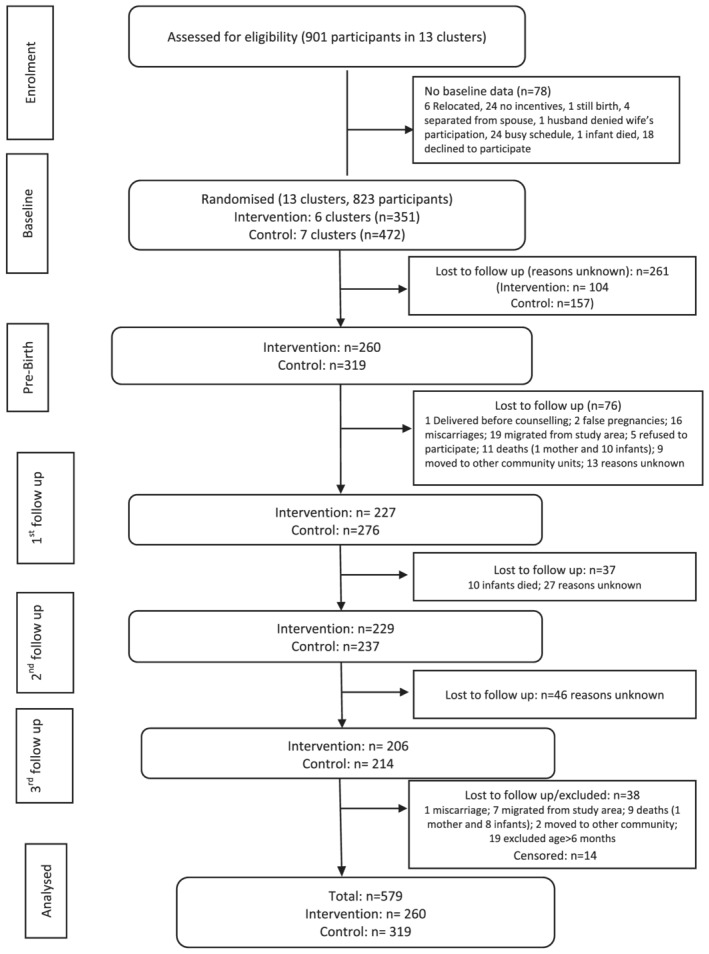
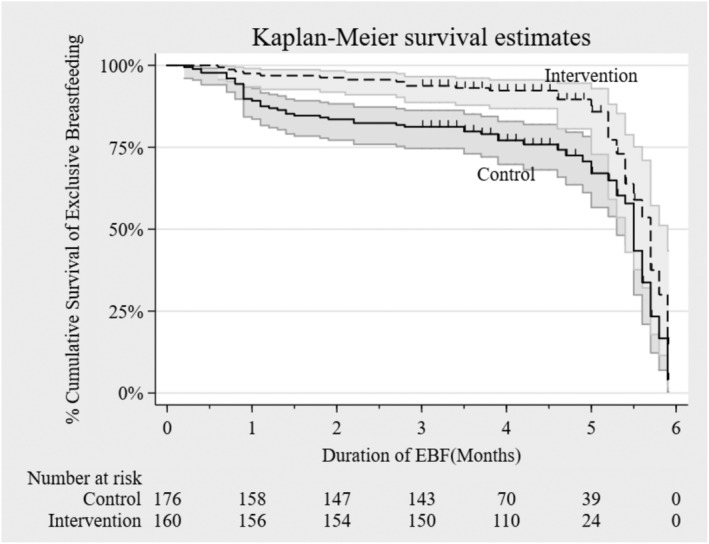
The baby-friendly hospital initiative (BFHI) promotes exclusive breastfeeding (EBF) in hospitals, but this is not accessible in rural settings where mothers give birth at home, hence the need for a community intervention. We tested the effectiveness of the baby-friendly community initiative (BFCI) on EBF in rural Kenya. This cluster randomized study was conducted in 13 community units in Koibatek sub-county. Pregnant women aged 15-49 years were recruited and followed up until their children were 6 months old. Mothers in the intervention group received standard maternal, infant and young child nutrition counselling, support from trained community health volunteers, health professionals and community and mother support groups, whereas those in the control group received standard counselling only. Data on breastfeeding practices were collected longitudinally. The probability of EBF up to 6 months of age and the restricted mean survival time difference were estimated. A total of 823 (intervention group n = 351) pregnant women were recruited. Compared with children in the control group, children in the intervention group were more likely to exclusively breastfeed for 6 months (79.2% vs. 54.5%; P < .05). Children in the intervention group were also exclusively breastfed for a longer time, mean difference (95% confidence interval [CI]) 0.62 months (0.38, 0.85; P < .001). The BFCI implemented within the existing health system and including community and mother support groups led to a significant increase in EBF in a rural Kenyan setting. This intervention has the potential to improve EBF rates in similar settings.
爱婴医院倡议(BFHI)在医院推广纯母乳喂养(EBF),但在农村地区,母亲们在家分娩,无法获得这一倡议,因此需要进行社区干预。我们测试了爱婴社区倡议(BFCI)在肯尼亚农村地区对纯母乳喂养的有效性。这项整群随机研究在科伊巴泰克次县的13个社区单位进行。招募了年龄在15 - 49岁的孕妇,并对其进行随访,直至其孩子6个月大。干预组的母亲接受标准的孕产妇、婴幼儿营养咨询,以及来自经过培训的社区健康志愿者、卫生专业人员、社区和母亲支持小组的支持,而对照组的母亲仅接受标准咨询。纵向收集母乳喂养实践的数据。估计了6个月龄前纯母乳喂养的概率以及受限平均生存时间差异。总共招募了823名孕妇(干预组n = 351)。与对照组的儿童相比,干预组的儿童更有可能纯母乳喂养6个月(79.2%对54.5%;P < 0.05)。干预组的儿童纯母乳喂养的时间也更长,平均差异(95%置信区间[CI])为0.62个月(0.38,0.85;P < 0.001)。在现有卫生系统内实施并包括社区和母亲支持小组的BFCI,使肯尼亚农村地区的纯母乳喂养显著增加。这种干预措施有可能在类似环境中提高纯母乳喂养率。