Cattaneo Adriano, Bettinelli Maria Enrica, Chapin Elise, Macaluso Anna, Córdova do Espírito Santo Lílian, Murante Anna Maria, Montico Marcella
Health Services Research and International Health, Institute for Maternal and Child Health IRCCS Burlo Garofolo, Trieste, Italy.
Maternal and Child Health Unit, Department of Primary Care, Local Health Authority, Milan, Italy.
BMJ Open. 2016 May 6;6(5):e010232. doi: 10.1136/bmjopen-2015-010232.
To assess the effectiveness of the Baby Friendly Community Initiative (BFCI) on exclusive breast feeding at 6 months.
Controlled, non-randomised trial.
18 Local Health Authorities in 9 regions of Italy.
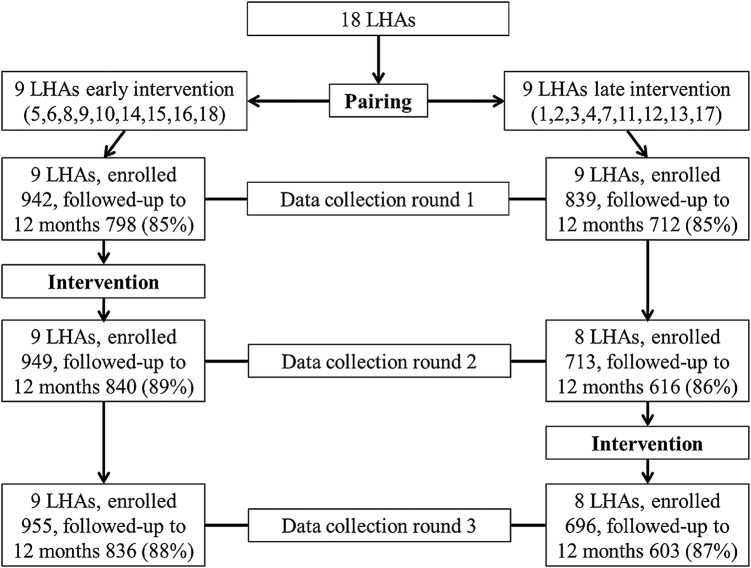
5094 mother/infant dyads in 3 cohorts were followed up to 12 months after birth in 3 rounds of data collection: at baseline, after implementation of the intervention in the early intervention group and after implementation in the late intervention group. 689 (14%) dyads did not complete the study.
Implementation of the 7 steps of the BFCI.
The rate of exclusive breast feeding at 6 months was the primary outcome; breast feeding at discharge, 3 and 12 months was also measured.
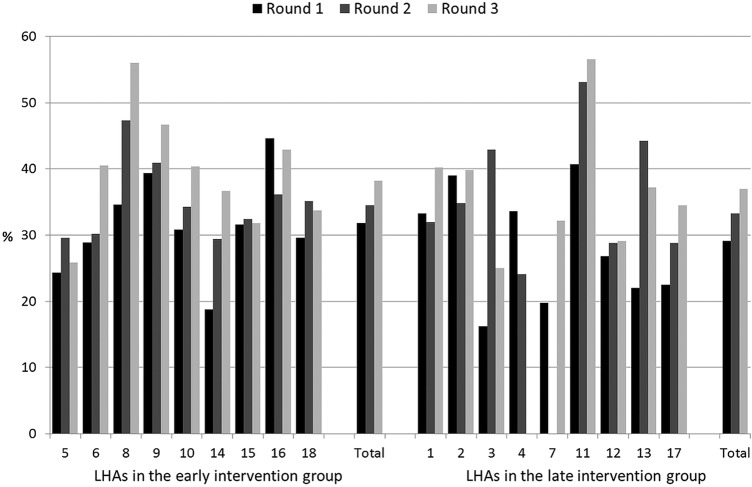
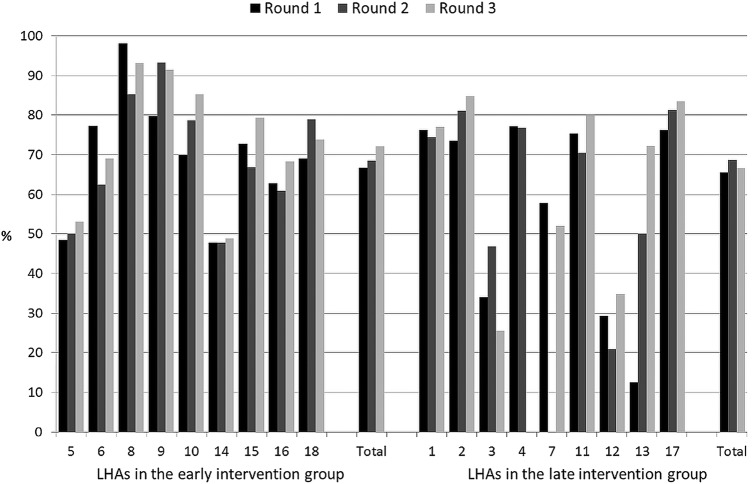
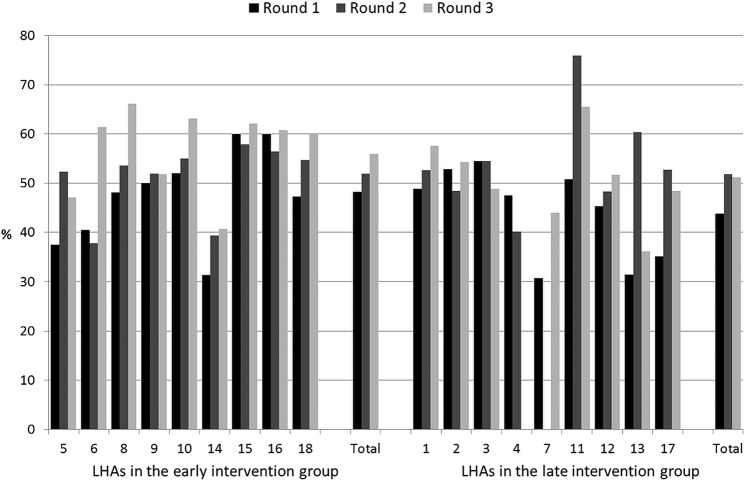
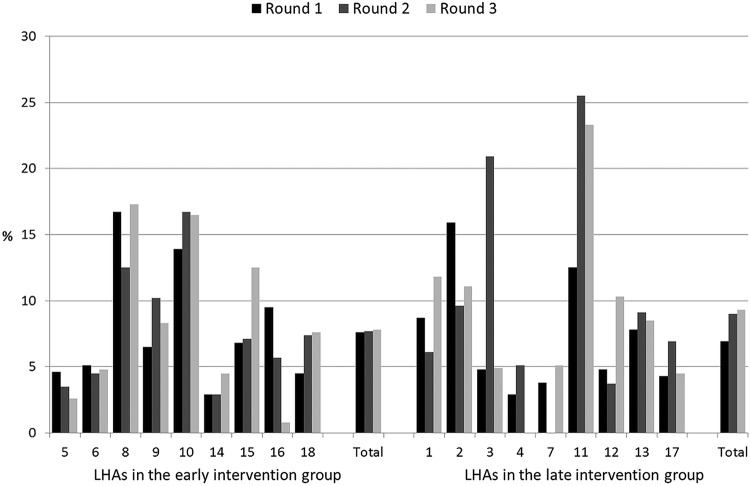
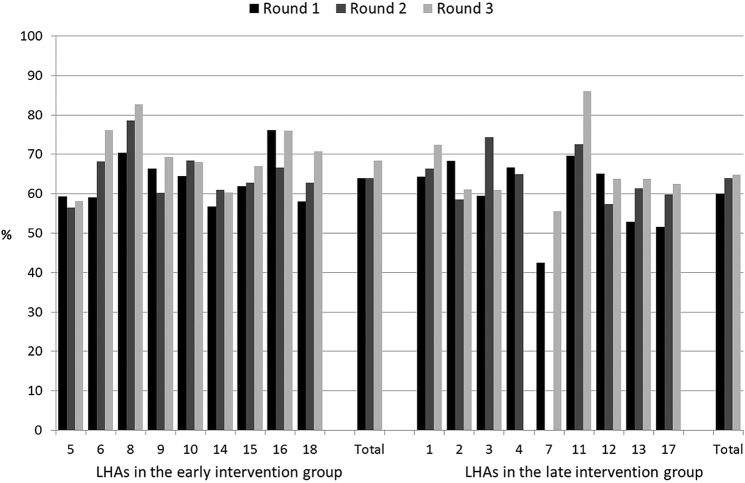
The crude rates of exclusive breast feeding at discharge, 3 and 6 months, and of any breast feeding at 6 and 12 months increased at each round of data collection after baseline in the early and late intervention groups. At the end of the project, 10% of infants were exclusively breast fed at 6 months and 38% were continuing to breast feed at 12 months. However, the comparison by adjusted rates and logistic regression failed to show statistically significant differences between groups and rounds of data collection in the intention-to-treat analysis, as well as when compliance with the intervention and training coverage was taken into account.
The study failed to demonstrate an effect of the BFCI on the rates of breast feeding. This may be due, among other factors, to the time needed to observe an effect on breast feeding following this complex intervention.
评估爱婴社区倡议(BFCI)对6个月纯母乳喂养的效果。
对照、非随机试验。
意大利9个地区的18个地方卫生当局。
3个队列中的5094对母婴在出生后12个月内接受了3轮数据收集随访:基线时、早期干预组实施干预后以及晚期干预组实施干预后。689对(14%)母婴未完成研究。
实施BFCI的7个步骤。
6个月时纯母乳喂养率是主要结局指标;还测量了出院时、3个月和12个月时的母乳喂养情况。
早期和晚期干预组在基线后的每一轮数据收集中,出院时、3个月和6个月时的纯母乳喂养粗率以及6个月和12个月时的任何母乳喂养粗率均有所增加。在项目结束时,10%的婴儿在6个月时纯母乳喂养,38%的婴儿在12个月时仍在继续母乳喂养。然而,在意向性分析中,以及在考虑干预措施依从性和培训覆盖情况时,通过调整率和逻辑回归进行的组间及数据收集轮次间比较未显示出统计学上的显著差异。
该研究未能证明BFCI对母乳喂养率有影响。这可能是由于多种因素,包括这种复杂干预措施对母乳喂养产生影响所需的时间等。