Department of Orthopaedic Surgery, Perelman School of Medicine, University of Pennsylvania, Philadelphia, PA.
Department of Orthopaedic Surgery, The First Hospital of China Medical University, Shenyang, China.
J Bone Miner Res. 2021 Jun;36(6):1159-1173. doi: 10.1002/jbmr.4265. Epub 2021 Mar 2.
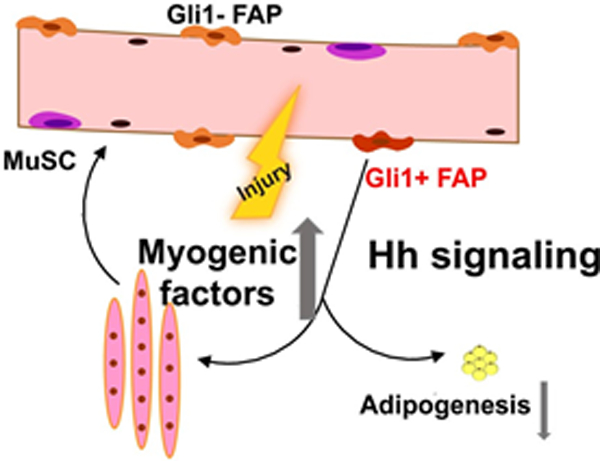
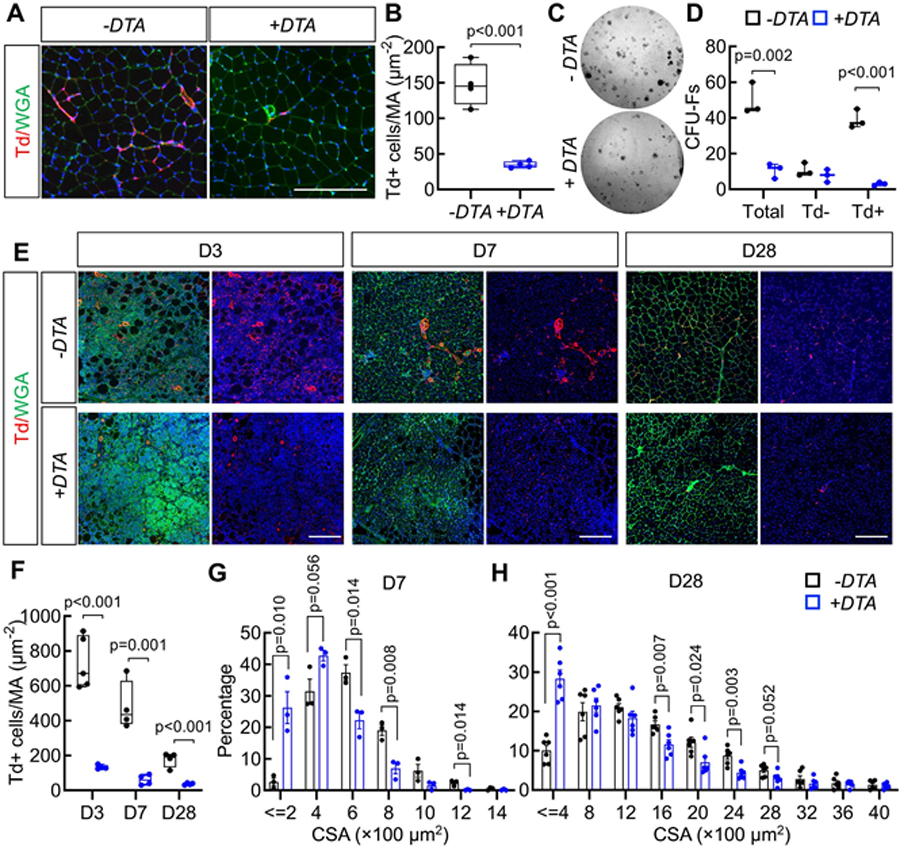
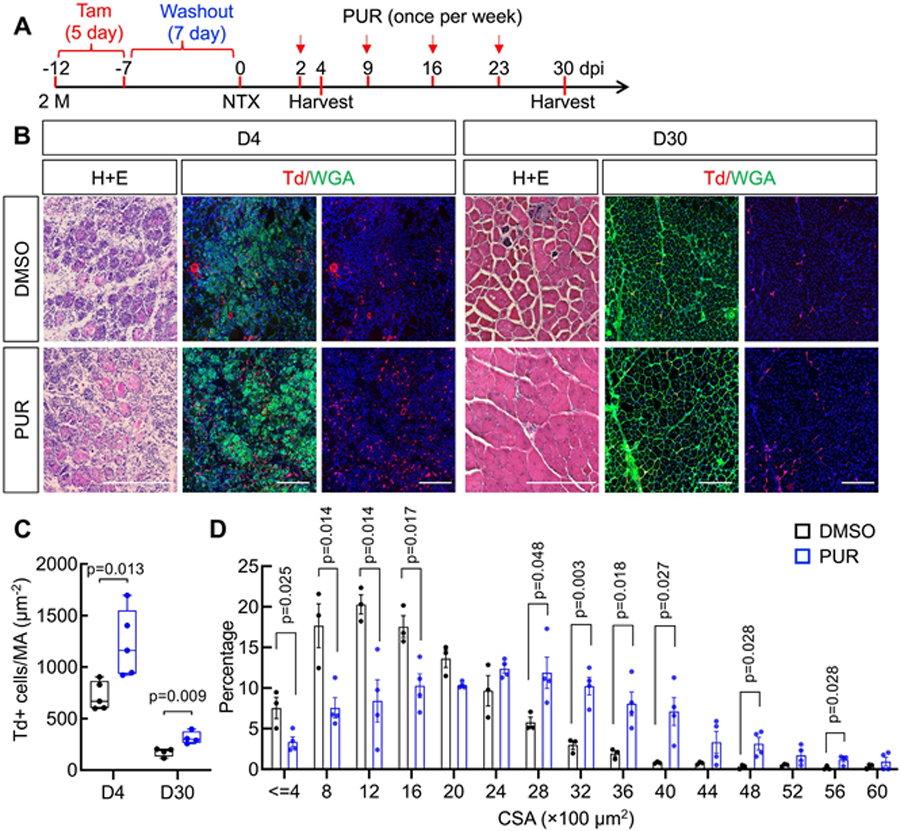
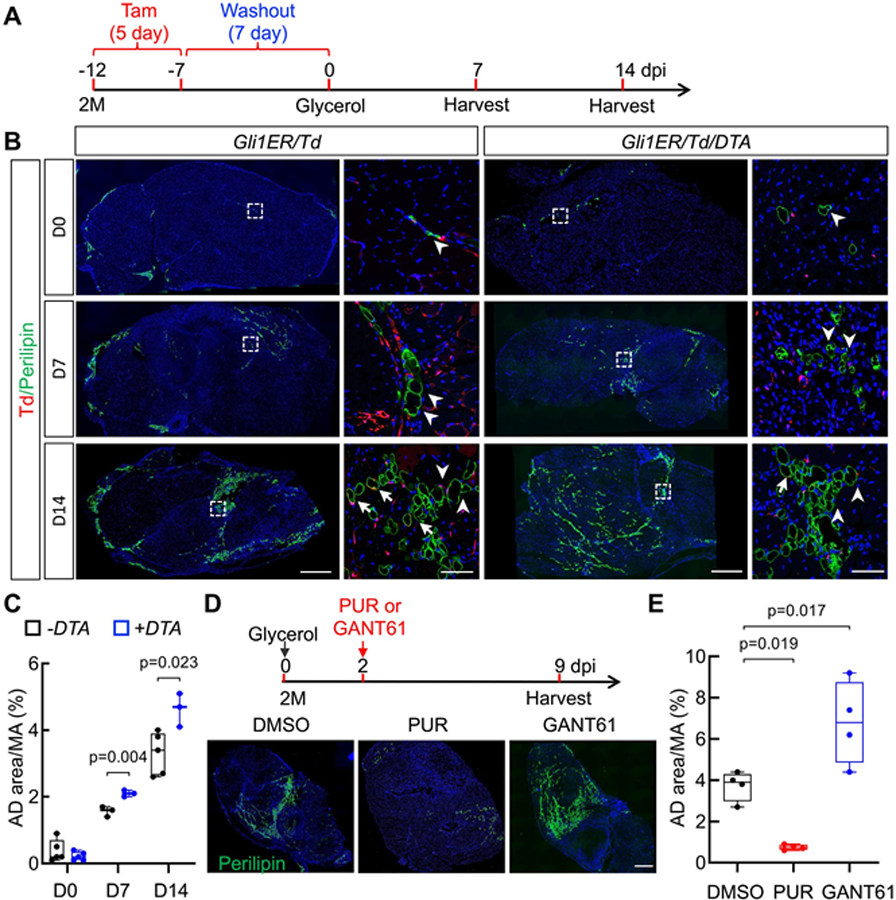
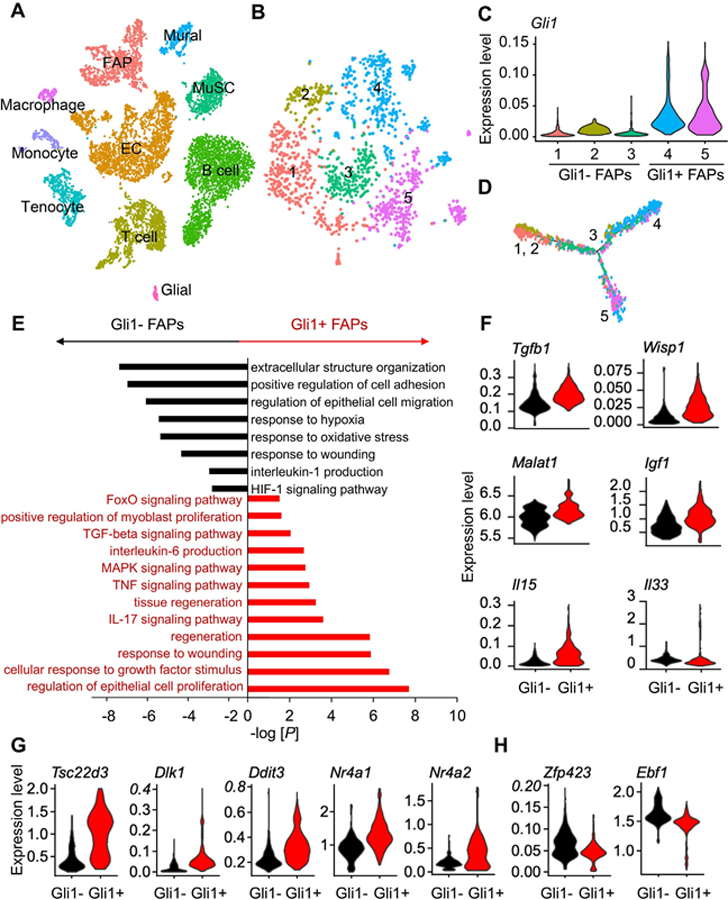
Skeletal muscle has remarkable regenerative ability after injury. Mesenchymal fibro-adipogenic progenitors (FAPs) are necessary, active participants during this repair process, but the molecular signatures of these cells and their functional relevance remain largely unexplored. Here, using a lineage tracing mouse model (Gli1-CreER Tomato), we demonstrate that Gli1 marks a small subset of muscle-resident FAPs with elevated Hedgehog (Hh) signaling. Upon notexin muscle injury, these cells preferentially and rapidly expanded within FAPs. Ablation of Gli1+ cells using a DTA mouse model drastically reduced fibroblastic colony-forming unit (CFU-F) colonies generated by muscle cells and impaired muscle repair at 28 days. Pharmacologic manipulation revealed that Gli1+ FAPs rely on Hh signaling to increase the size of regenerating myofiber. Sorted Gli1+ FAPs displayed superior clonogenicity and reduced adipogenic differentiation ability in culture compared to sorted Gli1- FAPs. In a glycerol injury model, Gli1+ FAPs were less likely to give rise to muscle adipocytes compared to other FAPs. Further cell ablation and Hh activator/inhibitor treatments demonstrated their dual actions in enhancing myogenesis and reducing adipogenesis after injury. Examining single-cell RNA-sequencing dataset of FAPs from normal mice indicated that Gli1+ FAPs with increased Hh signaling provide trophic signals to myogenic cells while restrict their own adipogenic differentiation. Collectively, our findings identified a subpopulation of FAPs that play an essential role in skeletal muscle repair. © 2021 American Society for Bone and Mineral Research (ASBMR).
骨骼肌在损伤后具有显著的再生能力。间充质成纤维脂肪祖细胞(FAPs)是修复过程中必要的、活跃的参与者,但这些细胞的分子特征及其功能相关性仍在很大程度上未被探索。在这里,我们使用谱系追踪小鼠模型(Gli1-CreER Tomato),证明 Gli1 标记了一小部分具有升高的 Hedgehog(Hh)信号的肌内 FAP。在肌球蛋白损伤后,这些细胞优先且快速在 FAP 内扩增。使用 DTA 小鼠模型对 Gli1+细胞进行消融,极大地减少了肌肉细胞产生的成纤维细胞集落形成单位(CFU-F)集落,并在 28 天内损害了肌肉修复。药理操作表明,Gli1+FAP 依赖于 Hh 信号来增加再生肌纤维的大小。与分选的 Gli1-FAP 相比,分选的 Gli1+FAP 在培养中显示出更高的克隆形成能力和降低的成脂分化能力。在甘油损伤模型中,与其他 FAP 相比,Gli1+FAP 不太可能产生肌肉脂肪细胞。进一步的细胞消融和 Hh 激活/抑制剂处理表明,它们在损伤后增强成肌作用和减少成脂作用方面具有双重作用。检查来自正常小鼠的 FAP 的单细胞 RNA 测序数据集表明,具有增加的 Hh 信号的 Gli1+FAP 为成肌细胞提供营养信号,同时限制其自身的成脂分化。总之,我们的发现确定了 FAP 的一个亚群,它们在骨骼肌肉修复中发挥着重要作用。