
基于 RNN 和 LSTM 的工业过程软传感器可转移性。
RNN- and LSTM-Based Soft Sensors Transferability for an Industrial Process.
机构信息
Department of Mathematics and Computer Science, University of Palermo, 90123 Palermo, Italy.
Department of Engineering, University of Messina, 98166 Messina, Italy.
出版信息
Sensors (Basel). 2021 Jan 26;21(3):823. doi: 10.3390/s21030823.
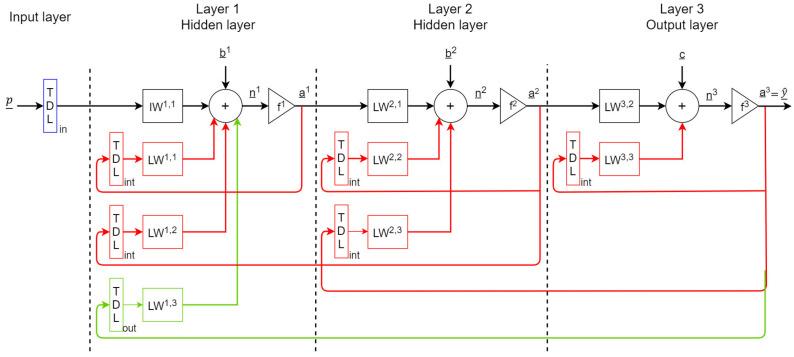
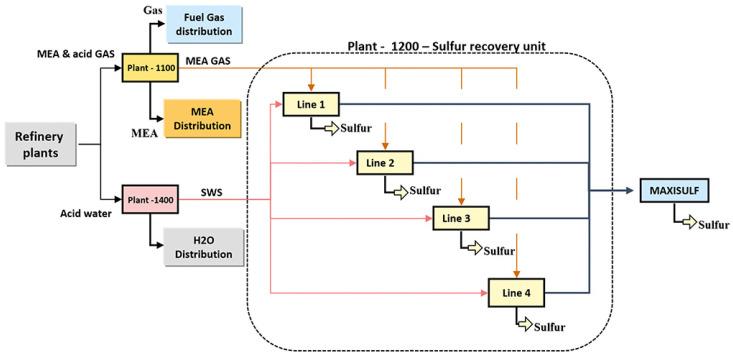
The design and application of Soft Sensors (SSs) in the process industry is a growing research field, which needs to mediate problems of model accuracy with data availability and computational complexity. Black-box machine learning (ML) methods are often used as an efficient tool to implement SSs. Many efforts are, however, required to properly select input variables, model class, model order and the needed hyperparameters. The aim of this work was to investigate the possibility to transfer the knowledge acquired in the design of a SS for a given process to a similar one. This has been approached as a transfer learning problem from a source to a target domain. The implementation of a transfer learning procedure allows to considerably reduce the computational time dedicated to the SS design procedure, leaving out many of the required phases. Two transfer learning methods have been proposed, evaluating their suitability to design SSs based on nonlinear dynamical models. Recurrent neural structures have been used to implement the SSs. In detail, recurrent neural networks and long short-term memory architectures have been compared in regard to their transferability. An industrial case of study has been considered, to evaluate the performance of the proposed procedures and the best compromise between SS performance and computational effort in transferring the model. The problem of labeled data scarcity in the target domain has been also discussed. The obtained results demonstrate the suitability of the proposed transfer learning methods in the design of nonlinear dynamical models for industrial systems.
软测量(SS)在过程工业中的设计和应用是一个不断发展的研究领域,需要协调模型精度与数据可用性和计算复杂性之间的问题。黑盒机器学习(ML)方法通常被用作实现 SS 的有效工具。然而,需要付出很多努力来正确选择输入变量、模型类、模型阶数和所需的超参数。本工作的目的是研究将给定过程的 SS 设计中获得的知识转移到类似过程的可能性。这被视为从源域到目标域的迁移学习问题。迁移学习过程的实现可以大大减少 SS 设计过程所需的计算时间,省去许多必需的阶段。提出了两种迁移学习方法,评估它们基于非线性动力模型设计 SS 的适用性。递归神经网络结构被用于实现 SS。具体来说,比较了递归神经网络和长短期记忆架构在可转移性方面的性能。考虑了一个工业案例研究,以评估所提出的过程的性能,以及在转移模型时在 SS 性能和计算工作量之间的最佳折衷。还讨论了目标域中标记数据稀缺的问题。所得到的结果表明,所提出的迁移学习方法在设计工业系统的非线性动力模型方面是合适的。





 Zotero 插件