Chen Qian, Xia Tianyi, Zhang Mingyue, Xia Nengzhi, Liu Jinjin, Yang Yunjun
Department of Radiology, The First Affiliated Hospital of Wenzhou Medical University, Zhejiang, China.
Aging Dis. 2021 Feb 1;12(1):143-154. doi: 10.14336/AD.2020.0421. eCollection 2021 Feb.
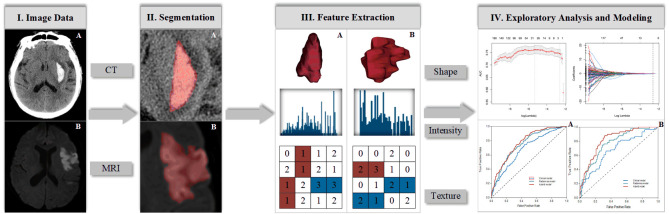
Stroke is a leading cause of disability and mortality worldwide, resulting in substantial economic costs for post-stroke care each year. Neuroimaging, such as cranial computed tomography or magnetic resonance imaging, is the backbone of stroke management strategies, which can guide treatment decision-making (thrombolysis or hemostasis) at an early stage. With advances in computational technologies, particularly in machine learning, visual image information can now be converted into numerous quantitative features in an objective, repeatable, and high-throughput manner, in a process known as radiomics. Radiomics is mainly used in the field of oncology, which remains an area of active research. Over the past few years, investigators have attempted to apply radiomics to stroke in the hope of gaining benefits similar to those obtained in cancer management, i.e., in promoting the development of personalized precision medicine. Currently, radiomic analysis has shown promise for a variety of applications in stroke, including the diagnosis of stroke lesions, early prediction of outcomes, and evaluation for long-term prognosis. In this article, we elaborate the contributions of radiomics to stroke, as well as the subprocesses and techniques involved in radiomics studies. We also discuss the potential challenges facing its widespread implementation in routine practice and the directions for future research.
中风是全球残疾和死亡的主要原因,每年给中风后护理带来巨大的经济成本。神经影像学,如头颅计算机断层扫描或磁共振成像,是中风管理策略的支柱,可在早期阶段指导治疗决策(溶栓或止血)。随着计算技术的进步,特别是机器学习领域的进步,视觉图像信息现在可以以客观、可重复和高通量的方式转换为大量定量特征,这一过程称为放射组学。放射组学主要应用于肿瘤学领域,该领域仍是一个活跃的研究领域。在过去几年中,研究人员试图将放射组学应用于中风,希望获得与癌症管理类似的益处,即促进个性化精准医学的发展。目前,放射组学分析在中风的各种应用中显示出前景,包括中风病变的诊断、结局的早期预测和长期预后评估。在本文中,我们阐述了放射组学对中风的贡献,以及放射组学研究中涉及的子过程和技术。我们还讨论了其在常规实践中广泛应用面临的潜在挑战以及未来研究的方向。