Kanagasingam Shalini, Chukkapalli Sasanka S, Welbury Richard, Singhrao Sim K
Brain and Behavior Centre, Faculty of Clinical and Biomedical Sciences, School of Dentistry, University of Central Lancashire, Preston, UK.
Department of Oral Biology, College of Dentistry, University of Florida, Gainesville, FL, USA.
J Alzheimers Dis Rep. 2020 Dec 14;4(1):501-511. doi: 10.3233/ADR-200250.
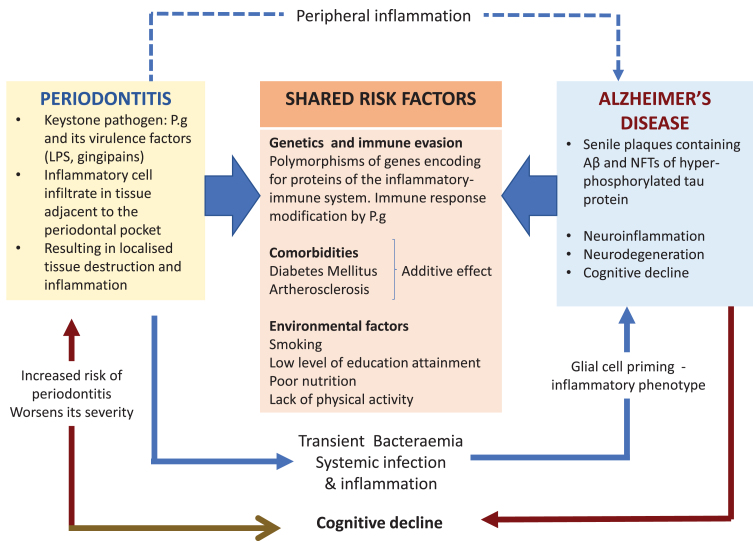
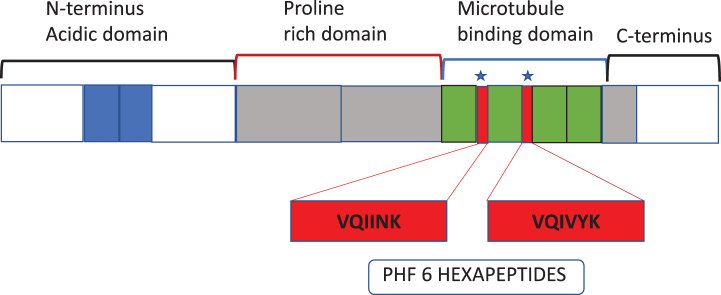
() is one of the several important bacterial pathogens associated with the sporadic Alzheimer's disease (AD). Different serotypes are either capsulated or are non-capsulated. It has been demonstrated that (non-capsulated) can reproduce the neurodegenerative AD-like changes , and a capsular (strain W83) could reproduce the cardinal hallmark lesions of AD in a wild-type mouse model. All forms express proteolytically active proteases that enable cleavage of the amyloid-β protin precursor (AβPP) and tau resulting in the formation of amyloid-β and neurofibrillary tangles. Tau is an established substrate for gingipains, which can cleave tau into various peptides. Some of the fragmented tau protein peptides contain "VQIINK" and "VQIVYK" hexapeptide motifs which map to the flanking regions of the microtubule binding domains and are also found in paired helical filaments that form NFTs. can induce peripheral inflammation in periodontitis and can also initiate signaling pathways that activate kinases, which in turn, phosphorylate neuronal tau. Periodontal disease related inflammation has metabolic implications for an individual's peripheral and brain health as patients suffering from generalized periodontitis often have related co-morbidities and are "at risk" of developing AD. The aim here is to discuss the role of behind such associations with the backdrop of huge efforts to test virulence factors clinically (GAIN Trial: Phase 2/3 Study of COR388 in Subjects with AD) with inhibitors, which may lead to an intervention by reducing the pathogenic bacterial load.
()是与散发性阿尔茨海默病(AD)相关的几种重要细菌病原体之一。不同血清型要么有荚膜,要么无荚膜。已证明(无荚膜型)可重现神经退行性AD样变化,而有荚膜的(菌株W83)可在野生型小鼠模型中重现AD的主要标志性病变。所有形式都表达具有蛋白水解活性的蛋白酶,能够切割淀粉样β蛋白前体(AβPP)和tau蛋白,导致淀粉样β蛋白和神经原纤维缠结的形成。Tau是牙龈蛋白酶的既定底物,牙龈蛋白酶可将tau切割成各种肽段。一些破碎的tau蛋白肽段含有“VQIINK”和“VQIVYK”六肽基序,这些基序映射到微管结合域的侧翼区域,也存在于形成神经原纤维缠结的双螺旋丝中。()可在牙周炎中诱导外周炎症,还可启动激活激酶的信号通路,进而使神经元tau蛋白磷酸化。牙周病相关炎症对个体的外周和大脑健康具有代谢影响,因为患有广泛性牙周炎的患者通常有相关合并症,并有患AD的“风险”。本文旨在讨论在临床上用抑制剂对()毒力因子进行大量测试(GAIN试验:COR388在AD患者中的2/3期研究)的背景下,()在这些关联背后所起的作用,这可能会通过降低致病细菌载量而导致干预措施的出现。