Department of Sciences for Department of Biological, Chemistry and Pharmaceutical Sciences and Technologies (STEBICEF), University of Palermo, Viale delle Scienze Ed.16, 90128, Palermo, Italy.
Centro di Biologia della Riproduzione, Via Villareale 54, Palermo, Italy.
J Assist Reprod Genet. 2021 Apr;38(4):979-986. doi: 10.1007/s10815-021-02080-w. Epub 2021 Feb 2.
To evaluate the correlation between the DNA Fragmentation Index (DFI) and sperm morphology in patients undergoing ICSI, as a predictive parameter in reproductive outcomes.
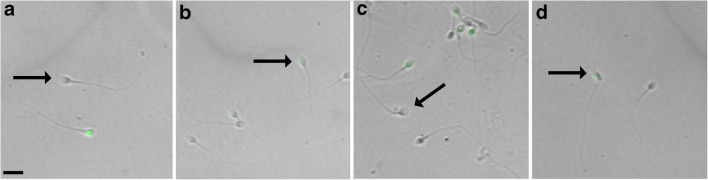
A retrospective study was conducted on 125 infertile patients enrolled in a fertility clinic. Seminal characteristics were measured following the WHO guidelines (2010) for the examination of the seminal fluid. After collecting motile sperm population by pellet swim up, DFI was calculated and simultaneously associated with sperm morphology using in situ TUNEL assay and an image analyzer software in at least 250 spermatozoa for each patient.
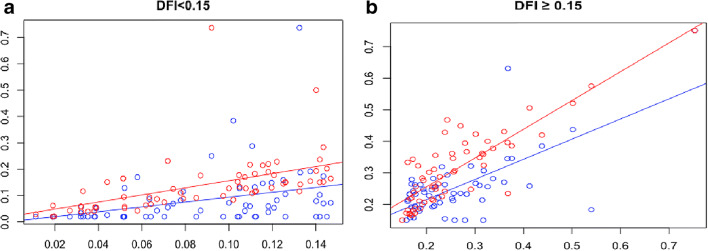
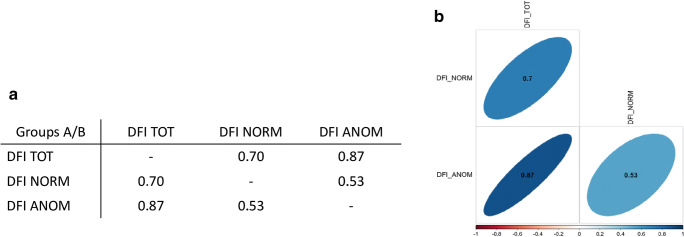
All subjects were divided into two groups according to a cutoff established, by choice, of the sperm DFI (15%): group A (< 15%) consisting of 65 patients and group B (≥ 15%) of 60 patients. Data were analyzed using non-parametric statistical methods. The results demonstrate that there is no statistical difference between the two groups in seminal characteristics. The collective data show a high significant correlation, suggesting that spermatozoa with abnormal morphology are the best candidates to contain DNA damage (p < 0.001). Also, when group A is compared with group B, an increased percentage of morphologically normal spermatozoa with fragmented DNA was observed in patients, with DFI values ≥ 15% (p < 0.001).
These results are aimed at providing an exact value of DFI in morphologically normal spermatozoa, which will be helpful to the embryologist in evaluating the risk of transferring, during the ICSI procedure, a spermatozoon whit normal morphology but fragmented DNA.
评估接受 ICSI 治疗的患者的 DNA 碎片指数(DFI)与精子形态之间的相关性,作为生殖结局的预测参数。
对在生育诊所就诊的 125 名不育患者进行了回顾性研究。精液特征按照世界卫生组织(2010 年)的精液检查指南进行测量。通过沉淀游移法收集活动精子群后,计算 DFI,并同时使用原位 TUNEL 检测和图像分析软件对每个患者至少 250 个精子进行精子形态相关分析。
所有受试者均根据 DFI(15%)的选择建立的截定点分为两组:组 A(<15%)由 65 例患者组成,组 B(≥15%)由 60 例患者组成。使用非参数统计方法分析数据。结果表明,两组在精液特征方面无统计学差异。综合数据显示存在高度显著相关性,表明形态异常的精子是最有可能含有 DNA 损伤的候选者(p<0.001)。此外,当将组 A 与组 B 进行比较时,DFI 值≥15%的患者中,具有碎片化 DNA 的形态正常精子的比例增加(p<0.001)。
这些结果旨在为形态正常精子的 DFI 提供确切值,这将有助于胚胎学家评估在 ICSI 过程中转移具有正常形态但碎片化 DNA 的精子的风险。