Cancer Research Center, Qatar Biomedical Research Institute (QBRI), Hamad Bin Khalifa University (HBKU), Qatar Foundation (QF), Doha, Qatar.
Department of Basic Medical Sciences, College of Medicine, Member of QU Health, Qatar University, Doha, Qatar.
Cancer Immunol Immunother. 2021 Aug;70(8):2103-2121. doi: 10.1007/s00262-020-02842-y. Epub 2021 Feb 3.
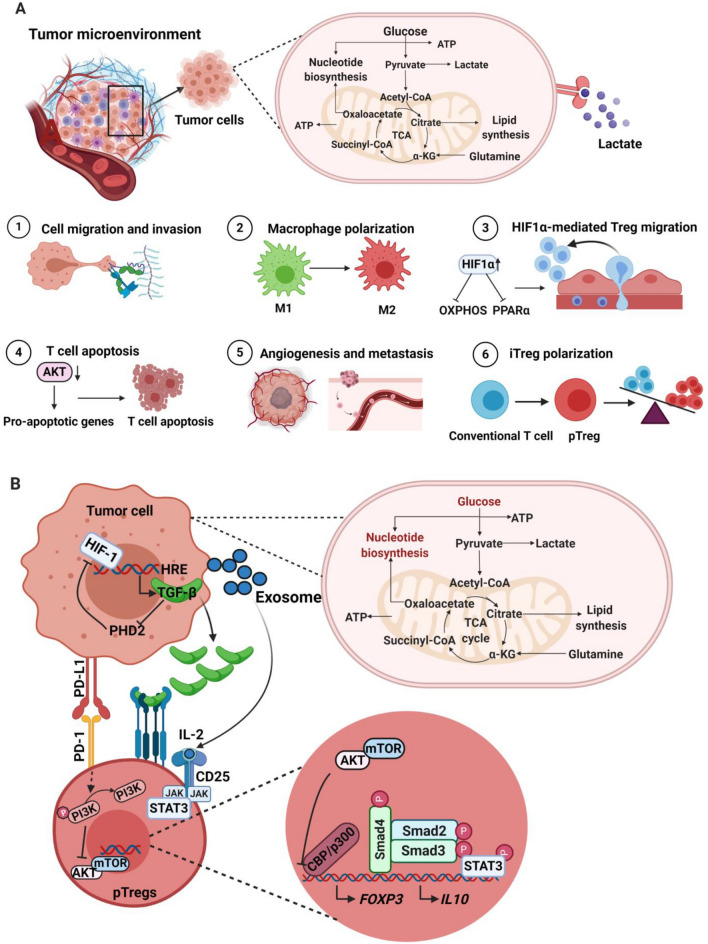
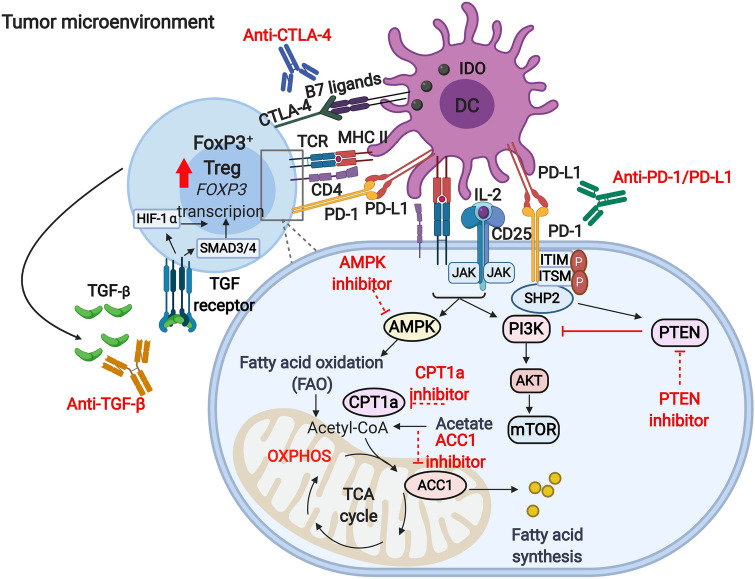
Metabolic dysregulation in the hypoxic tumor microenvironment (TME) is considered as a hallmark of solid tumors, leading to changes in biosynthetic pathways favoring onset, survival and proliferation of malignant cells. Within the TME, hypoxic milieu favors metabolic reprogramming of tumor cells, which subsequently affects biological properties of tumor-infiltrating immune cells. T regulatory cells (Tregs), including both circulating and tissue-resident cells, are particularly susceptible to hypoxic metabolic signaling that can reprogram their biological and physicochemical properties. Furthermore, metabolic reprogramming modifies Tregs to utilize alternative substrates and undergo a plethora of metabolic events to meet their energy demands. Major impact of this metabolic reprogramming can result in differentiation, survival, excessive secretion of immunosuppressive cytokines and proliferation of Tregs within the TME, which in turn dampen anti-tumor immune responses. Studies on fine-tuning of Treg metabolism are challenging due to heterogenicity of tissue-resident Tregs and their dynamic functions. In this review, we highlight tumor intrinsic and extrinsic factors, which can influence Treg metabolism in the hypoxic TME. Moreover, we focus on metabolic reprogramming of Tregs that could unveil potential regulatory networks favoring tumorigenesis/progression, and provide novel insights, including inhibitors against acetyl-coA carboxylase 1 and transforming growth factor beta into targeting Treg metabolism for therapeutic benefits.
缺氧肿瘤微环境(TME)中的代谢失调被认为是实体瘤的一个标志,导致生物合成途径发生变化,有利于恶性细胞的发生、存活和增殖。在 TME 中,缺氧环境有利于肿瘤细胞的代谢重编程,进而影响浸润肿瘤的免疫细胞的生物学特性。调节性 T 细胞(Tregs),包括循环和组织驻留细胞,特别容易受到缺氧代谢信号的影响,这些信号可以重新编程其生物学和物理化学特性。此外,代谢重编程使 Tregs 能够利用替代底物,并经历大量代谢事件来满足其能量需求。这种代谢重编程的主要影响可能导致 TME 中 Tregs 的分化、存活、过度分泌免疫抑制细胞因子和增殖,从而抑制抗肿瘤免疫反应。由于组织驻留 Tregs 的异质性及其动态功能,对 Treg 代谢的精细调控研究具有挑战性。在这篇综述中,我们强调了可以影响缺氧 TME 中 Treg 代谢的肿瘤内在和外在因素。此外,我们还重点关注了 Tregs 的代谢重编程,这可能揭示有利于肿瘤发生/进展的潜在调控网络,并提供新的见解,包括针对乙酰辅酶 A 羧化酶 1 和转化生长因子-β的抑制剂,以靶向 Treg 代谢,从而获得治疗益处。