Department of Biology, Indian Institute of Science Education and Research, Pune 411008, India.
New England Biolabs Inc., Research Department, Ipswich, MA 01938, USA.
Nucleic Acids Res. 2021 Feb 26;49(4):2161-2178. doi: 10.1093/nar/gkab042.
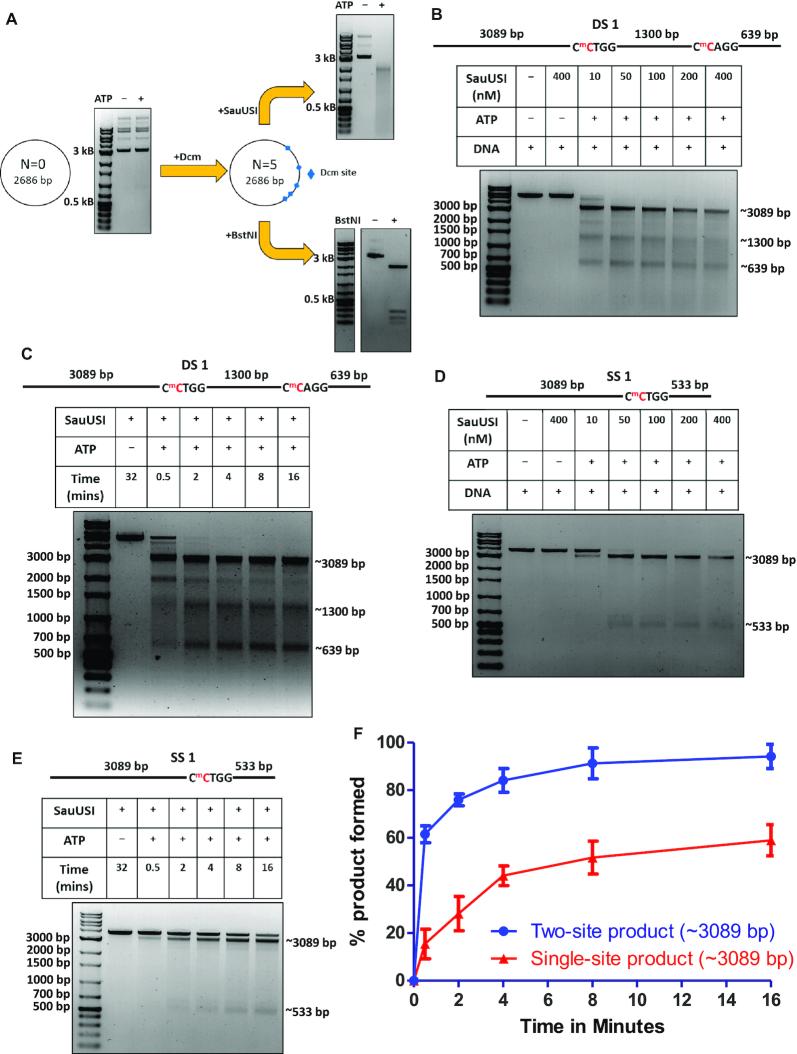
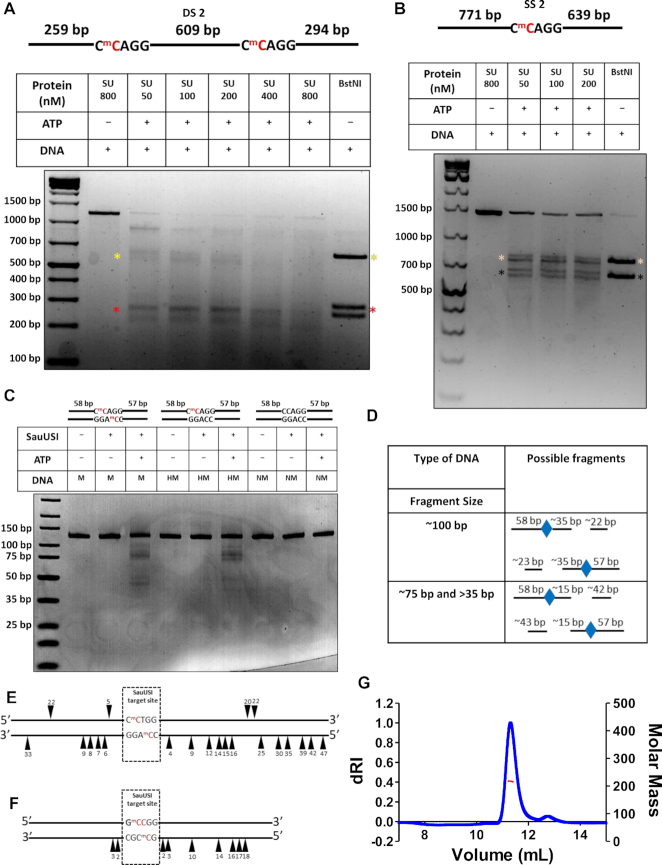
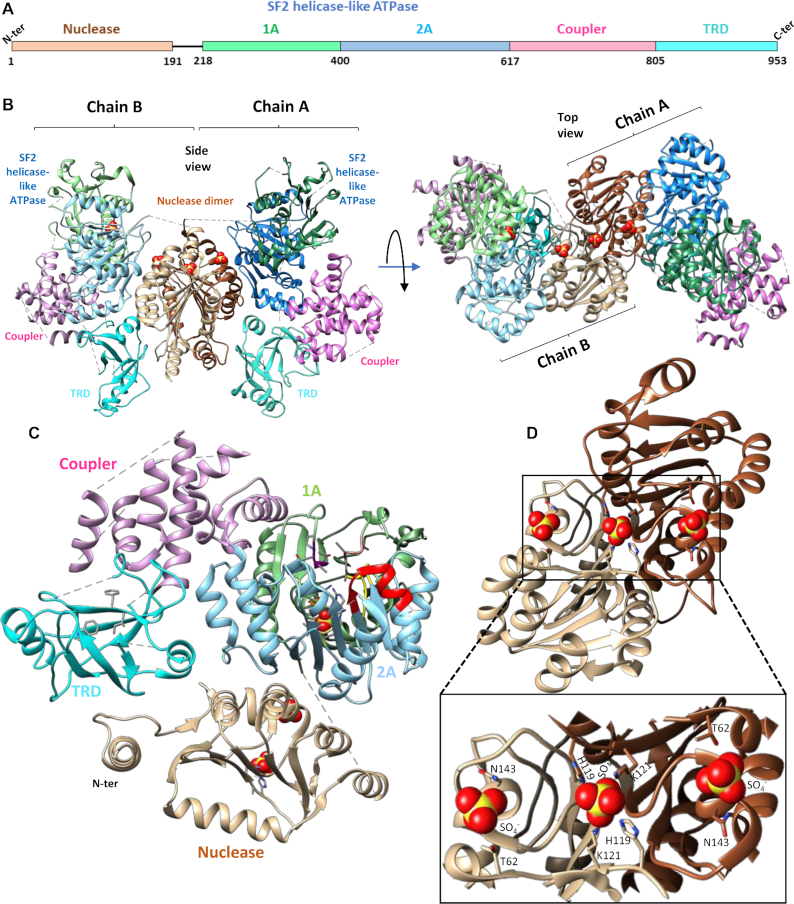
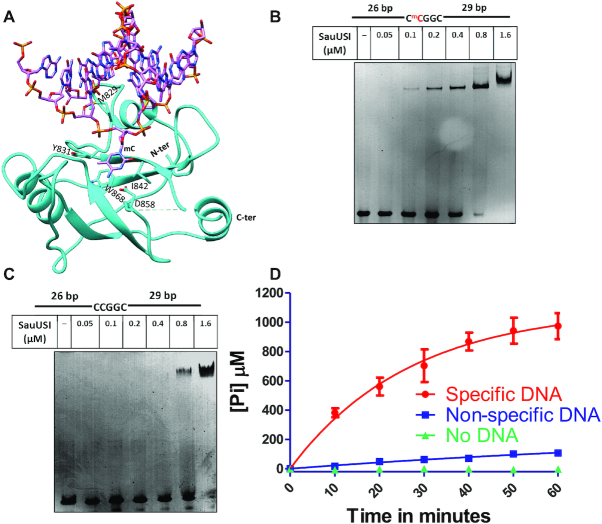
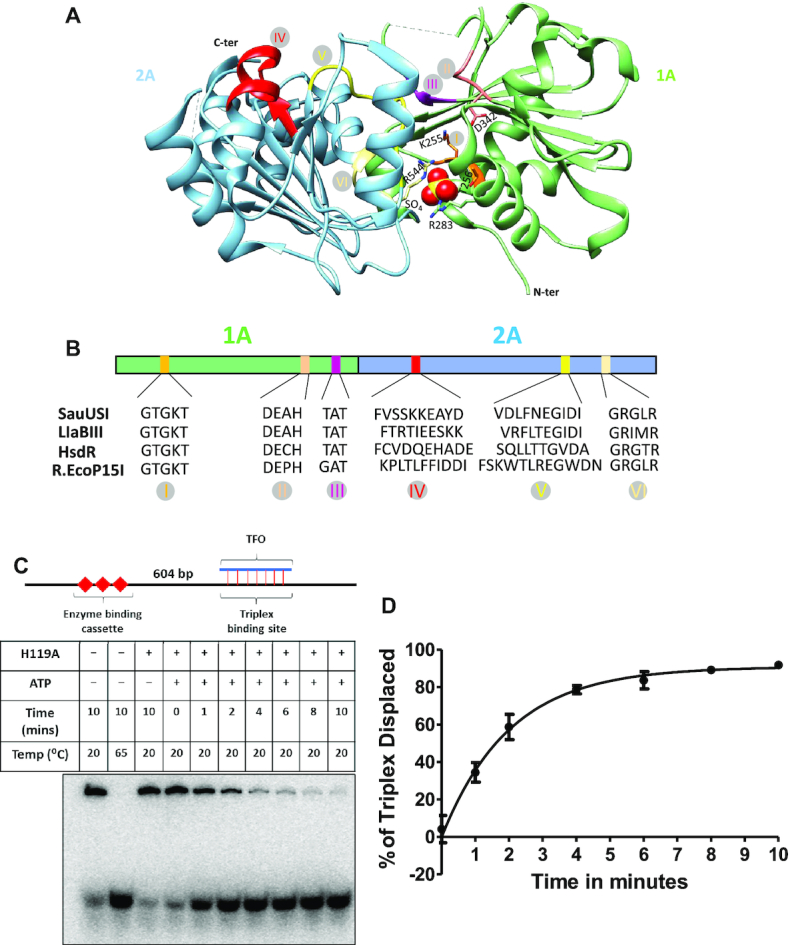
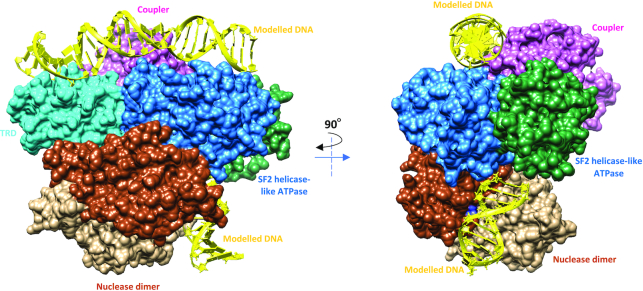
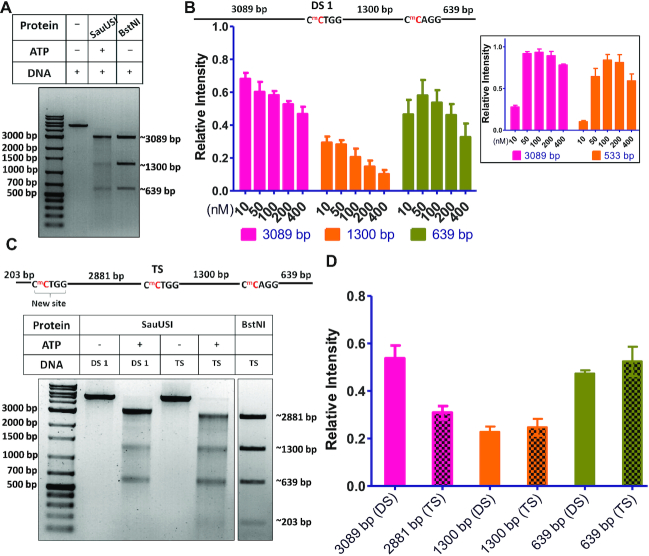
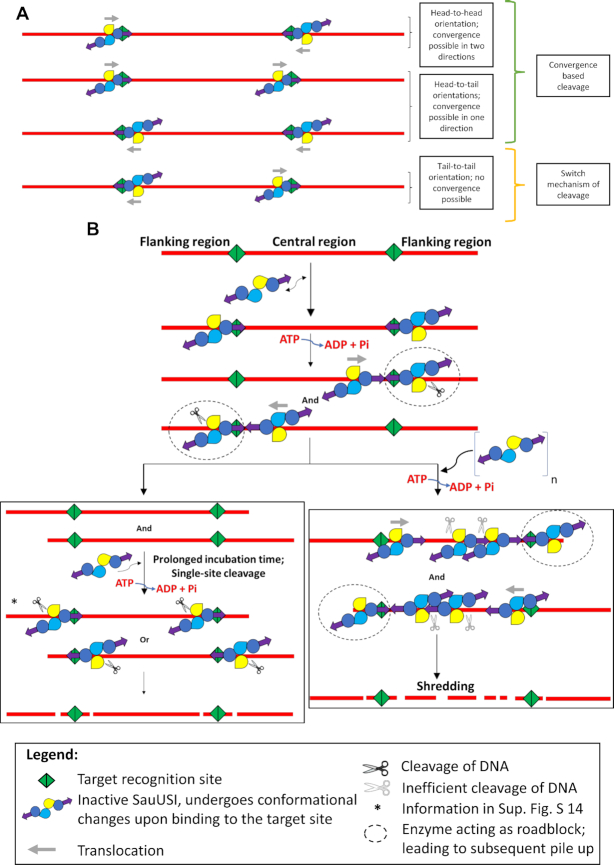
Acquisition of foreign DNA by Staphylococcus aureus, including vancomycin resistance genes, is thwarted by the ATP-dependent endonuclease SauUSI. Deciphering the mechanism of action of SauUSI could unravel the reason how it singularly plays a major role in preventing horizontal gene transfer (HGT) in S. aureus. Here, we report a detailed biochemical and structural characterization of SauUSI, which reveals that in the presence of ATP, the enzyme can cleave DNA having a single or multiple target site/s. Remarkably, in the case of multiple target sites, the entire region of DNA flanked by two target sites is shred into smaller fragments by SauUSI. Crystal structure of SauUSI reveals a stable dimer held together by the nuclease domains, which are spatially arranged to hydrolyze the phosphodiester bonds of both strands of the duplex. Thus, the architecture of the dimeric SauUSI facilitates cleavage of either single-site or multi-site DNA. The structure also provides insights into the molecular basis of target recognition by SauUSI. We show that target recognition activates ATP hydrolysis by the helicase-like ATPase domain, which powers active directional movement (translocation) of SauUSI along the DNA. We propose that a pile-up of multiple translocating SauUSI molecules against a stationary SauUSI bound to a target site catalyzes random double-stranded breaks causing shredding of the DNA between two target sites. The extensive and irreparable damage of the foreign DNA by shredding makes SauUSI a potent barrier against HGT.
金黄色葡萄球菌通过 ATP 依赖性内切核酸酶 SauUSI 来获取包括万古霉素抗性基因在内的外源 DNA。阐明 SauUSI 的作用机制可以揭示其在阻止金黄色葡萄球菌水平基因转移 (HGT) 中发挥主要作用的原因。在此,我们报告了 SauUSI 的详细生化和结构特征,表明在 ATP 存在的情况下,该酶可以切割具有单个或多个靶位点的 DNA。值得注意的是,在存在多个靶位点的情况下,SauUSI 可将两个靶位点之间的整个 DNA 区域切成较小的片段。SauUSI 的晶体结构揭示了一个稳定的二聚体,由核酸酶结构域结合在一起,这些结构域在空间上排列以水解双链体的两条链的磷酸二酯键。因此,二聚体 SauUSI 的结构促进了单一位点或多位点 DNA 的切割。该结构还提供了 SauUSI 靶标识别的分子基础的见解。我们表明,靶标识别通过解旋酶样 ATP 酶结构域激活 ATP 水解,该结构域为 SauUSI 沿 DNA 的主动定向运动(易位)提供动力。我们提出,多个易位的 SauUSI 分子在与靶位点结合的固定 SauUSI 上堆积,催化随机双链断裂,导致两个靶位点之间的 DNA 断裂。通过断裂对外源 DNA 的广泛和不可修复的破坏使 SauUSI 成为阻止 HGT 的有效屏障。