Department of Molecular Biology, Princeton University, Lewis Thomas Laboratory, Washington Road, Princeton, NJ 08544, USA.
Nucleic Acids Res. 2021 Feb 26;49(4):2044-2064. doi: 10.1093/nar/gkab019.
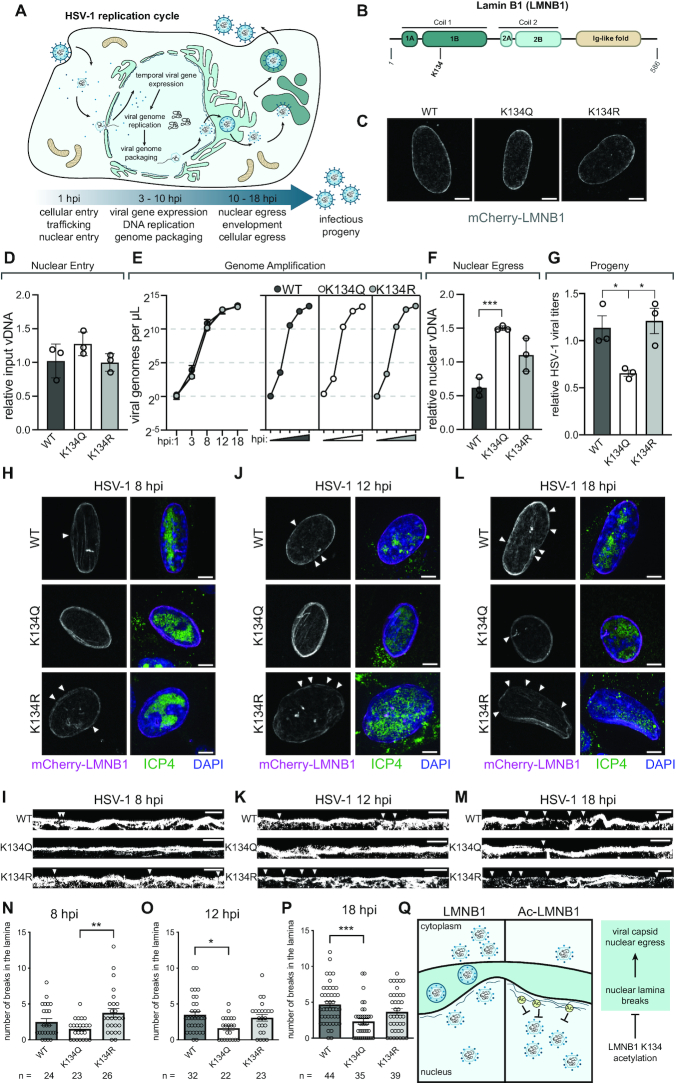
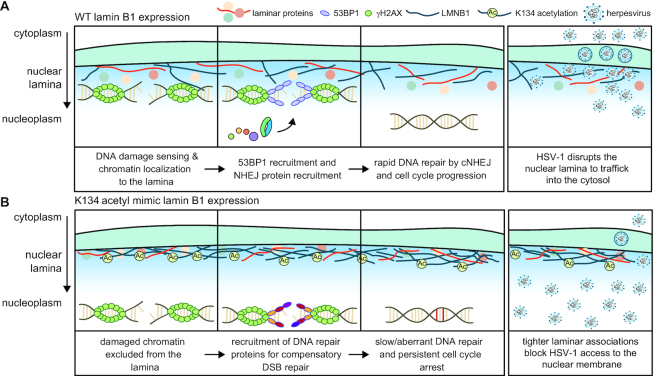
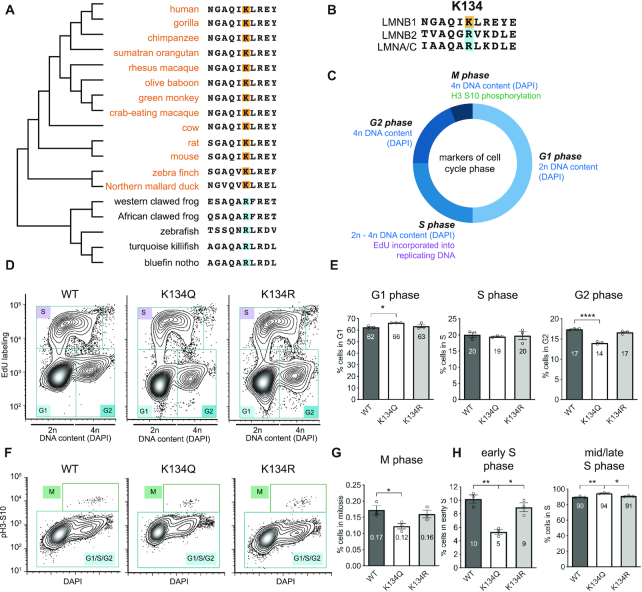
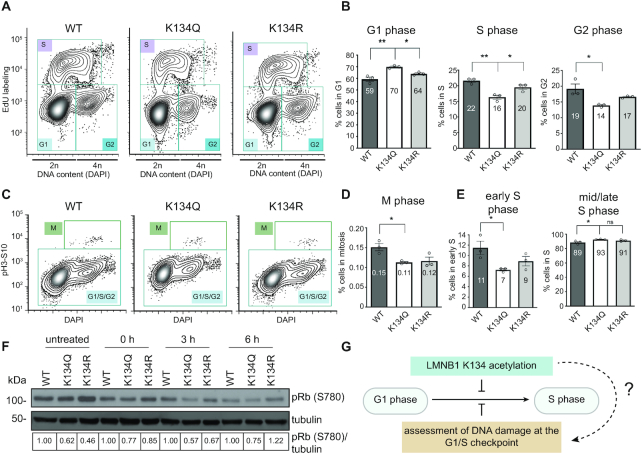
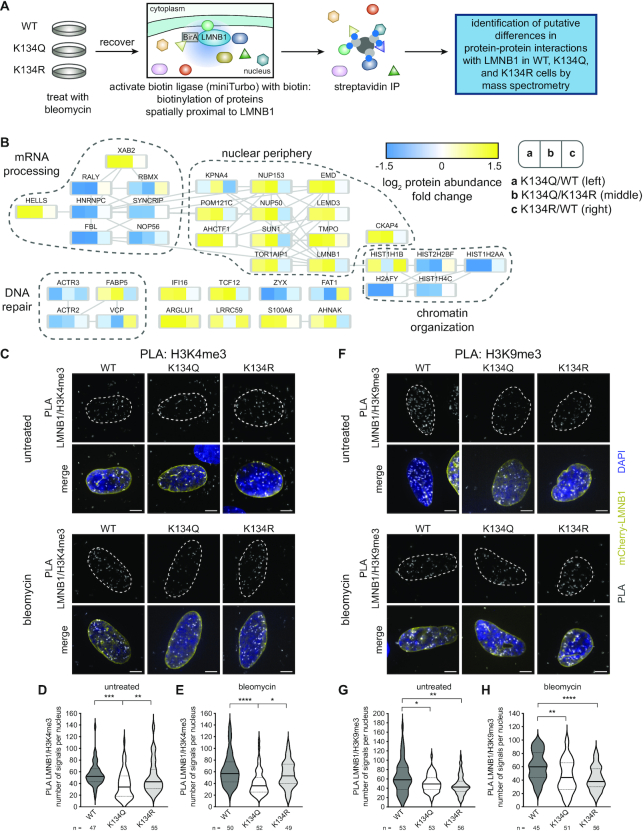
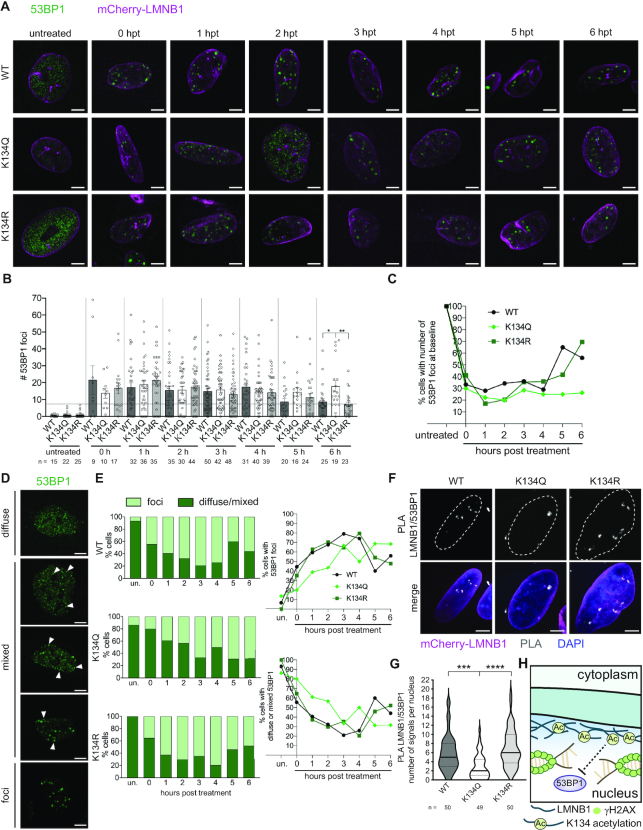
The integrity and regulation of the nuclear lamina is essential for nuclear organization and chromatin stability, with its dysregulation being linked to laminopathy diseases and cancer. Although numerous posttranslational modifications have been identified on lamins, few have been ascribed a regulatory function. Here, we establish that lamin B1 (LMNB1) acetylation at K134 is a molecular toggle that controls nuclear periphery stability, cell cycle progression, and DNA repair. LMNB1 acetylation prevents lamina disruption during herpesvirus type 1 (HSV-1) infection, thereby inhibiting virus production. We also demonstrate the broad impact of this site on laminar processes in uninfected cells. LMNB1 acetylation negatively regulates canonical nonhomologous end joining by impairing the recruitment of 53BP1 to damaged DNA. This defect causes a delay in DNA damage resolution and a persistent activation of the G1/S checkpoint. Altogether, we reveal LMNB1 acetylation as a mechanism for controlling DNA repair pathway choice and stabilizing the nuclear periphery.
核层的完整性和调节对于核组织和染色质稳定性至关重要,其失调与核纤层病和癌症有关。尽管已经鉴定出许多在核纤层蛋白上的翻译后修饰,但很少有被赋予调节功能。在这里,我们确定核纤层蛋白 B1(LMNB1)在 K134 的乙酰化是一个分子开关,控制核周稳定性、细胞周期进程和 DNA 修复。LMNB1 乙酰化可防止单纯疱疹病毒 1(HSV-1)感染期间的核层破裂,从而抑制病毒产生。我们还证明了该位点在未感染细胞的层状过程中的广泛影响。LMNB1 乙酰化通过损害 53BP1 与受损 DNA 的募集,负调控规范的非同源末端连接。这一缺陷导致 DNA 损伤的解决延迟,并持续激活 G1/S 检查点。总之,我们揭示了 LMNB1 乙酰化作为控制 DNA 修复途径选择和稳定核周的机制。