Villagomez Fabian R, Lang Julie, Nunez-Avellaneda Daniel, Behbakht Kian, Dimmick Hannah L, Webb Patricia, Nephew Kenneth P, Neville Margaret, Woodruff Elizabeth R, Bitler Benjamin G
Division of Reproductive Sciences, Department of Obstetrics and Gynecology, School of Medicine, University of Colorado, Anschutz Medical Campus, Aurora, Colorado.
Department of Immunology and Microbiology, University of Colorado Anschutz Medical Campus, Aurora, USA.
bioRxiv. 2024 Sep 7:2024.09.04.611120. doi: 10.1101/2024.09.04.611120.
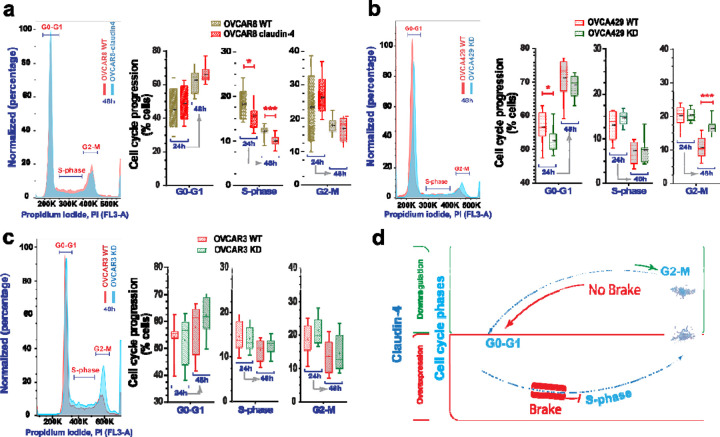
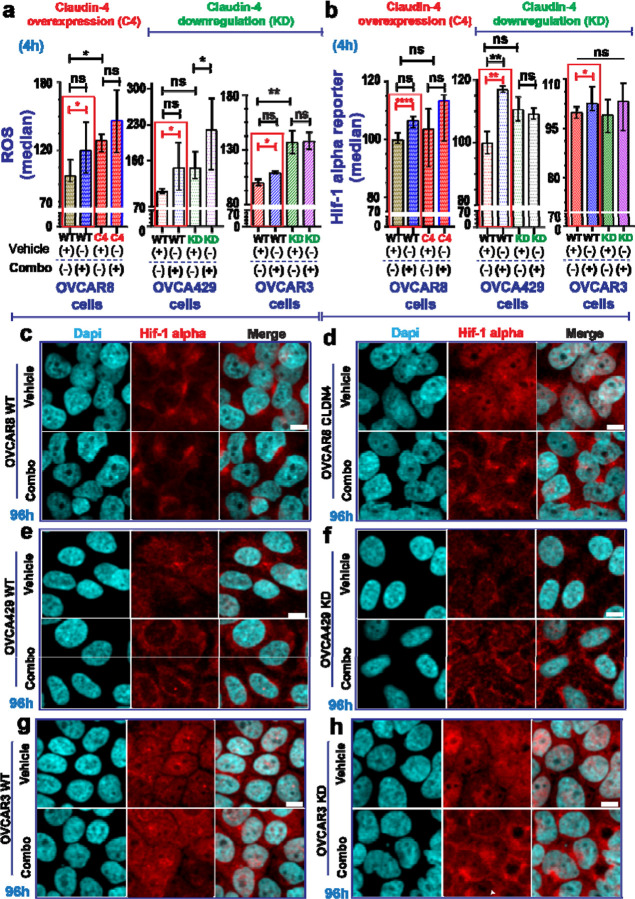
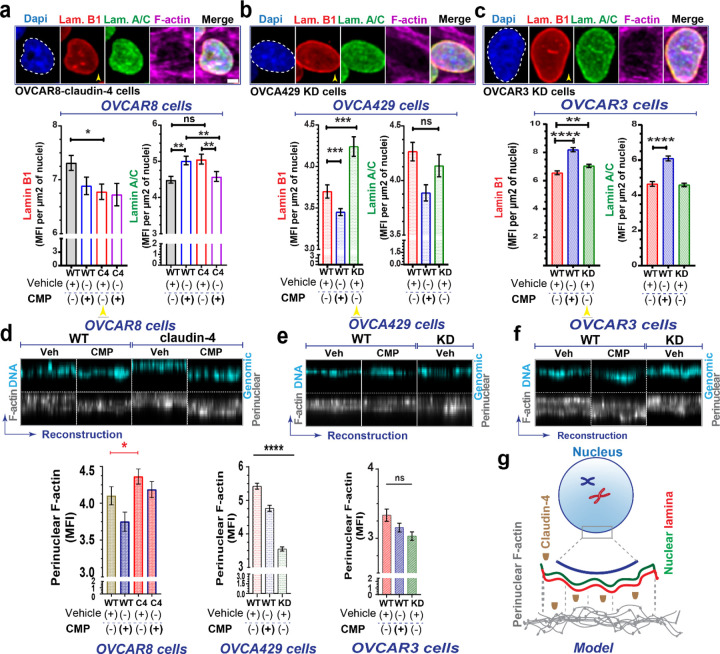
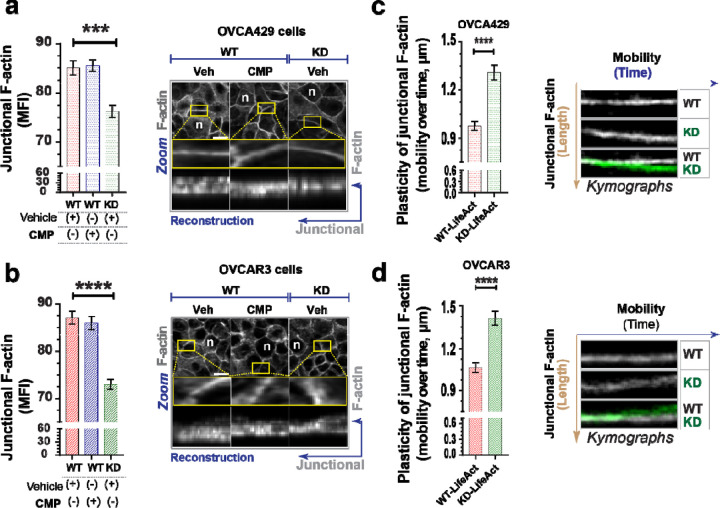
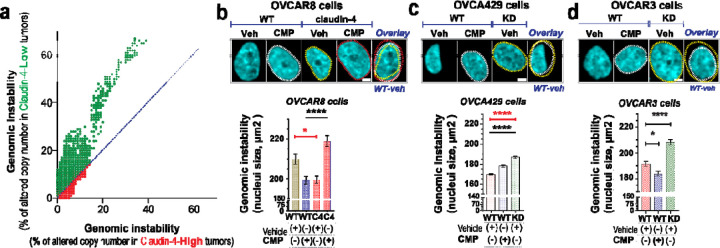
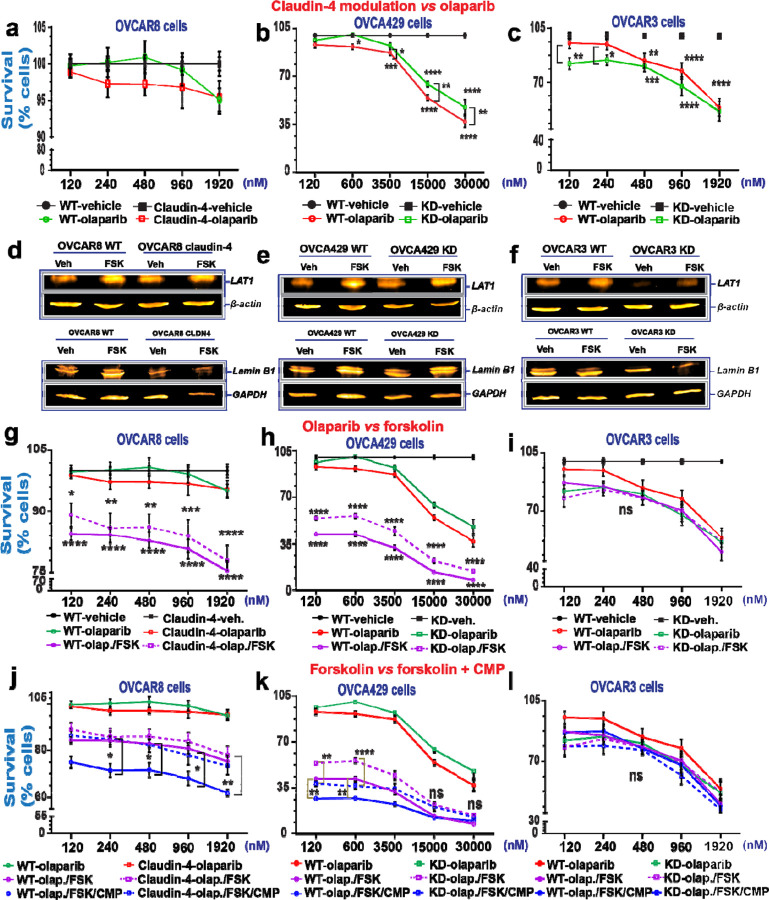
During cancer development, the interplay between the nucleus and the cell cycle leads to a state of genomic instability, often accompanied by observable morphological aberrations. These aberrations can be controlled by tumor cells to evade cell death, either by preventing or eliminating genomic instability. In epithelial ovarian cancer (EOC), overexpression of the multifunctional protein claudin-4 is a key contributor to therapy resistance through mechanisms associated with genomic instability. However, the molecular mechanisms underlying claudin-4 overexpression in EOC remain poorly understood. Here, we altered claudin-4 expression and employed a unique claudin-4 targeting peptide (CMP) to manipulate the function of claudin-4. We found that claudin-4 facilitates genome maintenance by linking the nuclear envelope and cytoskeleton dynamics with cell cycle progression. Claudin-4 caused nuclei constriction by excluding lamin B1 and promoting perinuclear F-actin accumulation, associated with remodeling nuclear architecture, thus altering nuclear envelope dynamics. Consequently, cell cycle modifications due to claudin-4 overexpression resulted in fewer cells entering the S-phase and reduced genomic instability. Importantly, disrupting biological interactions of claudin-4 using CMP and forskolin altered oxidative stress cellular response and increased the efficacy of PARP inhibitor treatment. Our data indicate that claudin-4 protects tumor genome integrity by remodeling the crosstalk between the nuclei and the cell cycle, leading to resistance to genomic instability formation and the effects of genomic instability-inducing agents.
在癌症发展过程中,细胞核与细胞周期之间的相互作用导致基因组不稳定状态,通常伴有可观察到的形态学畸变。这些畸变可被肿瘤细胞控制以逃避细胞死亡,要么通过预防要么通过消除基因组不稳定来实现。在上皮性卵巢癌(EOC)中,多功能蛋白claudin-4的过表达是通过与基因组不稳定相关的机制导致治疗耐药性的关键因素。然而,EOC中claudin-4过表达的分子机制仍知之甚少。在此,我们改变了claudin-4的表达,并采用一种独特的靶向claudin-4的肽(CMP)来操纵claudin-4的功能。我们发现claudin-4通过将核膜和细胞骨架动力学与细胞周期进程联系起来促进基因组维持。Claudin-4通过排除核纤层蛋白B1并促进核周F-肌动蛋白积累导致细胞核收缩,这与重塑核结构相关,从而改变核膜动力学。因此,由于claudin-4过表达引起的细胞周期改变导致进入S期的细胞减少并降低了基因组不稳定性。重要的是,使用CMP和福司可林破坏claudin-4的生物学相互作用改变了氧化应激细胞反应并提高了PARP抑制剂治疗的疗效。我们的数据表明,claudin-4通过重塑细胞核与细胞周期之间的串扰来保护肿瘤基因组完整性,从而导致对基因组不稳定形成和基因组不稳定诱导剂作用的抗性。