1Cranfield Water Science Institute, Cranfield University, Cranfield, United Kingdom.
2Faculty of Engineering and Physical Sciences, University of Leeds, Leeds, United Kingdom.
Am J Trop Med Hyg. 2021 Feb 1;104(3):884-897. doi: 10.4269/ajtmh.20-0945.
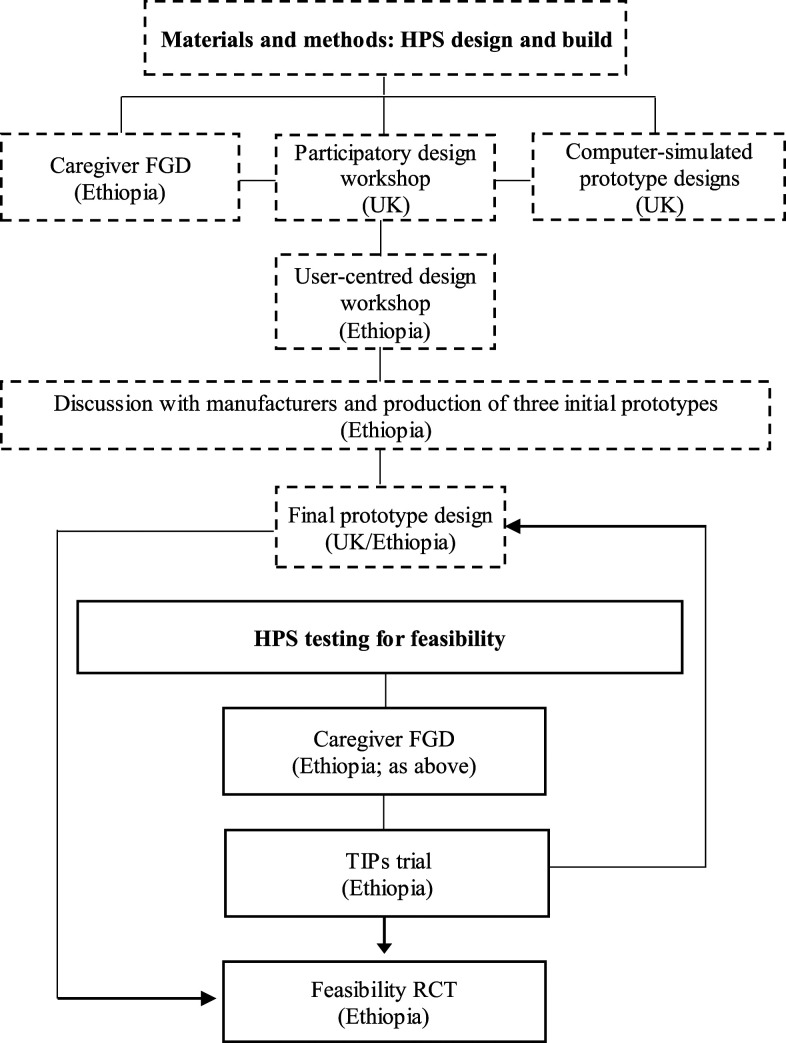
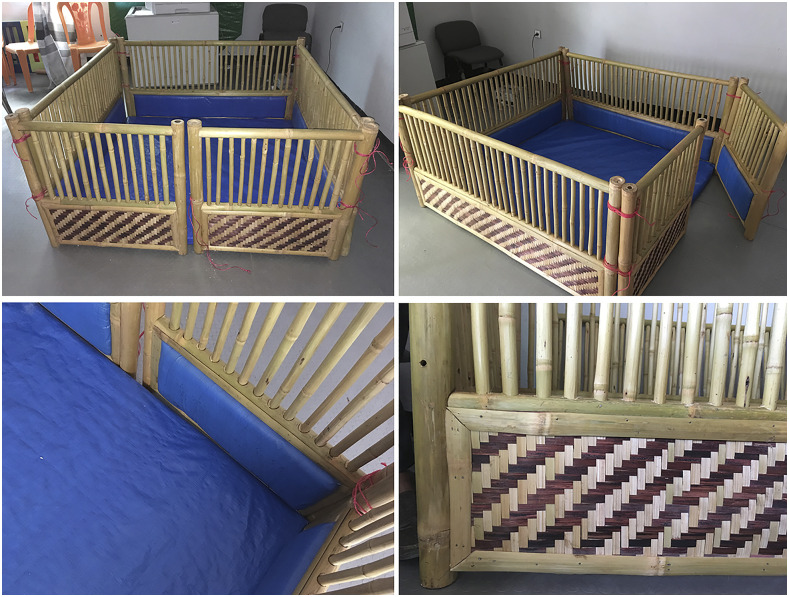
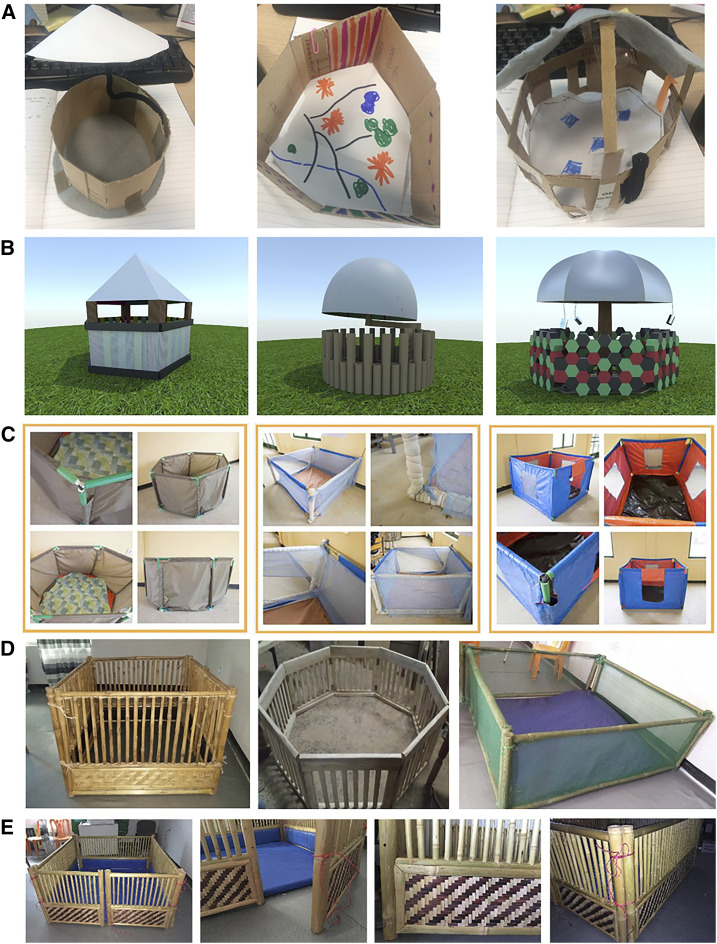
Growing evidence suggests current water, sanitation, and hygiene interventions do not improve domestic hygiene sufficiently to improve infant health, nor consider the age-specific behaviors which increase infection risk. A household playspace (HPS) is described as one critical intervention to reduce direct fecal-oral transmission within formative growth periods. This article details both the design and development (materials and methods), and testing (results) of a HPS for rural Ethiopian households. Design and testing followed a multi-sectoral, multistep participatory process. This included a focus group discussion (FGD), two user-centered and participatory design workshops in the United Kingdom and Ethiopia, discussions with local manufacturers, and a Trials by Improved Practices (TIPs) leading to a final prototype design. Testing included the FGD and TIPs study and a subsequent randomized controlled feasibility trial in Ethiopian households. This multi-sectoral, multistage development process demonstrated a HPS is an acceptable and feasible intervention in these low-income, rural subsistence Ethiopian households. A HPS may help reduce fecal-oral transmission and infection-particularly in settings where free-range domestic livestock present an increased risk. With the need to better tailor interventions to improve infant health, this article also provides a framework for future groups developing similar material inputs and highlights the value of participatory design in this field.
越来越多的证据表明,当前的水、环境卫生和个人卫生干预措施并没有充分改善家庭卫生,从而提高婴儿健康水平,也没有考虑到增加感染风险的特定年龄段行为。家庭游戏空间(HPS)被描述为减少形成期内直接粪-口传播的一项重要干预措施。本文详细介绍了为埃塞俄比亚农村家庭设计和开发(材料和方法)以及测试(结果)的 HPS。设计和测试遵循多部门、多步骤的参与式过程。这包括焦点小组讨论(FGD)、在英国和埃塞俄比亚进行的两次以用户为中心和参与式设计研讨会、与当地制造商的讨论,以及最终导致最终原型设计的改进实践试验(TIPs)。测试包括 FGD 和 TIPs 研究以及随后在埃塞俄比亚家庭中进行的随机对照可行性试验。这种多部门、多阶段的开发过程表明,HPS 在这些低收入、农村自给自足的埃塞俄比亚家庭中是一种可接受且可行的干预措施。HPS 可能有助于减少粪-口传播和感染,尤其是在存在自由放养家畜的情况下增加了风险。由于需要更好地调整干预措施以改善婴儿健康,本文还为未来开发类似材料投入的团体提供了一个框架,并强调了参与式设计在这一领域的价值。