Department of Respiratory and Critical Care Medicine, West China Hospital of Sichuan University and Division of Pulmonary Diseases, State Key Laboratory of Biotherapy of China, Chengdu 610041, China.
Respiratory Ward, Department of Geriatrics, Sichuan Provincial People's Hospital, University of Electronic Science and Technology of China, Chengdu 611731, China.
Aging (Albany NY). 2021 Feb 1;13(4):5120-5135. doi: 10.18632/aging.202432.
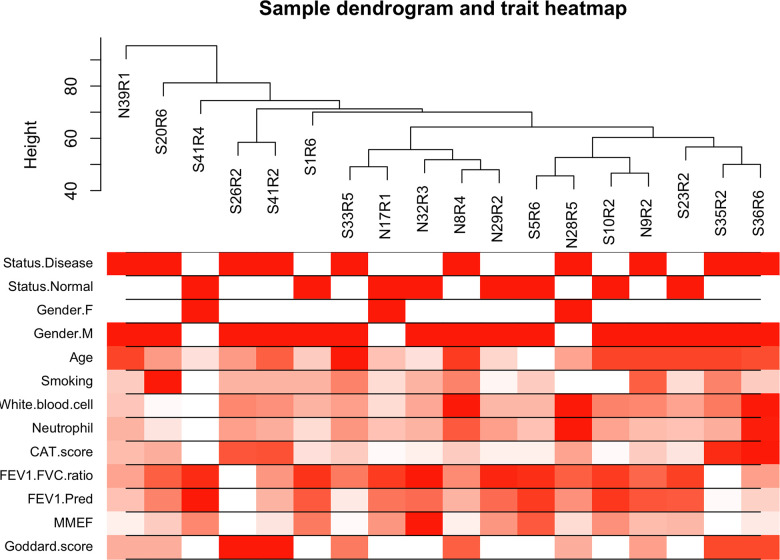
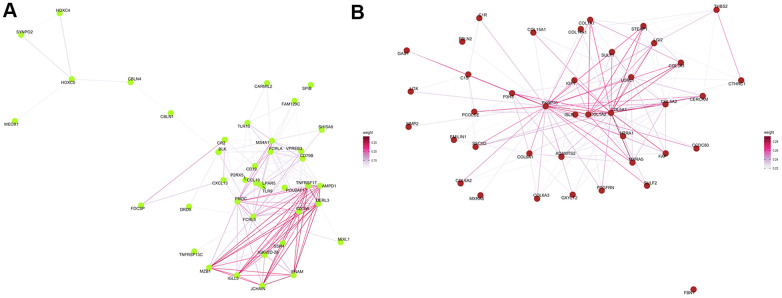
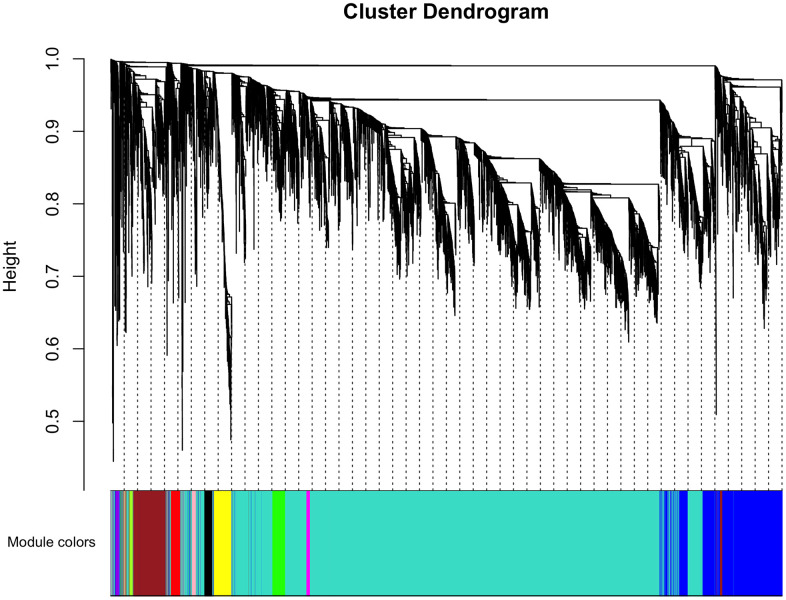
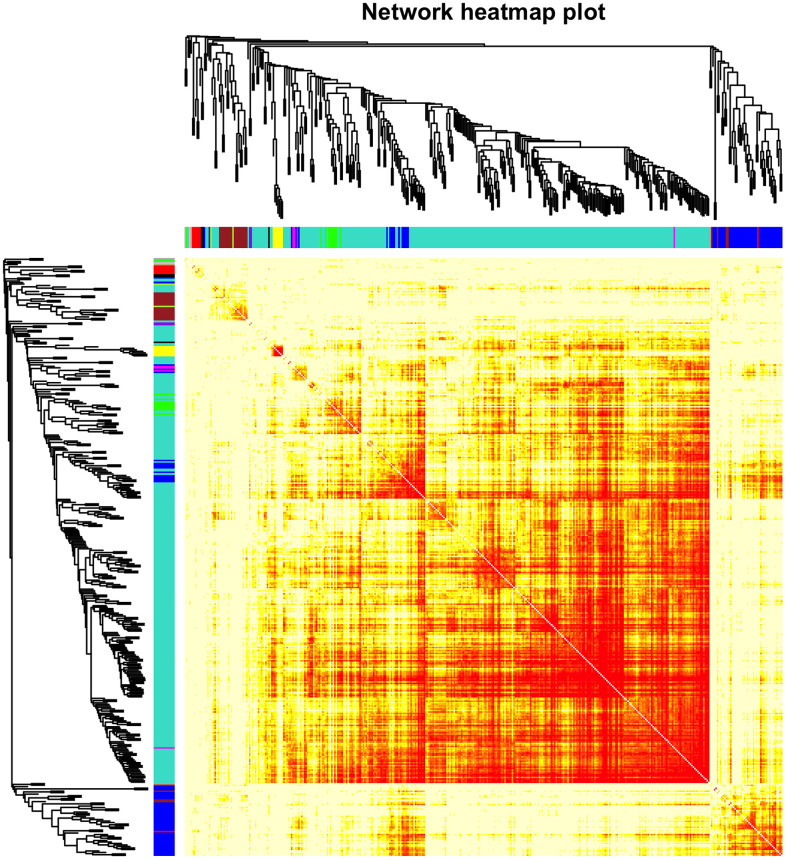
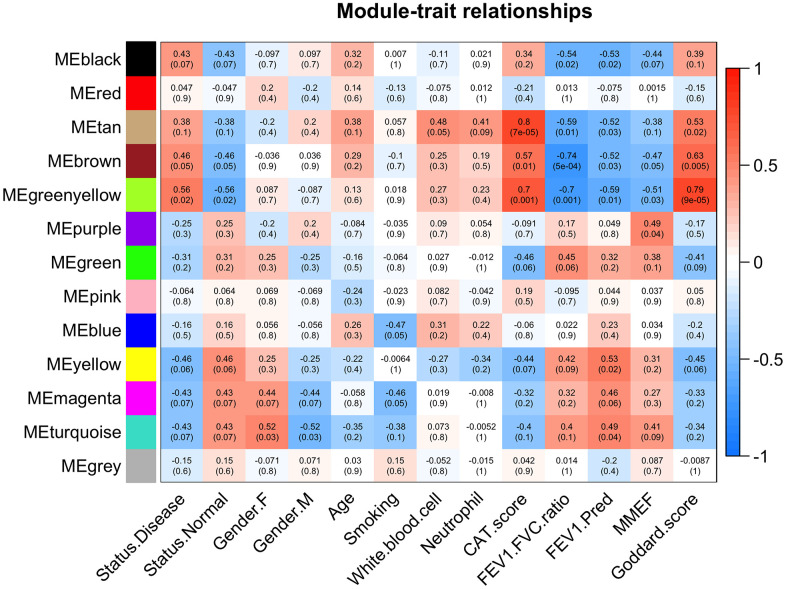
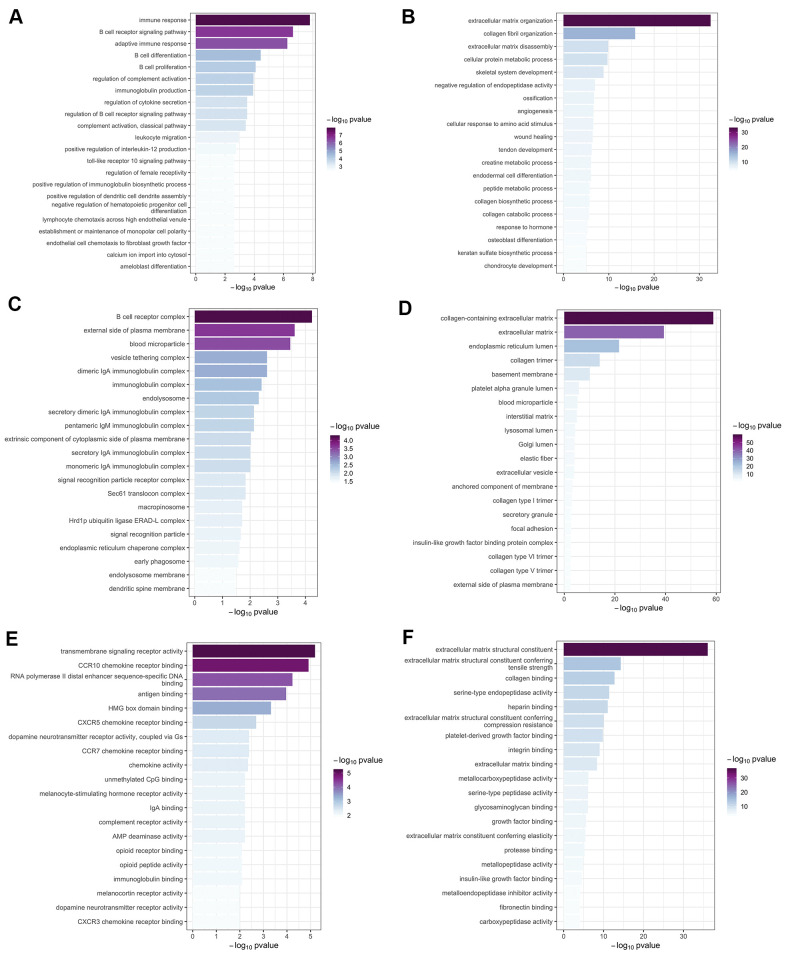
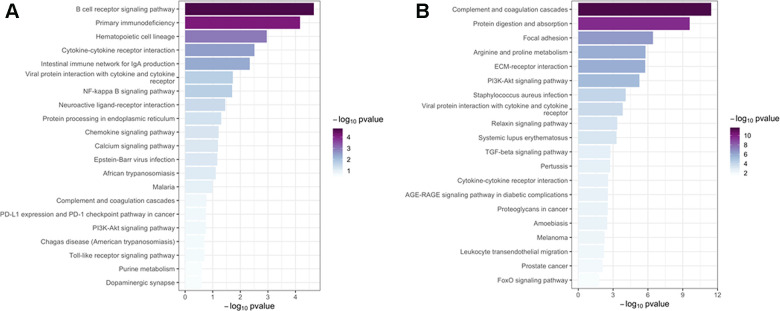
Chronic obstructive pulmonary disease (COPD) is a heterogeneous condition associated with high morbidity and mortality. This study aimed to use weighted gene co-expression network analysis (WGCNA) to explore the molecular pathogenesis of the emphysema phenotype of COPD. After obtaining lung mRNA expression profiles from ten patients with the emphysema phenotype of COPD and eight controls, emphysema-associated gene modules were identified with WGCNA. Among 13 distinct modules, the green-yellow and brown modules showed the strongest correlations with emphysema severity and lung function and were thus selected as hub modules. On gene ontology analysis, these two modules were mainly enriched in immune response, B cell receptor (BCR) signaling pathway, extracellular matrix (ECM) organization, and collagen fibril organization. Pathway analysis primarily showed enrichment in BCR signaling pathways, ECM receptor interaction, and NF-κB and TGF-β signaling pathways for the two hub modules. Several genes, including FCRLA, MS4A1, CD19, FKBP10, C1S and HTRA1, among others, were identified as hub genes. Our results shed light on the potential genetic mechanisms underlying the pathogenesis of the emphysema phenotype of COPD. However, further research will be needed to confirm the involvement of the identified genes and to determine their therapeutic relevance.
慢性阻塞性肺疾病(COPD)是一种异质性疾病,与高发病率和死亡率相关。本研究旨在利用加权基因共表达网络分析(WGCNA)探索 COPD 肺气肿表型的分子发病机制。从 10 名 COPD 肺气肿表型患者和 8 名对照者的肺 mRNA 表达谱中,使用 WGCNA 识别与肺气肿相关的基因模块。在 13 个不同的模块中,绿色-黄色和棕色模块与肺气肿严重程度和肺功能的相关性最强,因此被选为枢纽模块。在基因本体论分析中,这两个模块主要富集在免疫反应、B 细胞受体(BCR)信号通路、细胞外基质(ECM)组织和胶原纤维组织。通路分析主要显示两个枢纽模块在 BCR 信号通路、ECM 受体相互作用、NF-κB 和 TGF-β信号通路中富集。鉴定出 FCRLA、MS4A1、CD19、FKBP10、C1S 和 HTRA1 等几个基因作为枢纽基因。我们的研究结果揭示了 COPD 肺气肿表型发病机制的潜在遗传机制。然而,需要进一步的研究来确认所鉴定基因的参与,并确定其治疗相关性。