Salisbury-Ruf Christi T, Larochelle Andre
Cellular and Molecular Therapeutics Branch, National Heart, Lung and Blood Institute (NHLBI), National Institutes of Health (NIH), Bethesda, MD 20892, USA.
J Clin Med. 2021 Feb 1;10(3):513. doi: 10.3390/jcm10030513.
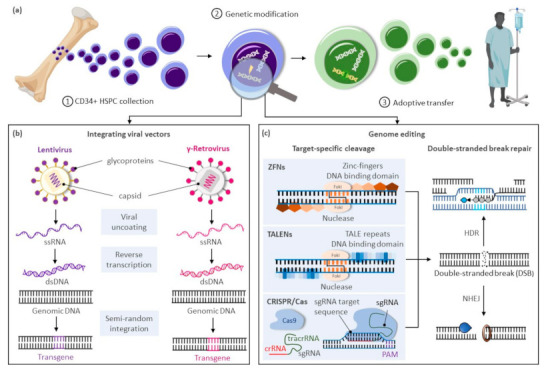
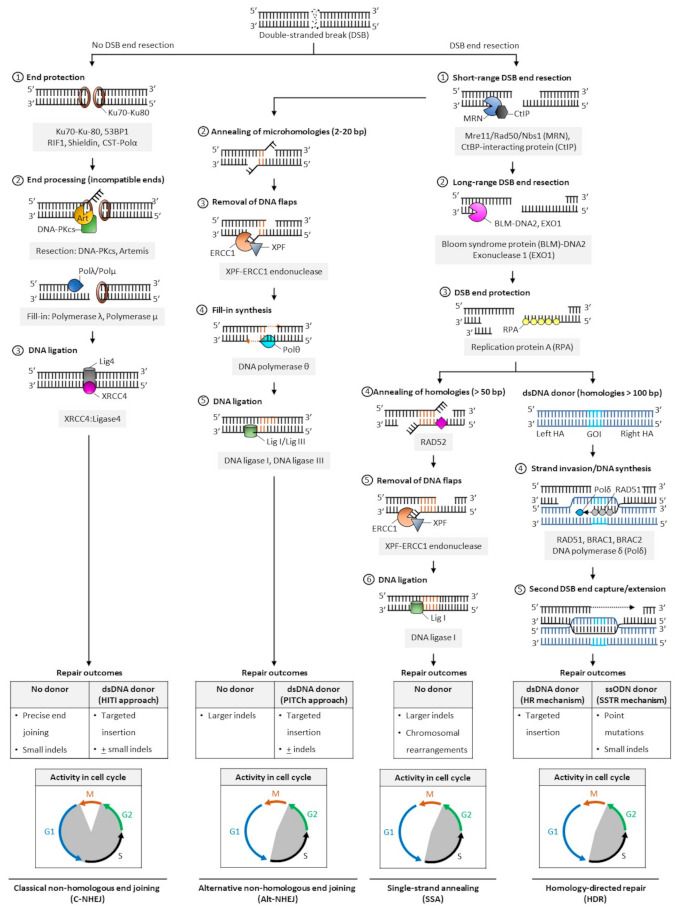
Homology-directed gene editing of hematopoietic stem and progenitor cells (HSPCs) is a promising strategy for the treatment of inherited blood disorders, obviating many of the limitations associated with viral vector-mediated gene therapies. The use of CRISPR/Cas9 or other programmable nucleases and improved methods of homology template delivery have enabled precise ex vivo gene editing. These transformative advances have also highlighted technical challenges to achieve high-efficiency gene editing in HSPCs for therapeutic applications. In this review, we discuss recent pre-clinical investigations utilizing homology-mediated gene editing in HSPCs and highlight various strategies to improve editing efficiency in these cells.
对造血干细胞和祖细胞(HSPCs)进行同源性定向基因编辑是治疗遗传性血液疾病的一种有前景的策略,它避免了许多与病毒载体介导的基因疗法相关的局限性。CRISPR/Cas9或其他可编程核酸酶的使用以及同源模板递送方法的改进,使得体外精确基因编辑成为可能。这些变革性进展也凸显了在HSPCs中实现高效基因编辑以用于治疗应用所面临的技术挑战。在这篇综述中,我们讨论了最近利用HSPCs中的同源性介导基因编辑进行的临床前研究,并强调了提高这些细胞编辑效率的各种策略。