Department of Microbiology, Tumor and Cell Biology, Karolinska Institutet, Stockholm, Sweden.
Department of Cell and Molecular Biology, Karolinska Institutet, Stockholm, Sweden.
Autophagy. 2021 Nov;17(11):3577-3591. doi: 10.1080/15548627.2021.1885183. Epub 2021 Feb 16.
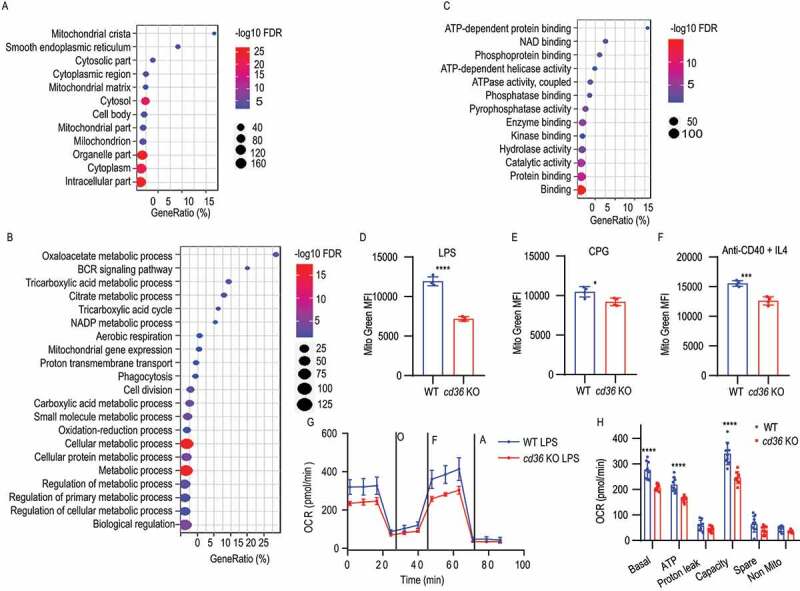
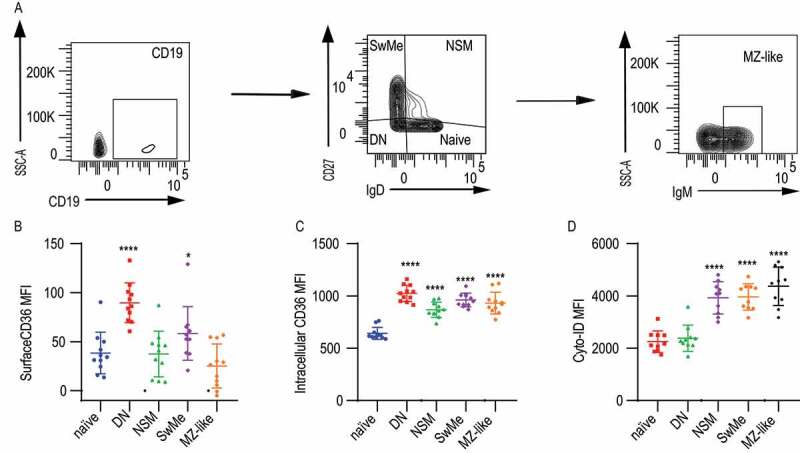
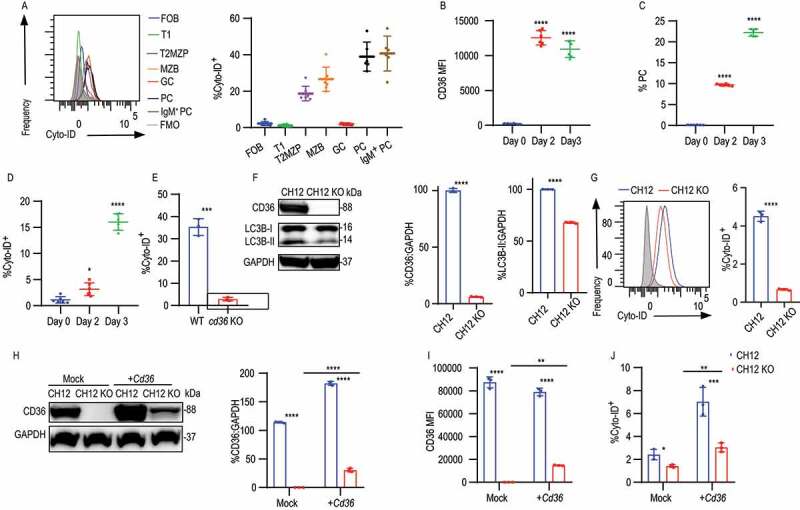
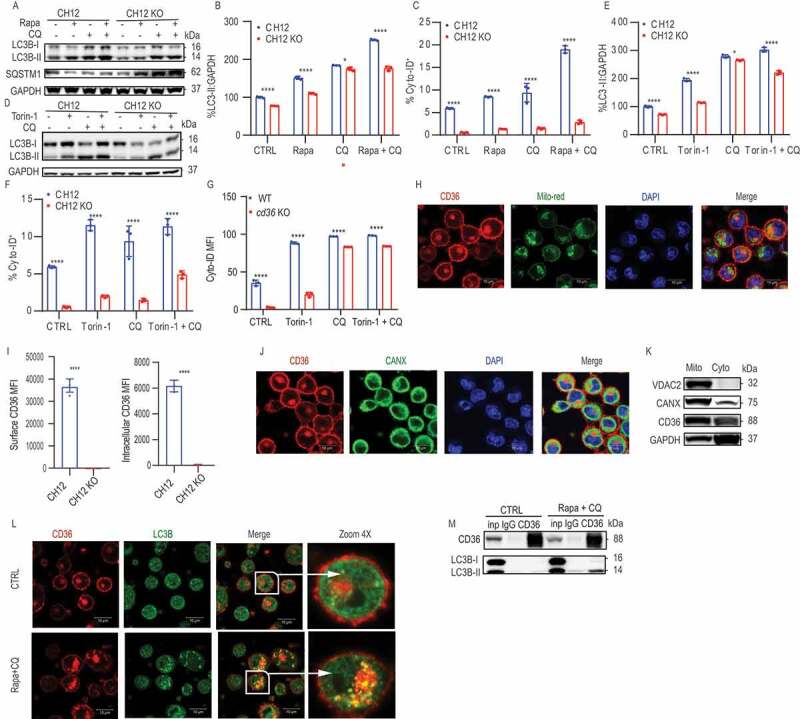
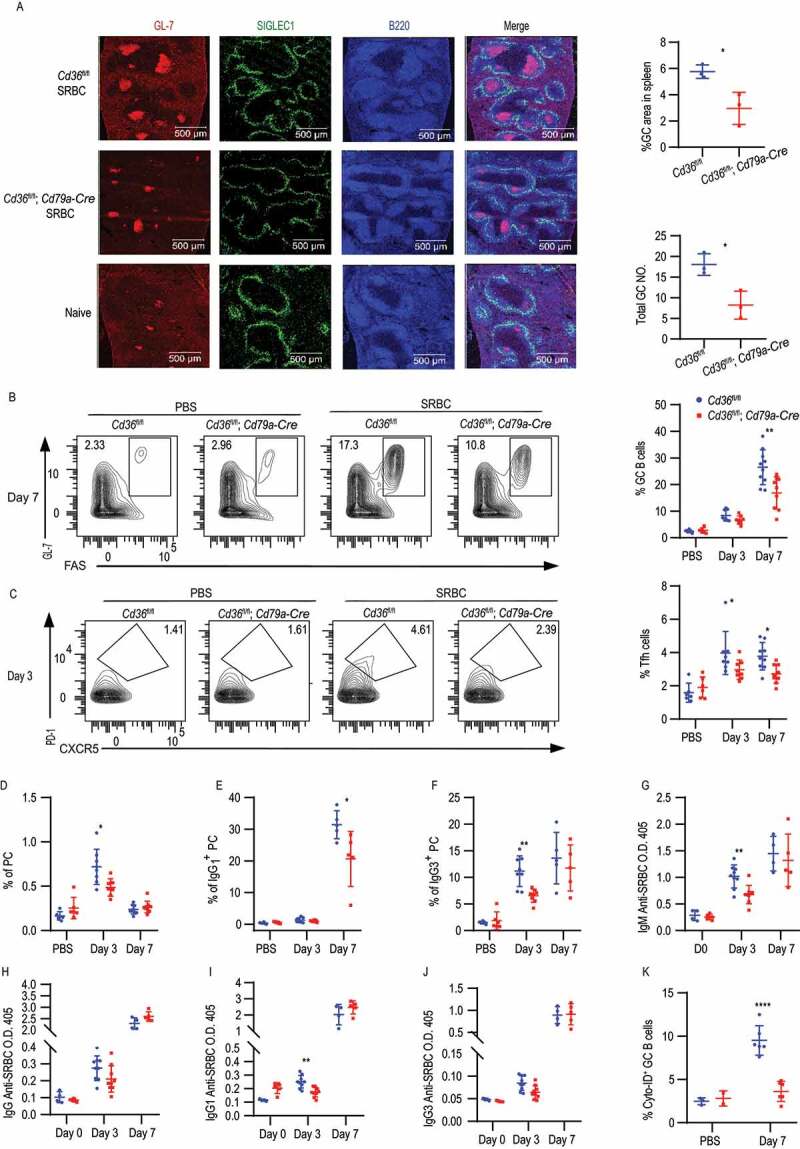
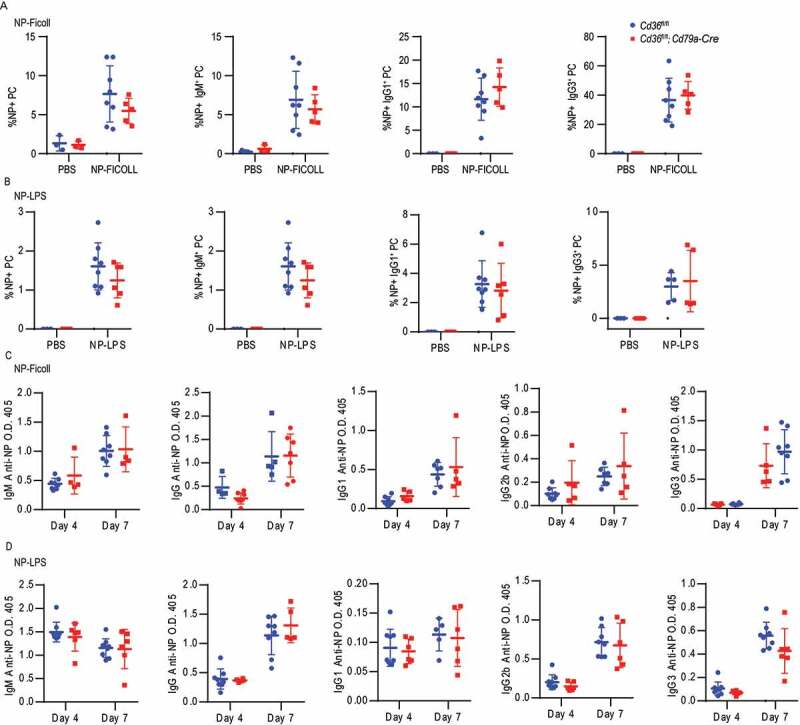
Scavenger receptors are pattern recognition receptors that recognize both foreign and self-ligands, and initiate different mechanisms of cellular activation, often as co-receptors. The function of scavenger receptor CD36 in the immune system has mostly been studied in macrophages but it is also highly expressed by innate type B cells where its function is less explored. Here we report that CD36 is involved in macro-autophagy/autophagy in B cells, and in its absence, the humoral immune response is impaired. We found that CD36-deficient B cells exhibit a significantly reduced plasma cell formation, proliferation, mitochondrial mobilization and oxidative phosphorylation. These changes were accompanied by impaired initiation of autophagy, and we found that CD36 regulated autophagy and colocalized with autophagosome membrane protein MAP1LC3/LC3 (microtubule-associated protein 1 light chain 3). When we investigated T-cell-dependent immune responses, we found that mice with CD36 deficiency, specifically in B cells, exhibited attenuated germinal center responses, class switching, and antibody production as well as autophagosome formation. These findings establish a critical role for CD36 in B cell responses and may also contribute to our understanding of CD36-mediated autophagy in other cells as well as in B cell lymphomas that have been shown to express the receptor. AICDA/AID: activation-induced cytidine deaminase; ATG5: autophagy related 5; ATP: adenosine triphosphate; BCR: B-cell receptor; CPG: unmethylated cytosine-guanosine; CQ: chloroquine; DC: dendritic cells; FOB: follicular B cells; GC: germinal center; Ig: immunoglobulin; LPS: lipopolysaccharide; MAP1LC3/LC3: microtubule-associated protein 1 light chain 3; MFI: mean fluorescence intensity; MZB: marginal zone B cells; NP-CGG: 4-hydroxy-3-nitrophenylacetyl-chicken gamma globulin; OCR: oxygen consumption rate; oxLDL: oxidized low-density lipoprotein; PC: plasma cells; Rapa: rapamycin; SQSTM1/p62: sequestosome 1; SRBC: sheep red blood cells; Tfh: follicular helper T cells; TLR: toll-like receptor.
清道夫受体是一种模式识别受体,可识别外来和自身配体,并启动不同的细胞激活机制,通常作为共受体。清道夫受体 CD36 在免疫系统中的功能主要在巨噬细胞中进行了研究,但在先天 B 细胞中也高度表达,其功能尚未得到充分探索。在这里,我们报告 CD36 参与 B 细胞中的巨自噬/自噬,并且在其缺失的情况下,体液免疫反应受损。我们发现 CD36 缺陷 B 细胞的浆细胞形成、增殖、线粒体动员和氧化磷酸化显著减少。这些变化伴随着自噬的起始受损,我们发现 CD36 调节自噬并与自噬体膜蛋白 MAP1LC3/LC3(微管相关蛋白 1 轻链 3)共定位。当我们研究 T 细胞依赖性免疫反应时,我们发现 CD36 缺陷的小鼠,特别是在 B 细胞中,生发中心反应、类别转换和抗体产生以及自噬体形成减弱。这些发现确立了 CD36 在 B 细胞反应中的关键作用,也可能有助于我们理解 CD36 介导的其他细胞中的自噬以及已显示表达该受体的 B 细胞淋巴瘤中的自噬。AICDA/AID:激活诱导的胞嘧啶脱氨酶;ATG5:自噬相关 5;ATP:三磷酸腺苷;BCR:B 细胞受体;CPG:未甲基化胞嘧啶-鸟嘌呤;CQ:氯喹;DC:树突状细胞;FOB:滤泡 B 细胞;GC:生发中心;Ig:免疫球蛋白;LPS:脂多糖;MAP1LC3/LC3:微管相关蛋白 1 轻链 3;MFI:平均荧光强度;MZB:边缘区 B 细胞;NP-CGG:4-羟基-3-硝基苯乙酰-鸡γ球蛋白;OCR:耗氧量;oxLDL:氧化低密度脂蛋白;PC:浆细胞;Rapa:雷帕霉素;SQSTM1/p62:自噬体相关蛋白 1;SRBC:绵羊红细胞;Tfh:滤泡辅助 T 细胞;TLR: toll 样受体。