ICAR- Central Island Agricultural Research Institute, Port Blair, Andaman and Nicobar Islands, 744 101, India.
Sci Rep. 2021 Feb 3;11(1):2894. doi: 10.1038/s41598-021-81682-x.
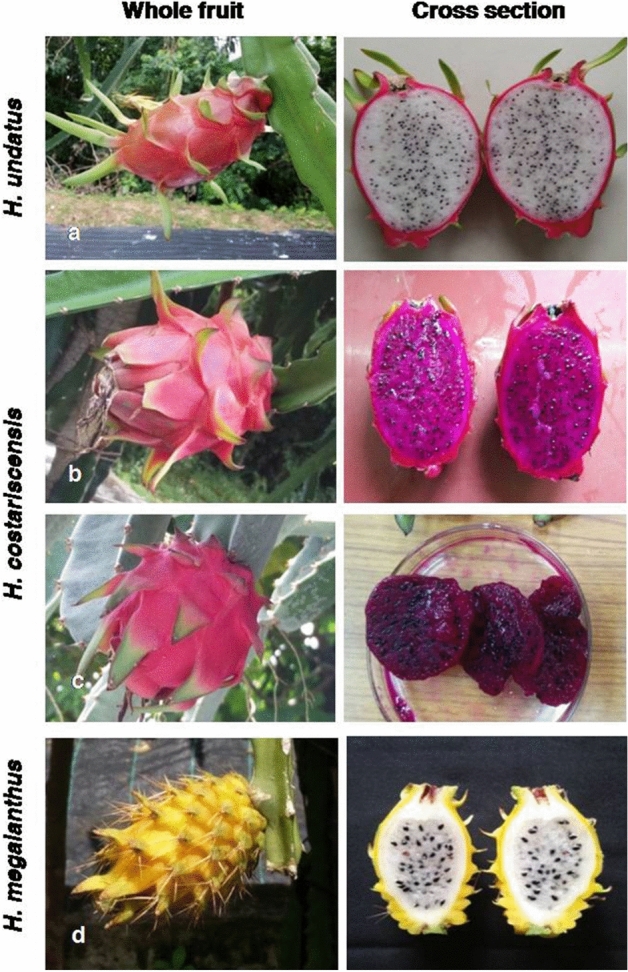
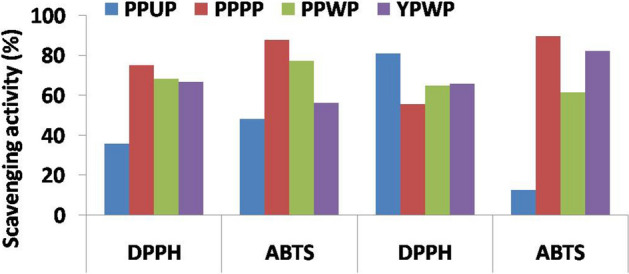
Dragon fruit (Hylocereus spp.), an important tropical fruit belonging to the family Cactaceae, is rich in essential nutrients such as vitamins, minerals, complex carbohydrates, dietary fibres and antioxidants. This study aims to distinguish three dragon fruit species well adapted to Andaman and Nicobar Island through morphological (34 quantitative and 26 qualitative traits), biochemical (5 traits) and molecular (14 ISSR primers) characterization. Morphological characterization revealed that presence of considerable amount of genetic variations among them especially for fruit characters viz., colour of peel and pulp. Cladode characters such as number of spines (3-5), length of areoles (mm) as 1-4, margin ribs of cladode (convex or concave) and its waxiness (weak or strong white waxy or light waxy) could be used for identification of three Hylocereus spp. under present study. Highest co-efficient of variation (%) obtained for pulp weight (88.7), whereas, lowest in distance of anthers belowstigma (3.3). Fruit and pulp weight (g) ranged from 26.5-419.3 and 10.3-258.8 with mean value of 204.8 and 125.3, respectively. Comparatively, high phenol (71.3-161.3) and flavonoid (26.6-508.2) content observed in peels than pulp (32.5-130.0 and 45.0-258.2) of fruit indicating higher antioxidant potential. Highest total carotenoids (µg 100 g), β-carotene (µg 100 g) and xanthophyll (µg g) content obtained in pulp on DGF3 (33.8), DGF4 (55.9) and DGF3 (32.7), whereas, in peel on DGF2 (24.3), DGF4 (18.5) and DGF2 (24.1), respectively. DPPH-based scavenging activity (%) revealed higher scavenging activity of peels (55.6-81.2) than pulp (36.0-75.3) extracts. Comparatively, ABTS-based scavenging activity (%) was found more than DPPH-based one. Sixteen ISSR primers screened, 14 were produced 178 reproducible amplified bands. Number of amplified bands varied from 5 in UBC887 to 19 in UBC811 with an average of 12.71 bands per primer. Range of polymorphic bands and % polymorphism observed were 1-13 and 20.0-92.8, respectively. The polymorphic information content value of ISSR marker ranged from 0.42 (UBC895) to 0.91 (UBC 856). Cluster analysis distinguished three different Hylocereus species on the basis of geographic origin and pulp colour by forming separate groups and two genotypes each showed 52% (DGF1 and DGF3) and 76% (DGF2 and DGF4) genetic similarity. Key traits identified for distinguishing three different Hylocereus species were: Pulp/ peel colour of fruits, number of spines and length of areoles in cladode. Genotypes with high carotenoid and xanthophylls content (DGF4 and DGF2) identified under present study may be of industrial importance for development of nutraceutical products to meet out the vitamin-A deficiency among humans in tropical regions needed future focus.
火龙果(Hylocereus 属)是一种重要的热带水果,属于仙人掌科,富含多种必需营养物质,如维生素、矿物质、复杂碳水化合物、膳食纤维和抗氧化剂。本研究旨在通过形态学(34 个定量和 26 个定性特征)、生化(5 个特征)和分子(14 个 ISSR 引物)特征区分三种适应安达曼和尼科巴群岛的火龙果物种。形态学特征表明,它们之间存在相当大的遗传变异,特别是在果实特征方面,如果皮和果肉的颜色。茎的特征,如刺的数量(3-5)、节间长度(mm)为 1-4、茎的边缘肋骨(凸或凹)及其蜡质(弱或强白色蜡质或浅色蜡质)可用于识别本研究中的三种 Hylocereus 属。获得的果肉重量变异系数(%)最高(88.7),而花药距柱头下的距离(%)最低(3.3)。果实和果肉重量(g)范围为 26.5-419.3 和 10.3-258.8,平均值分别为 204.8 和 125.3。相比之下,果皮中的酚类(71.3-161.3)和类黄酮(26.6-508.2)含量高于果肉(32.5-130.0 和 45.0-258.2),表明具有更高的抗氧化潜力。在 DGF3(33.8)、DGF4(55.9)和 DGF3(32.7)中,果肉中的总类胡萝卜素(µg 100 g)、β-胡萝卜素(µg 100 g)和叶黄素(µg g)含量最高,而在 DGF2(24.3)、DGF4(18.5)和 DGF2(24.1)中,果皮中的含量最高。DPPH 清除活性(%)表明果皮提取物(55.6-81.2)的清除活性高于果肉提取物(36.0-75.3)。相比之下,ABTS 清除活性(%)高于 DPPH 清除活性。筛选出的 16 个 ISSR 引物中,有 14 个产生了 178 个可重复扩增的条带。扩增带的数量从 UBC887 的 5 条到 UBC811 的 19 条不等,平均每个引物为 12.71 条。多态性带的范围和多态性百分比分别为 1-13 和 20.0-92.8。ISSR 标记的多态信息含量值范围为 0.42(UBC895)至 0.91(UBC 856)。聚类分析根据地理起源和果肉颜色将三种不同的火龙果物种分为不同的组,并形成了两个基因型,每个基因型显示出 52%(DGF1 和 DGF3)和 76%(DGF2 和 DGF4)的遗传相似性。用于区分三种不同火龙果物种的关键特征是:果实的果肉/果皮颜色、茎上的刺的数量和节间的长度。本研究确定的具有高类胡萝卜素和叶黄素含量的基因型(DGF4 和 DGF2)可能具有工业重要性,可用于开发营养保健品,以满足热带地区人类对维生素 A 的需求,这是未来需要关注的重点。